



Inka Express Bus: The Ruta del Sol Route
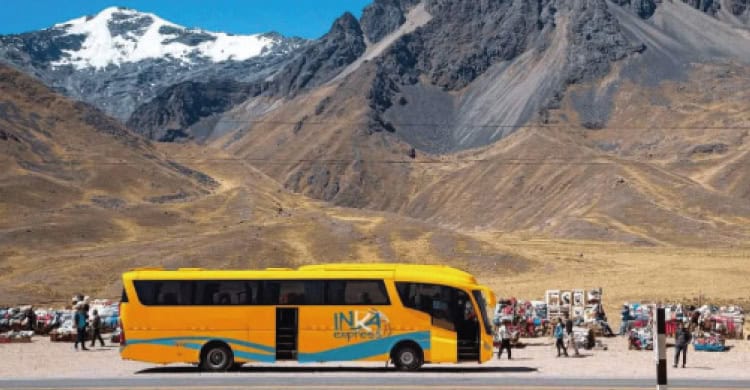
February 5, 2026Inka Express is the most popular “Ruta del Sol” tourist bus: a full-day transfer that breaks the journey with guided cultural stops, a buffet lunch, and a daylight arrival in your next city.
This page is for travelers who want the practical stuff up front—timetable, stops, what’s included, what you still pay, and why Inka Express is usually the best Cusco ↔ Puno choice if you prefer a daytime ride that feels like part of the trip.
Quick summary
- What it is: A full-day tourist bus between Cusco and Puno with guided stops along the “Ruta del Sol.”
- Typical time window (both directions): 06:40 departure → ~17:30 arrival (full day because of stops + lunch).
- Stops included: Andahuaylillas, Raqchi, La Raya (Abra La Raya), Pucará Museum + lunch stop.
- What’s included: Guide, buffet lunch, drinks/snacks, onboard toilet, luggage compartment, and they list Starlink Wi-Fi (from July 2025) plus oxygen/heating.
Best for travelers who want daylight scenery + structured stops + less DIY planning. If you only care about a transfer A→B, a direct public bus can work but has fewer supports and no stops.
What “Ruta del Sol” means
Ruta del Sol is basically the scenic corridor between Cusco and Puno where you can hit major highland highlights in one day. Inka Express markets itself as the original official operator (established 1999), and runs this as a guided day experience rather than a simple bus ride.
Cusco to Puno schedule and itinerary
Departure point in Cusco
Inka Express publishes a 06:40 departure from Cusco, with the departure terminal listed at Av. Alameda Pachacuteq 499-B.
(Translation: don’t assume you can roll out of a hotel near Cusco’s Plaza de Armas at 06:25. Build buffer for a taxi and morning traffic.)
Stops and timings (Cusco → Puno)
Published itinerary:
- 06:40 – depart Cusco (Av. Alameda Pachacuteq 499-B)
- 07:40 – Andahuaylillas (San Pedro Apóstol church; often called “America’s Sistine Chapel”)
- 10:15 – Raqchi (Temple of Wiracocha complex)
- 11:35 – Buffet lunch stop (Sicuani area / Marangani)
- 14:15 – La Raya (Abra La Raya viewpoint)
- 15:20 – Pucará Museum
- 17:30 – arrive Puno (bus terminal)
Arriving in Puno is usually just the warm-up—most travelers are here for the lake. Use our Lake Titicaca tours from Puno comparison to avoid “photo-stop-only” tours and pick something with real cultural context.
Puno to Cusco schedule and itinerary
Departure point in Puno
Inka Express publishes 06:40 departure from Puno bus terminal.
Puno’s main terminal is often referred to as the Terminal Terrestre (many travelers know it by the Jr. 1ro de Mayo area), so plan a short taxi from lakeside hotels if needed.
Stops and timings (Puno → Cusco)
Published itinerary:
- 06:40 – depart Puno (bus terminal)
- 08:50 – Pucará Museum
- 11:00 – La Raya (Abra La Raya viewpoint)
- 11:35 – Buffet lunch stop (Sicuani area / Marangani)
- (mid-day) – Raqchi (Temple of Wiracocha)
- 15:30 – Andahuaylillas
- 17:30 – arrive Cusco (bus terminal)
Note: some third-party schedules list departures closer to 07:00. If you see that, don’t panic—just confirm what time is shown on your ticket/confirmation and plan to arrive early.
For day-to-day taxi and transport tips once you’re in Cusco, use our getting around Cusco guide (what’s realistic, what’s not, and how to avoid the classic overpay moments).
What’s included on the Inka Express ticket
Inka Express lists these inclusions across the route pages:
- Modern tourist-class bus with reclining seats + panoramic windows
- Bilingual guide and guided visits at stops
- Buffet lunch (Sicuani area)
- Complimentary drinks (they list items like coca tea, herbal infusions, coffee, soda, bottled water)
- Onboard toilet
- Luggage compartment for large bags
- Comfort features they highlight: oxygen supply + heating system
- Starlink satellite Wi-Fi (they state from July 2025)
Why Inka Express is the best option for Cusco ↔ Puno
“Inka Express is best” depends on your goal. For most travelers, it wins because it’s the best mix of comfort, daylight safety, and value-per-hour on this specific corridor.
It’s usually the best option if you want:
- A daylight arrival (less stress than arriving overnight in a terminal and negotiating taxis half-asleep).
- The classic stops without DIY planning (you don’t need to coordinate separate transport, timings, and entrances).
- A structured full-day itinerary with food built in (buffet lunch stop is part of the plan).
- Onboard basics that matter on a long high-altitude day: toilet, luggage storage, and the comfort features they advertise.
- Wi-Fi as a bonus for messaging and maps (they claim full-route Starlink connectivity).
If you’re the type of traveler who only cares about getting to Lake Titicaca as cheaply as possible, Inka Express may feel “too tour-like.” But if you want to enjoy the Andes in daylight and learn what you’re looking at, it’s the cleanest package.
Inka Express vs direct night buses vs flying
Here’s the practical comparison most people need:
- Inka Express (day tourist bus): Full-day (roughly 10–11 hours including stops). More comfortable, guided stops, lunch included, arrives early evening.
- Direct public buses (often overnight): Usually cheaper and can be faster “seat time,” but you’ll manage terminals, check-ins, and last-mile taxis yourself—and you miss the cultural stops entirely.
- Flying via Juliaca: Often fastest on paper, but you add airport transfers, baggage rules, and waiting time. It can still be the right move if your itinerary is tight.
Practical tips (altitude, packing, luggage, toilets, Wi-Fi)
- Altitude: This route crosses high Andean areas. Dress in layers and hydrate. La Raya can feel windy and cold even when Cusco feels sunny.
- Cash: Bring soles for entrances + snacks.
- Luggage: They state there’s a secure luggage compartment for large bags. Keep valuables with you in your daypack.
- Toilet: They state all buses have an onboard toilet.
- Wi-Fi: Inka Express claims Starlink Wi-Fi and “full-route connectivity.” Treat it as helpful, not mission-critical—download maps/tickets offline anyway.
- Puno planning: If you’re continuing onto Lake Titicaca activities, remember you’re arriving in the evening—most Uros/Taquile tours start the next morning, which pairs well with a day-bus arrival. For destination context, Peru’s official tourism site has a solid overview of Lake Titicaca.
Bottom line
If you want the best Cusco ↔ Puno experience by road, Inka Express is usually the top pick because it turns a long transfer into a planned Ruta del Sol day with guided stops, lunch, and a daylight arrival—plus clearly stated extras like entrance fees and onboard inclusions.
FAQ
Is the Inka Express tourist bus worth it in 2026?
Yes—if you want the drive to feel like part of the trip, not just a transfer. You get guided stops, a lunch break, and a daylight schedule that’s easier than arriving pre-dawn on a night bus. It’s not ideal for ultra-budget travelers or anyone who needs to arrive early in the day.
How long is the Inka Express Ruta del Sol from Cusco to Puno?
Plan on a full day. Departure is typically early morning and arrival is late afternoon/early evening, with several guided stops plus lunch. Don’t schedule a tight evening connection—timing can shift slightly with weather, traffic, and stop durations.
Is the Wi-Fi actually usable on the bus?
On some departures it’s surprisingly decent, but the Andes are the Andes—coverage can drop in remote stretches. Treat Wi-Fi as a helpful bonus, not guaranteed “work-call” internet.
What are the main stops on the Route of the Sun?
Common highlights include Andahuaylillas (colonial church), Raqchi (Temple of Wiracocha), Abra La Raya viewpoint, and the Pucará Museum, plus a buffet lunch stop. The order changes depending on whether you travel Cusco→Puno or Puno→Cusco.
Is it better to take a tourist bus or a direct night bus?
Tourist bus is better for daylight travel, cultural stops, and a calmer rhythm. Direct night buses are better for locals and saving a day, but you arrive very early and tired—and you’ll usually need taxis immediately.
What should I pack for the Cusco–Puno ride?
Bring layers, sun protection, water, and cash in soles. Abra La Raya can be cold and windy even on sunny days. Keep a jacket and snacks in your day bag so you don’t have to open big luggage at every stop.
Can I do this route if I’m worried about altitude?
Most travelers can, but take it easy the day before, hydrate, and avoid heavy drinking. The route reaches high points, so symptoms can spike if you arrived at altitude too recently.
YOU MAY LIKE

Lima to Machu Picchu – Agencies DON’T want you to read this!

#1 Rated Day Trips From Lima To Unforgettable Destinations
Everything You Need to Know to Avoid the Typical Tourist Mistakes At Machu Picchu

What NOT To Do When Visiting Rainbow Mountain
Spend 50% less and see 100% more in Peru
Machu Picchu Tickets – All You Need To Know!

These Hidden Destinations Just Outside Of Lima Will Blow Your Mind!
Peru – How to Avoid Being a Typical Tourist
OFFICIAL: This Company Was Voted The Best Way To Get Around Peru

Peruvian Travel Secrets That Only The Locals Know