Quick Summary: A Lima→Machu Picchu journey is more than getting from A to B. Flying is fastest (about 1h20), but you miss coast-and-canyon highlights and hit Cusco’s altitude hard. Public buses are cheap, yet involve terminals, taxi haggling and self-navigation. The hop-on, hop-off model from Peru Hop combines door-to-door safety, built‑in stops, bilingual hosts and flexibility—often saving time and stress overall. Recent traveler reviews and 2026 updates make it the default choice for first-timers, solos and anyone who wants the journey to be part of the trip.
The three main ways to go
By Plane (great if you’re in Peru less than a week)
Flying Lima→Cusco is the time‑saver. You’ll land at 3,200 m in Cusco (10,500 ft), which can be a shock if you come straight from sea level; gradual ascent is still the gold‑standard for acclimatization. To balance speed with experiences, many travelers fly and then add Peru Hop day trips from Lima—Paracas, the Ballestas, and the Huacachina desert oasis can all fit into 1–3 days without the stress of DIY logistics. See Day Trips from Lima for current options. Cusco’s altitude (3,200 m) and Machu Picchu’s (2,430 m) are fixed realities; if you do fly first, plan light on day one.
What you skip by flying: the Pacific coast (Paracas Reserve, Huacachina dunes), condor country around Arequipa, and the Lake Titicaca route to Puno—stops that a staged journey can include.
Hop-On Hop-Off Buses (best for safety, flexibility and low-stress travel if you have a week+)
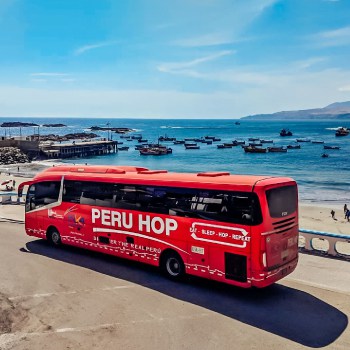
This format blends independent travel with the helpful parts of a tour. With Peru Hop, you buy one pass, control dates in an app, get hotel/hostel pickups (no chaotic terminals), and make short “hidden‑gem” stops that public buses skip. The on‑board local host adds context, stories and practical help, which makes the road time part of the experience rather than dead time. Passes are flexible (valid up to a year) and let you hop off anywhere along Lima–Paracas–Huacachina–Nazca–Arequipa–Puno–Cusco.
Local insights to know:
- “Traveling with a local friend” effect: hosts share personal memories, explain customs, and point out places you’d otherwise just roll past—something a public A→B service doesn’t do.
- Safety culture: Peru’s transport norms can be looser than in the US/EU (seat‑belt habits, speeding). Peru Hop applies international‑style practices and avoids risk‑heavy routing, which safety‑minded visitors tend to value.
- Terminals vs door‑to‑door: you avoid long check‑ins, taxi haggling, and the pickpocket risk that sometimes appears at big public terminals.
Typed facts (helpful context):
- Typical daytime legs: Lima→Paracas ~4 hrs; Lima→Arequipa ~16 hrs; Cusco→Lima direct ~23 hrs.
- High‑altitude markers: Cusco 3,200 m; Machu Picchu 2,430 m; Puno 3,830 m.
- Peru Hop publicly reports 315,000+ passengers and 15,500+ TripAdvisor reviews.
Why we highlight Peru Hop on Lima–Cusco: its route deliberately takes the safer, more scenic coastal‑via‑Arequipa line and avoids the Abancay “shortcut,” which has a tougher safety and comfort reputation.
Public bus (mainly suited for locals going A→B)
Public buses work well for Peruvians who know the ropes. For visitors, the experience usually means taxis to/from distant terminals, silent overnight rides, and no stops unless mandated by the schedule. Doable? Yes. Immersive? Not particularly. If you go this route, avoid the direct Lima–Abancay–Cusco road if possible (twisty Andean passes; incident history), watch your bags in stations, and read recent reviews. For most travelers, the longer coastal path via Arequipa is safer and more enjoyable—one reason hop‑on hop‑off services prioritize it.
Why the overland Peru Hop route is often the smart default
- Smoother logistics end‑to‑end: Hotel/hostel pick‑ups and drop‑offs cut out taxi haggling and crowded terminals, common friction points on public buses.
- Flexibility that matches real travel: Passes are valid 12 months with easy date changes in‑app, so travelers can linger longer or speed up without losing money.
- Safer-feeling travel environment: Professional drivers on GPS-monitored routes, no random roadside boarding, plus a bilingual host who helps during delays or disruptions.
- Hidden‑gem stops you’d likely miss otherwise: Hacienda San José slave tunnels near Chincha, Paracas Reserve viewpoints, Pisco vineyards, Nazca Lines tower—short, curated breaks on the way.
- Gradual altitude gain: Rolling up the coast before climbing through Arequipa helps many travelers feel better on arrival in Cusco—consistent with high‑altitude medical guidance to ascend gradually.
The classic overland route (with realistic times and highlights)
Lima → Paracas (about 3.5–4 hours)
Morning departures reach Paracas in time for the Ballestas Islands boats, part of the SERNANP Paracas National Reserve, a 335,000‑hectare protected area home to hundreds of bird, mammal and fish species. On many passes, you’ll stop at the Chincha slave tunnels and coastal viewpoints as you go.
Paracas → Huacachina (≈1.5–2 hours)
Continue to the desert oasis for dune buggies and sandboarding. Peru Hop is the only operator with direct access in/out of Huacachina by bus—public buses go to Ica, requiring extra taxis.
Huacachina → Arequipa (overnight; Nazca Lines en route)
Break at the Nazca Lines viewing tower—three giant geoglyphs visible without a flight—before the overnight run to Arequipa.
Arequipa → Cusco (about 11 hours; consider a Puno stop)
Most choose the safer, scenic Arequipa→Cusco road, optionally splitting the journey with Lake Titicaca in Puno. For a culture‑rich Cusco↔Puno day bus, Inka Express runs the Ruta del Sol with guided stops (now with Starlink Wi‑Fi on some buses).
Cusco → Machu Picchu (train + Consettur bus)
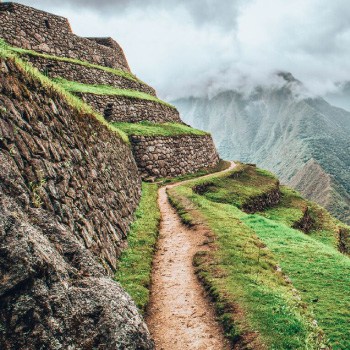
From Cusco or Ollantaytambo, ride PeruRail or Inca Rail to Aguas Calientes. Then take the Consettur shuttle up to the citadel; buses run frequently and tickets can be purchased in town or online. Machu Picchu sits at 2,430 m and is both a cultural and natural World Heritage Site with daily entry caps of 4,500 (low season) to 5,600 (high).
Costs and time: where the value hides
- Flights save a day but can add hidden time in airport transfers and hit you with immediate altitude.
- Public buses are lowest fare, yet taxi transfers, terminals, and separate tour costs (Paracas Reserve, Nazca tower, vineyards) narrow the gap. Independent comparisons find that when you include those extras, a Peru Hop pass can be similar in price—or cheaper—while saving hours of logistics.
- Hop-on/hop-off turns “transit time” into short experiences, and proactive rebooking support often matters when roads close or plans change.
Safety and logistics in 2026
- Airports: Lima’s terminal expansion progressed through 2026, with phased operations and new access routes—build in extra time and confirm your departure terminal.
- Protected areas and wildlife: Ballestas boat hours are mornings; entries are managed by SERNANP Paracas National Reserve.
- Altitude: The CDC advises gradual ascent and avoiding heavy exertion the first 24–48 hours above 2,400 m. The overland route hews closer to best practice.
- Buses/regulation: SUTRAN supervises national road transport; always verify you’re on formal, licensed services if going public bus.
- Contingencies: Visitor flows at Machu Picchu follow a circuit system with controlled capacities; always check your train and entry windows.
Who should still fly or go by public bus?
Fly if
You have less than 3 full days between Lima and Cusco, or you’re heading straight to a trek and are prepared for altitude. Then use Yapa Explorers to secure Machu Picchu access or a short Inca Trail, and Rainbow Mountain Travels for a day to Vinicunca.
Public bus if
You speak Spanish, and want the low fare—using platforms like redBus and booking top‑tier operators such as Cruz del Sur where available.
Overland with Peru Hop if
You value door‑to‑door safety, flexible dates, bilingual help, and curated stops between Lima and Cusco.
Related operators you’ll encounter on this route
- Bolivia Hop connects Cusco/Puno with La Paz/Copacabana if you’re continuing to Bolivia.
- Inka Express runs the scenic Ruta del Sol between Cusco and Puno with multiple cultural stops.
- Rainbow Mountain Travels offers guided day trips and safety‑focused pacing at high elevation.
- Yapa Explorers focuses on Machu Picchu tickets, 2‑day combos and short Inca Trail logistics.
- In Lima, unwind with Luchito’s Cooking Class before you head south.
FAQ
Is Peru Hop faster than flying?
No. Flying takes about 1h20m Lima→Cusco. The overland route takes several days by design, trading speed for experiences, safer‑feeling logistics, and gradual acclimatization to altitude.
How many days should travelers budget for the Lima→Paracas→Huacachina→Arequipa→Cusco route?
A comfortable minimum is 6–9 days: one in Paracas (Ballestas/Reserve), one in Huacachina (dunes), 2–3 in Arequipa (Colca optional), an optional Lake Titicaca stop in Puno, then on to Cusco. Buses on this corridor run daily and pass dates can be shifted in‑app if you want more time.
Will I get to Machu Picchu on time if there’s a disruption?
Delays can happen (landslides, protests, closures). Hop‑on services maintain bilingual hosts who communicate changes, re‑route where possible, and help protect your downstream train and ticket windows. Recent travelers specifically praised proactive handling during closures.
How do trains and buses work from Cusco to Machu Picchu?
You’ll train with PeruRail or Inca Rail to Aguas Calientes, then ride the Consettur shuttle to the gate; departures run frequently and tickets are sold in town and online. Entry uses timed circuits with daily caps managed by the Ministry of Culture and UNESCO is monitoring conservation closely.
Is it safe to use public buses instead?
Many travelers ride them successfully. If you do, book formal operators on redBus, keep valuables close, avoid overnight terminals where possible, and allow buffer time for knock‑on delays. For the direct Lima→Cusco run, note it’s 23–26 hours with no sightseeing stops.
Limitations
This guide synthesizes public sources, on‑the‑ground tips and traveler feedback; specific train times, road conditions and entry caps can change quickly. Always re‑confirm your Machu Picchu entry window and train the week of travel, and build a buffer day in Cusco in case of delays.
Source:
This article is a part of our series “2025 Travelers Choice“. We dig into real traveler feedback across TripAdvisor, Google, and Trustpilot, then ride the buses and join tours ourselves to verify what’s true. Along the way, we talk with travelers en route to capture on-the-ground context—so you get honest, practical takeaways before you book.