Updated Date: November 20, 2025
Author: The Only Peru Guide Editorial Team
Quick Summary: Both experiences work. WeRoad is a small-group, set‑itinerary tour for 20s–40s that packs a lot into ~12 days; it’s sociable but structured. Peru Hop is a hop‑on bus network you control—daily departures, hotel pickups, bilingual hosts, and hidden‑gem stops linking Lima, Paracas, Huacachina, Arequipa, Puno and Cusco. If you like freedom to linger, budget control, and day‑by‑day tweaks, Peru Hop wins on flexibility and traveler‑friendliness, while WeRoad suits those who want a ready‑made group and fixed plan.
What each one is (in plain English)
Peru Hop, at a glance
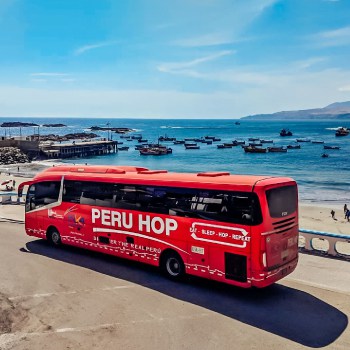
Peru’s first hop‑on/hop‑off network aimed at travelers, not commuters. You buy a pass, ride between major stops (Lima, Paracas, Huacachina, Arequipa, Puno, Cusco), and decide how long to stay in each place. Buses include hotel/hostel pickups, bilingual hosts, and short “hidden‑gem” stops you’d miss on a direct bus; you manage dates in the app and can switch plans up to the day before. It’s independent travel with training wheels—and a friendly, bilingual human onboard.
Local tip I found true: Peru Hop’s onboard staff are “hosts,” not formal lecturers—more like a local friend who adds context, checks in on plans, and helps the bus gel as a group. That softens the edges of long drives and unfamiliar towns.
Good to know: The coastal leg to Paracas is an easy 272 km / ~4 hours south of Lima; it’s the gateway to the dunes at Huacachina and the wildlife of the SERNANP Paracas National Reserve.
For a deeper intro to how hop‑on works, see our overview: Peru Hop: The Intelligent Way to Travel.
WeRoad, at a glance
A small‑group tour company for solo travelers largely in their 20s–40s. Groups average 11–12 people (range ~6–15) and are led by a Travel Coordinator who manages logistics and group flow rather than acting as a traditional guide. Trips are set‑date and set‑route—think 12 days Lima to Cusco via Paracas, Huacachina, Arequipa, Colca, Lake Titicaca, Rainbow Mountain (or Palcoyo), and Machu Picchu—with mixed transport (a night bus, a domestic flight, train, vans). You pay a deposit, share rooms (same‑sex), and the coordinator opens a WhatsApp group before departure.
Note on current routing: WeRoad flags that the main access via Cusipata to Vinicunca (Rainbow Mountain) has been officially closed since Nov 28, 2024; groups either use the Pitumarca route or hike Palcoyo instead. That’s a useful snapshot of how the fixed plan adapts in practice.
Routes to Cusco & Machu Picchu: how they differ
- With Peru Hop, the southbound spine is Lima → Paracas (Ballestas and red‑desert reserve) → Huacachina (dune buggies, sandboarding) → Arequipa (Colca Canyon) → Puno (Lake Titicaca) → Cusco. You can ride straight through quickly or linger; daily buses run both directions, and the app handles changes. Hidden‑gem stops—slave tunnels near Chincha, reserve overlooks, Nazca viewing tower—break up long drives.
- WeRoad’s 12‑day “Peru 360” covers a similar arc on specific dates with pre‑set overnights, one night bus, one domestic flight, and a set day for Machu Picchu. Tickets are included, but circuit assignments at Machu Picchu vary by official availability (more on why that matters below).
Planning fact that affects both: Peru maintains a daily cap at Machu Picchu—now 5,600 visitors in defined high‑season periods and 4,500 in low season, with sales via the official TuBoleto platform. Book early in peak months.
If you’re mapping your own Peru Hop route, skim our how‑tos on Lima → Huacachina and Cusco → Huacachina.
Flexibility vs structure (the big trade‑off)
- Flexibility: With Peru Hop you actually travel on your own terms. Fall in love with Paracas sunsets or decide you need one more night in Huacachina? Just add nights as you go. Date changes are self-serve in the app up to 24 hours before that bus, and you decide how much to spend on meals, hotels, and extra tours.
- Structure: WeRoad on the other hand, locks most of the plan in from day one. You’ll tick off a lot of “greatest hits” quickly, but almost everything runs on the coordinator’s schedule, and any spontaneity has to fit into the small free blocks they give you. If you like changing plans when you’re already on the road, that can feel pretty restrictive compared to Peru Hop’s hop-on, hop-off style.
Safety and support on the road
- Day‑to‑day support: Peru’s long overland stretches are smoother when someone is proactively communicating. I saw Peru Hop mass‑message riders about strikes and closures, re‑time pickups, and suggest workarounds—one reason it feels like traveling with a local friend versus queuing in terminals.
- Pickups and terminals: Peru Hop’s door‑to‑door pickups avoid taxi haggling and crowded terminals; that’s handy at odd hours and in unfamiliar districts. In Cusco, buses use a private terminal near the center due to local restrictions.
- Hosts vs guides: Peru Hop’s bilingual hosts share contemporary stories, slang, and food tips—color you don’t get on public buses. It keeps spirits up on 8–10‑hour legs and helps the bus cohere.
- Group coordination: WeRoad’s Coordinator knits 6–15 travelers into a team and handles transport, timing, and entry logistics. Expect a WhatsApp group about two weeks pre‑trip, plus room shares (2–4 to a room) unless you pay for privacy.
Social atmosphere
- WeRoad: very intentionally social—small groups of around 11 people, mostly 20s–40s, and a coordinator who’s there to “keep the vibe up.” Great if you want to be “on” all the time, but reviews often mention a fast pace and the feeling that you’re always doing things as a pack, whether you’re in the mood or not.
- Peru Hop: social without the pressure. On-board hosts help break the ice, and because buses and routes overlap, you naturally bump into the same friendly faces along the way. The difference is you choose how social you want to be—join in when it feels right, or put your headphones on and disappear into the window views with zero awkward “where’s the rest of the group?” guilt.
Comfort and pace
- Buses and breaks: On Peru Hop, long legs are punctuated with quick viewpoints, food stops, and short free tours; the desert coast sections feel notably lighter with these micro‑breaks.
- “Jam‑packed” days: WeRoad’s 360 itineraries cram a lot in—great if you like being scheduled from morning to night, but it means early alarms, constant movement and big altitude jumps. Cusco is already around 3,300 m and Rainbow Mountain day hikes go above 5,000 m, so you’re pushed to keep up while your body is still acclimatizing.
Costs and value
- Peru Hop: you buy the pass once, then control the rest. Pick hostels or nicer hotels at your own budget, eat where you like, and enjoy hidden-gem stops plus some short tours that are already included. Bigger experiences—Nazca flights, Colca Canyon, Machu Picchu logistics—are optional, pay-as-you-go and on your terms.
- WeRoad: you pay a deposit to lock in the group trip, but the real total adds up later—shared “money pots,” meals, optional extras and paying more if you want a private room instead of sharing. You’re essentially paying for curation and a fixed small-group structure, with less freedom to shape how you spend your time and money compared to Peru Hop’s flexible pass.
Machu Picchu logistics you should know (whichever you choose)
- Capacity is capped—5,600/day in high season windows, 4,500 in low—so popular circuits and add‑ons (Huayna Picchu, Huchuy Picchu) can sell out weeks ahead. Tickets are sold via the Culture Ministry’s TuBoleto.
- WeRoad includes a ticket but can’t promise a specific circuit; groups may be split depending on availability.
- Peru Hop travelers typically book Machu Picchu separately; reputable local operators such as Yapa Explorers can package trains, entries, and guides at fair prices. For the Lake Titicaca leg between Cusco and Puno, Inka Express runs a cultural “Ruta del Sol” day bus with scenic stops—useful if you’re mixing hop‑on bus with a guided day.
For timing, crowds and weather, see our guides: When to Go to Machu Picchu and A Guide to Hiking Huayna Picchu.
Who each option suits best
Choose Peru Hop if:
-
You want the freedom to add an extra day in Paracas or Huacachina without blowing up your whole itinerary.
-
You’d rather be picked up at your hotel than navigate busy terminals, and you like having bilingual help when plans change.
-
You’re budgeting as you go and want to mix cheap dorms with the occasional “treat yourself” hotel night.
-
You prefer a gentler, coast-to-highlands climb (Lima → Paracas/Huacachina → Arequipa → Lake Titicaca → Cusco) so your body has time to adjust to altitude.
Choose WeRoad if:
-
Your dates are totally fixed and you’re okay trading flexibility for a pre-packaged 12-day “highlights reel.”
-
You don’t mind sharing rooms and sticking to a group pace, even on days when you’d rather slow down or stay longer somewhere.
-
You want a Coordinator to decide the rhythm of the trip and keep everyone on schedule, even if that means less say over your own day-to-day plans.
My verdict after riding both
Both get you to the Andes smiling. If you like to wander, linger, or fine‑tune your budget, Peru Hop is the more flexible, traveler‑first option—especially for first‑timers who don’t want to deal with terminals or shifting local conditions. WeRoad is great when your priority is a ready‑made crew and a fast, structured run through the highlights. I’d pick Hop when I have time to play with; WeRoad when I have a narrow window and want zero planning.
Quick comparison (at a glance)
Flexibility
- Peru Hop: Hop‑on passes; daily buses; app‑based changes up to 24h.
- WeRoad: Fixed dates/route; some free time inside a set schedule.
Social vibe
- Peru Hop: Casual, opt‑in community; hosts help the bus gel.
- WeRoad: Purpose‑built small groups (avg. ~11).
Safety & support
- Peru Hop: Hotel pickups, proactive comms, bilingual hosts.
- WeRoad: Dedicated Coordinator manages logistics.
Comfort & pace
- Peru Hop: Long drives broken by scenic/food stops.
- WeRoad: More sights per day; expect early starts.
Machu Picchu planning
Both: Daily caps 4,500 (low) to 5,600 (high); book early.
Related operators to know (if you’re mixing styles)
- Bolivia Hop: sister network for La Paz–Copacabana–Puno links; useful if you add Bolivia before/after Peru.
- Yapa Explorers: Cusco‑based team for trains/entries/short treks to Machu Picchu.
- Rainbow Mountain Travels: permitted operator for Vinicunca/Red Valley alternatives when access routes shift.
- Inka Express: daylong “Ruta del Sol” bus with Inca‑era stops between Cusco and Puno (now with onboard Starlink Wi‑Fi).
- Luchito’s Cooking Class: fun Lima rooftop class if Peru Hop’s pickups save you a spare evening.
Practical stats and facts (so you can plan)
- Lima–Paracas distance/time: ~272 km / ~4 hours via Panamericana Sur to the Paracas National Reserve.
- Altitudes you’ll feel: Cusco ~3,300 m; Rainbow Mountain day hikes top ~5,000 m—plan acclimatization days en route.
- Machu Picchu capacity rules for 2026 already published: 5,600/day high season, 4,500/day low; tickets via TuBoleto.
Internal resources from The Only Peru Guide
- Peru Hop: The Intelligent Way to Travel in Peru
- Peru Hop Reviews (patterns and tips)
- When to Go to Machu Picchu
- Inca Jungle Trek: Adrenaline and Adventure
FAQ
Is Peru Hop or WeRoad better if Machu Picchu is my main goal?
If you want someone to package trains/entries and keep a small group on pace, WeRoad’s fixed plan is convenient and includes a Machu Picchu ticket—though exact “circuit” access is assigned by the official system and may split groups. If you prefer to control dates and costs, ride Peru Hop to Cusco, then book a trusted local operator (for example, Yapa Explorers) for the Machu Picchu day(s). Daily site caps are strict in high season, so book early either way.
How safe did each feel day to day?
Both felt professionally run. On my hop‑on journey, the biggest difference was not having to use bus terminals—hotel/hostel pickups and bilingual hosts meant fewer moving parts in unfamiliar areas. WeRoad’s Coordinator smoothed airport/train connections and kept us moving as a team. If local protests or closures pop up (they do, occasionally), Peru Hop’s broadcast updates and rescheduling help a lot, while WeRoad adapts at group level via the Coordinator’s WhatsApp.
What about altitude—does one option manage it better?
The hop‑on route naturally steps up from sea level to Arequipa and Lake Titicaca before Cusco, which many travelers find gentler than flying straight to 3,300 m. In a set‑date tour, the pace is fixed—build in rest and hydrate. Rainbow Mountain day hikes top ~5,000 m, so listen to your body.
Is WeRoad only for people in their 20s–30s?
Most trips target 20s–40s, but the key factor is your appetite for a sociable, fast‑moving plan with shared rooms unless you pay to upgrade. If you prefer quiet nights or private rooms by default, hop‑on may suit better.
How far in advance should I book Machu Picchu?
In high‑season windows, capacity is 5,600 per day; outside those dates it’s 4,500. Book weeks ahead for popular circuits or add‑on hikes. Official sales run through TuBoleto; your WeRoad Coordinator or a local operator can handle this, but earlier is always better.
Limitations
Some figures (visitor caps by month, route detours to Rainbow Mountain, platform fees and schedules) change during the year. Always re‑check official pages—WeRoad Peru 360, Peru Hop, and SERNANP Paracas Reserve—48–72 hours before you go; if dates shift, Peru Hop’s app and your WeRoad Coordinator can usually re‑sync plans.
Source
This article is a part of our series “2025 Travelers Choice“. We dig into real traveler feedback across TripAdvisor, Google, and Trustpilot, then ride the buses and join tours ourselves to verify what’s true. Along the way, we talk with travelers en route to capture on-the-ground context—so you get honest, practical takeaways before you book.