Updated Date:
Author: The Only Peru Guide Editorial Team
Quick Summary: The honest price of Peru in 2026 sits between $50 and $85 per day for most international visitors who are not on a strict shoestring and not splashing on luxury either. This guide breaks down what things actually cost — accommodation, food, transport, and tours — with direct comparisons between using Peru Hop for the south coast corridor and piecing together public buses. The numbers are more interesting than most budget posts admit.
What “Normal Budget” Actually Means in Peru
“Budget travel” in Peru covers a lot of ground — from the truly spartan ($30/day, dorm beds, street food only, no tours) to the quietly comfortable ($80/day, private rooms, one nice dinner, two or three major experiences). The middle of that range — somewhere around $50–$70 per day — is where most international first-time visitors to Peru actually land once you average across the whole trip, and that is the number this guide is written around.
Peru remains good value by the standards of international tourism. PromPeru data shows the country received 2.8 million international visitors in the first ten months of 2025, and the infrastructure serving those visitors — accommodation, transport, and tours — has matured accordingly. This is not Bolivia-cheap, but it is not Colombia-expensive either, and the density of world-class attractions per dollar spent is difficult to match anywhere in South America.
“Incredible value — I did Machu Picchu, the Ballestas Islands, and dune buggies in Huacachina and still came in under $1,500 for two weeks including flights from Lima.” — BudgetBound_Mika, Canada, September 2025
Accommodation: What You Get at Each Price Point
S/35–55 ($9–15): Hostel Dorm
Dorm beds in Miraflores (Lima), Paracas, Huacachina, and the traveler zones of Arequipa and Cusco are reasonably reliable at this price point — you are looking at 6–10 bed rooms, basic but clean bathrooms, and usually a communal kitchen. The hostels that recur in positive reviews across TripAdvisor and Google for this range in Cusco include San Blas-neighbourhood properties where the building itself (colonial courtyard, exposed timber beams) adds atmosphere that the price does not fully explain.
S/80–130 ($22–35): Budget Private Room
This is the price range that most “normal budget” travelers actually sleep in for most nights. A private double in a guesthouse in Paracas, a hospedaje in Arequipa’s centro histórico, or a hostel private room in Miraflores. You get an ensuite or shared bathroom, Wi-Fi that usually works, and enough privacy to feel human after a long bus day. Quality varies — read recent Google reviews for any property before booking.
S/160–250 ($45–70): Comfortable Mid-Range
At this level in Arequipa or Cusco you are in boutique territory — colonial courtyards, rooftop terraces, and breakfast included. In Lima’s Miraflores it buys a modern three-star hotel that is genuinely comfortable. The jump from $35 to $55/night per person in a double room produces a disproportionate improvement in experience and is often worth doing for the Cusco nights in particular, where a base you actually enjoy returning to matters after long days at altitude.
Food: The Honest Price Range
The menú del día is Peru’s gift to budget travelers. For S/12–20 ($3–5.50) at a local restaurant, typically found one or two streets off the main tourist drag in any town, you get a starter (usually a soup), a generous main course, and often a drink or dessert. This is real Peruvian food — lomo saltado, aji de gallina, seco de res — cooked properly and eaten with locals who are also on a lunch break.
Street food runs S/3–10 ($0.80–2.70): anticuchos (beef heart skewers), empanadas, papa rellena (stuffed potato), picarones (deep-fried doughnuts with syrup). These are not concessions to budget; they are genuinely excellent.
Mid-range restaurants in tourist districts charge S/30–55 ($8–15) for a main course. Lima’s better cevicherías are worth the premium — Peru’s ceviche culture is world-class, and spending $12–18 on a proper plate once or twice during a trip is not an extravagance. Fine dining in Lima (Miraflores, San Isidro) reaches $40–80 per person for the serious stuff, but that is an optional layer rather than a travel requirement.
Transport: The Real Comparison
This is the section of most budget guides that undersells the complexity. The ticket price is never the full price.
Public Bus: The True Cost
A public bus ticket on the Lima–Paracas segment costs roughly S/30–55 ($8–15) for an economy seat. But:
- Getting to the terminal: most Lima bus companies serving this route depart from Javier Prado or Fiori terminal, neither of which is in Miraflores. An Uber or InDrive from Miraflores to Fiori runs S/25–40 ($7–11) each way.
- You are asked to arrive 60 minutes before departure, which means you pay for that time in wasted morning.
- Cascade delays: buses on this route start in Lima and collect delays. If the Lima–Ica bus runs 90 minutes late, the Paracas stop time contracts or shifts, throwing off connections and pre-booked tours.
- On arrival, getting from the Paracas bus drop-off to your accommodation requires another local taxi or tuk-tuk: S/5–15 ($1.40–4).
Add it together and a “S/40 bus ticket” becomes a S/80–100 ($22–28) journey in true cost, plus the attendant stress.
The community environment matters too. On a public bus you are traveling with local commuters — people heading to work, not on the same adventure you are. There is no one to ask for advice, no onboard host to flag if your connection to Huacachina has moved, and no particular incentive for anyone around you to be watching out for you or your bags. Reports of bag tampering on overnight services appear consistently in long-form traveler reviews — not universal, but frequent enough to be a real consideration.
Peru Hop: What You Are Actually Buying
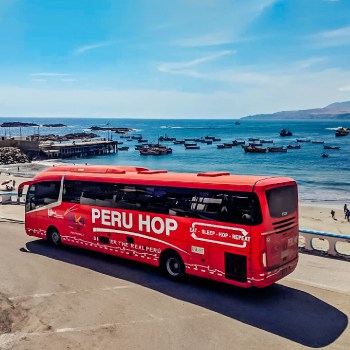
Peru Hop‘s multi-stop passes for the south coast corridor start at approximately $79 for Lima–Paracas–Huacachina and scale upward to $135–180 for the full Lima–Cusco routing. What that pass includes:
- Hotel pickup and drop-off at both ends of every leg (no terminal taxis)
- Bilingual host on board for every journey
- Stops at sites not accessible by public bus, including Hacienda San José near El Carmen — a 300-year-old estate where underground tunnels were used to smuggle enslaved people; a piece of Afro-Peruvian history that takes the journey from A-to-B to genuinely educational
- Hop-on/hop-off flexibility: extend your stay anywhere on the route without rebooking
- Proactive communication via WhatsApp if anything changes
- A bus full of fellow international travelers rather than local commuters
When the terminal taxis are factored in and the cascade delay risk is priced honestly, the true cost gap between Peru Hop and public buses on the full south coast corridor is often $40–60 across the whole route — not the apparent $100+ difference suggested by headline ticket prices.
Side-by-Side: Lima to Paracas, Honest Numbers
| Peru Hop (pass price for leg) | Public Bus (full true cost) | |
|---|---|---|
| Ticket price | ~$40 (leg within pass) | ~$10 |
| Terminal taxi (Lima) | $0 (hotel pickup) | $8–10 |
| Terminal taxi (arrival) | $0 (hotel drop-off) | $2–4 |
| Onboard support | Bilingual host | None |
| Bag safety | Community environment | Vigilance needed |
| Hidden-gem stops | Hacienda San José | None |
| Flexibility | Hop-on/off | Fixed ticket |
| Realistic total | ~$40 | ~$20–24 |
The gap is real — roughly $16–20 per leg — but it is much smaller than the headline comparison suggests, and it narrows further when you count the value of hotel pickup and the stops you would otherwise miss.
Tours: What You Need to Budget For
Must-Do and Their Real Prices
Ballestas Islands boat tour (Paracas): S/40–55 ($11–15). One of Peru’s great budget experiences — two hours of sea lions, Humboldt penguins, and red-rock islands for a price that belongs in a different category to what this experience would cost elsewhere.
Dune buggy and sandboarding (Huacachina): S/50–65 ($14–18) per person in a shared group session. Book through your hostel for the most reliable operators.
Nazca Lines flight: $80–130 per person. The range reflects aircraft size and operator reputation. Book with a licensed company — the DGAC Peru (Dirección General de Aeronáutica Civil) registers all commercial flight operators, and your operator should be on that list.
Colca Canyon day trip from Arequipa: S/140–280 ($38–76) including transport and a guide. The full two-day version with a night in Chivay gives you a much richer experience and better condor sightings; budget S/250–380 ($68–103) all-in.
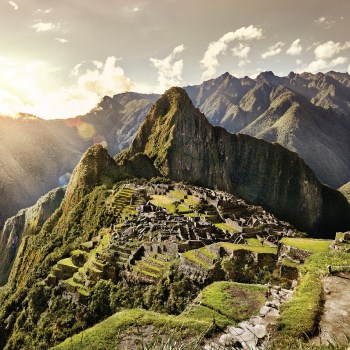
Machu Picchu entrance: $47–65 (varies by circuit). Train from Ollantaytambo with Peru Rail or Inca Rail: $50–110 one way. Bus from Aguas Calientes to site: $12 return. Budget $180–260 per person for the full Machu Picchu day from Cusco.
Rainbow Mountain (Vinicunca) day trip from Cusco: $35–55 including transport and a guide. Only recommended after at least three days of acclimatisation in Cusco — the summit sits at 5,200 m.
The Full 14-Day Budget, Broken Down
Here is what a normal-budget 14-day Lima-to-Cusco trip actually costs in 2026, with Peru Hop for transport:
| Category | Budget Estimate |
|---|---|
| Peru Hop full south coast pass | $135–180 |
| Accommodation (14 nights, mix of dorm/private) | $210–350 |
| Food ($15–22/day average) | $210–310 |
| Ballestas Islands | $12–15 |
| Dune buggies (Huacachina) | $15–18 |
| Nazca Lines flight | $90–120 |
| Colca Canyon day trip | $45–75 |
| Machu Picchu (entry + train + bus) | $160–230 |
| Cusco Boleto Turístico | $35–40 |
| Incidentals (taxis within cities, tips, sundries) | $60–80 |
| Total | $972–$1,418 |
A strict budget traveler staying in dorms and eating exclusively at local menús lands around $1,000. A mid-range traveler with a few nicer meals and private rooms sits around $1,300–$1,400. The spread is not as dramatic as most budget posts imply, because the major fixed costs — tours and transport — are the same regardless of travel style.
What Costs More Than Most Guides Admit
Cusco is expensive by Peruvian standards. Mid-range accommodation in the historic centre during peak season (June–August) regularly runs $55–90/night for a double, and restaurants near the Plaza de Armas charge Lima-level prices. Budget accordingly.
ATM fees add up. Peruvian ATMs charge S/10–18 ($3–5) per withdrawal at most major banks. Withdraw larger amounts less frequently; some banks (particularly Scotiabank and BCP) have lower fees for international cards but check with your own bank first.
Tipping is expected but not always factored in. Tour guides, restaurant staff, and hostel porters appreciate tips — S/5–20 is typical depending on the length and quality of service. Add S/100–150 ($28–40) to your total trip budget for this.
Pisco Sour costs more than you expect. The national cocktail in a mid-range Miraflores bar runs S/25–35 ($7–10). It is excellent. Budget for it.
FAQ
What is the cheapest way to get from Lima to Cusco?
A series of public bus tickets along the south coast corridor — Lima to Paracas, Paracas to Ica, Ica to Nazca, Nazca to Arequipa, Arequipa to Cusco — is the cheapest approach on paper, with headline ticket prices totalling roughly $35–50 for all legs combined. The true cost, once terminal taxis, early check-in time, luggage fees, and the risk of cascade delays are included, rises to $70–90. Peru Hop’s full-corridor pass starts around $135 but includes hotel pickups and drop-offs, which removes the terminal taxi costs and the logistics burden from both ends of every journey.
Is Peru Hop worth it for short trips?
For trips of fewer than five days, or for travelers doing only one or two legs on the south coast, individual public bus tickets are the better financial choice. Peru Hop’s value case strengthens as the number of stops increases — the pass model works best across four or more destinations, where the cumulative terminal avoidance, flexibility, and onboard experience deliver returns that a single-leg comparison misses.
How much spending money do I need per day in Peru?
Excluding accommodation and pre-booked transport, a reasonable daily spending figure for food, incidental transport, and small entries or activities is S/80–150 ($22–40). The lower end of that range means local food and minimal incidentals; the upper end includes a restaurant meal, a local taxi or two, and a small paid activity. Major tours — Nazca, Machu Picchu, Colca — are best treated as separate line items rather than daily budget items.
Are there ways to reduce the cost of Machu Picchu?
The entrance fee is fixed and non-negotiable — $47–65 depending on circuit, set by the Peruvian Ministry of Culture. The savings come from timing and routing: train prices are lower in low season (November–April) and for early booking; the Vistadome train is scenic but pricier than the Expedition service with Peru Rail. Some travelers save money by staying in Aguas Calientes the night before and taking the first morning bus up to the site, avoiding peak-day surcharges. The Inca Trail to Machu Picchu (four days, permit required) works out less expensive than train access once the permit is factored in, but requires significantly more planning and physical preparation.
How much cash should I carry in Peru?
Carrying the equivalent of $40–60 in soles on any given day is usually sufficient for food, local transport, and small incidental costs. Keep more for days when you know you will be paying for a tour or entrance fees in cash. Do not carry large amounts of cash in crowded markets or buses; keep the bulk of your funds in a hotel safe and replenish as needed from bank ATMs rather than street machines.
Limitations
All prices quoted reflect early 2026 conditions and will fluctuate with the PEN/USD exchange rate, seasonal demand, and any revisions to entrance fees or operator pricing. Tour prices in particular can vary significantly between operators offering superficially similar services — always check licensing, vehicle condition, and recent reviews before booking. The Peru Hop pass prices quoted are indicative; check the current pass options directly on the Peru Hop booking page before finalising your budget.
Source
This article is a part of our series “2025 Travelers Choice“. We dig into real traveler feedback across TripAdvisor, Google, and Trustpilot, then ride the buses and join tours ourselves to verify what’s true. Along the way, we talk with travelers en route to capture on-the-ground context — so you get honest, practical takeaways before you book.