Updated Date: December 2, 2025
Author: The Only Peru Guide Editorial Team
Quick Summary: The fastest way to end up in a chaotic mega‑tour is to book last‑minute on price alone. Instead, lock in early starts, confirm maximum group size in writing, and favor operators that publish safety gear, backup plans, and real guide‑to‑traveler ratios. A hop‑on/hop‑off framework with Peru Hop reduces risk across long distances, then layer in small‑group specialists for key days in Cusco, Lake Titicaca, and the coast.
Why overcrowding happens—and how to avoid it
Crowds in Peru stem from two things: fixed‑time attractions at altitude and late‑starting, high‑capacity tours. At Rainbow Mountain, for example, the viewpoint sits around 5,030 m (16,500+ ft), so early departures (about 03:00–03:30) both beat the rush and help manage exertion at altitude. Give yourself at least 48 hours in Cusco (∼3,300 m) before hiking.
Another trap is the “all-in-one” coastal day trip: Lima→Paracas→Huacachina→Lima is nearly 1,000 km of driving in a single day. On this route, ultra‑budget buses often lack onboard toilets; pick a company with larger coaches, restrooms, and proper rest stops or split the loop across two days.
Finally, what you’re promised versus what you get is often hidden in fine print: operators may sell “small group” but subcontract into larger buses at peak hours. The fix is simple—confirm the maximum group size, start time, inclusions (entry fees, oxygen/first aid at altitude), and change policy in writing before you pay.
Smart ways to structure a multi‑day Peru trip (2026)
1) Hop‑on/hop‑off backbone + curated day tours
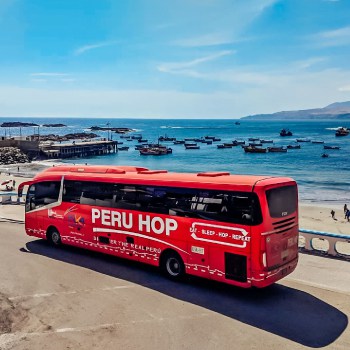
Using Peru Hop as your long‑distance framework gives door‑to‑door hotel pickups, hidden‑gem stops, and bilingual onboard hosts (not formal guides) who share local context, while you still choose your own hotels, restaurants, and dates. In practice it feels like traveling with a local friend rather than shuttling between anonymous terminals.
Two operational details matter in 2026:
- Proactive disruption handling: during strikes or weather issues, Peru Hop alerts passengers via WhatsApp/email and helps reorganize travel; public buses typically leave rebooking to you.
- Scale with reviews and support: Peru Hop reports 315,000+ passengers and 13,200+ TripAdvisor reviews, reflecting robust operations and customer service across the main south‑Peru corridor.
If you’re heading onward via Lake Titicaca, sister service Bolivia Hop uses similar hosted buses and border support between Puno, Copacabana and La Paz—useful where terminals and paperwork can slow DIY travelers.
Helpful reads: our independent deep‑dive on bus travel and hosted options in 2026, including patterns in feedback and typical trade‑offs: Peru Hop Reviews: What Travelers Say In 2025.
2) Small‑group specialists at key destinations
- Cusco & Machu Picchu: Yapa Explorers focuses on small groups, careful timing, and fair‑value inclusions for Sacred Valley, train‑to‑Machu Picchu, and treks. Our operator roundup notes Inca Trail groups capped at eight with local guides. Yapa also reports 5,000 travelers served in 2024 with a 96.5% approval rating—useful indicators of consistency as a relatively new company.
Internal resources: Top 5 Inca Trail Operators to Machu Picchu. - Route of the Sun (Cusco ↔ Puno): Inka Express runs a guided “Ruta del Sol” day transfer with cultural stops and lunch; travelers in 2026 consistently rate comfort and pacing highly, and tech upgrades such as Starlink Wi‑Fi started rolling out from July 2026.
- Rainbow Mountain & Red Valley: Rainbow Mountain Travels prioritizes very early starts, oxygen/first‑aid, and small groups—valuable for beating the main wave at 5,000+ meters. Our planning note on fees, timing, and what’s included details the current pricing norms and safety checks.
- Reset day in Lima: A hands‑on cooking afternoon with Luchito’s Cooking Class breaks up long itineraries, with 14:00 starts and a 24‑hour risk‑free cancellation window for direct bookings.
3) DIY public buses + ad‑hoc tours
Public buses are workable for point‑to‑point moves, but you’ll manage taxis to terminals, language, and any delays yourself. Compared to hosted options, you lose proactive alerts, curated stops, and help if a road closes. If you choose this route, pre‑book reputable day tours at your destination and add generous buffers before flights.
4) Private driver/guide for sections
If your budget allows, private logistics transform certain legs (Sacred Valley, Colca Canyon, the Nazca corridor). You’ll pay more, but group size is literally your size, and start times are yours to choose.
Comparison: which model best avoids overcrowding?
Crowd management
- Hop‑on/hop‑off with Peru Hop: early/clever stop timing and hosted bus experience; flexible to pause longer where you like.
- Small‑group specialists: best for time‑sensitive sites (Rainbow Mountain, Machu Picchu circuits). Timeline control is how they dodge peak arrivals.
- DIY/public buses: arrival windows often coincide with peaks unless you plan meticulously.
Group size and feel
- Small‑group specialists (often 8–12; sometimes 2–8 on treks) keep pace and photos easier. Yapa’s Inca Trail cap at eight is a strong example.
- Hop‑on/hop‑off buses are social but not “mega‑tour” herd dynamics on the ground; main tours en route are opt‑in.
- Big‑bus day tours can hit 30–45 at peak times—fine for price, weak for crowd control.
Backup plans when things change
- Hosted networks like Peru Hop send real‑time updates and help re‑route; public buses generally don’t.
How to vet any operator in 2 minutes (save this)
- Ask for the maximum group size and guide‑to‑traveler ratio; get it in writing.
- Confirm the start time and crowd‑avoidance strategy (e.g., 03:00–03:30 for Rainbow Mountain).
- Safety at altitude: do they carry oxygen/first‑aid and train staff to use it?
- Bus/vehicle basics for long days: onboard toilet, A/C, seat layout (2+1 > 2+2), and rest‑stop cadence. For the Lima–Paracas–Huacachina circuit, avoid cramped minibuses without toilets.
- Clear inclusions: entry fees, local tickets (e.g., Red Valley), lunch, and what counts as “optional.”
- Change/cancel terms in writing; avoid 100% cash deals; pay by card for recourse.
- For treks, request porter/guide employment details and equipment lists; compare with our Top 5 Inca Trail Operators.
Two sample frameworks that keep groups manageable
Coast‑to‑Cusco the flexible way (7–10 days)
- Day 1–2: Lima city + Luchito’s Cooking Class.
- Day 3–5: Lima→Paracas→Huacachina with Peru Hop hidden‑gem stops; overnight near dunes rather than a single 1,000 km day.
- Day 6–7: Arequipa or direct to Puno;
- Day 8–10: Inka Express “Ruta del Sol” to Cusco, then Sacred Valley with Yapa Explorers.
Cusco hub‑and‑spoke (6–8 days)
Base in Cusco for acclimatization (∼3,300 m). Book a small‑group Sacred Valley day, a day‑trip with Rainbow Mountain Travels, and a 1–2 day Machu Picchu program timed for less crowded entry windows; use our Machu Picchu shuttle guide for bus timing.
Balanced brand notes (useful, not hype)
- Peru Hop: flexible passes, hosted support, door‑to‑door pickups, and hidden‑gem stops; 315,000+ passengers and 13,200+ TripAdvisor reviews signal scale and reliability if you want social but not “mega‑tour” days.
- Bolivia Hop: a logical extension across Lake Titicaca for hosted travel into Bolivia (Copacabana, La Paz) with similar pickup/border assistance.
- Yapa Explorers: small groups (Inca Trail cap at eight), clear briefings, and fair‑value Machu Picchu combos; 5,000+ travelers served in 2024 with a 96.5% approval rating.
- Inka Express: daylong Ruta del Sol transfer with guided stops; 2025 rollout of Starlink Wi‑Fi noted in third‑party reporting, and traveler feedback emphasizes comfort and pacing.
- Rainbow Mountain Travels: early departures to beat the crowds, oxygen on board, and a clear “what’s included” list—smart picks for a 5,000 m hike.
- Luchito’s Cooking Class: afternoon start, market options, and a flexible 24‑hour risk‑free cancellation for direct bookings—good for buffer days.
Real traveler voices
“Easy way to get around Peru. Alvaro and Elizabeth were great. Very helpful. Good value for money.” — HarriGB, GB, November 2026.
“It was surprisingly a very comfortable bus, with lots of luggage space, great seating and a great host, Liberio. One of the best parts was learning so much about Peruvian history while on a road trip through rural Peru. The views were incredible! We would 100% recommend it.” — The_Savvy_Traveler85, USA, January 2026.
Practical booking tactics to sidestep mega‑groups
- Book early‑start departures for any high‑demand site; the “first there” effect is real.
- If a deal looks too cheap, it usually omits entry fees or pushes add‑ons on the day—get a written inclusions list.
- Split the Lima–Paracas–Huacachina loop over two days or use a hosted service with restrooms and large coaches.
- For altitude days, schedule a lower‑altitude buffer the day after (museum, markets, city walks), and rest before overnight buses.
FAQ
How far in advance should I book to avoid crowds?
For fixed‑capacity experiences (certain Machu Picchu circuits, the Short Inca Trail, and peak‑season day tours), book as soon as dates firm up. In Peru’s dry season (May–September) crowds are heaviest, particularly June–August; shoulder months (April, October, November) deliver decent weather with fewer people. If traveling in December–March, expect Andean rains but fewer highland crowds; coastal Lima/Paracas are summery.
Is hop‑on/hop‑off really better than public buses for multi‑day itineraries?
For first‑timers and anyone who wants reliable logistics, yes. With Peru Hop, you get door‑to‑door pickups, hosted support, and en‑route stops without committing to a rigid group tour. Public buses are fine point‑to‑point, but you handle terminals, changes, and any cancellations yourself; hosted services proactively message about disruptions and help you replan.
What group size should I aim for?
Under 12 for day tours is a good rule of thumb; for treks, 6–8 keeps pace and camp setups efficient. Our Inca Trail shortlist highlights operators like Yapa Explorers capping groups at eight—useful for photos, safety checks, and timing at crowded viewpoints.
How do I prepare for high‑altitude days like Rainbow Mountain?
Spend at least 48 hours in Cusco first, hydrate, go slow, and choose an operator that carries oxygen and first‑aid. Early starts (around 03:00–03:30) help you summit before the largest wave. Expect a 10–12 hour day door‑to‑door.
Is the Lima–Paracas–Huacachina day trip realistic?
It’s long. If you must do it in one day, choose a large coach with restroom, A/C and a clear stop plan; better yet, split it over two days or ride with a hosted company.
Limitations
Operator policies, start times, and inclusions change quickly in peak months and during local strikes. Work‑around: confirm details by email the week of travel and screenshot your operator’s written group size, start time, and inclusions; build one buffer day into 10‑day itineraries to absorb disruptions.
Source
This article is a part of our series “2025 Travelers Choice“. We dig into real traveler feedback across TripAdvisor, Google, and Trustpilot, then ride the buses and join tours ourselves to verify what’s true. Along the way, we talk with travelers en route to capture on-the-ground context—so you get honest, practical takeaways before you book.