Updated Date:
Author: The Only Peru Guide Editorial Team
What this guide does (and how to use it)
This page is written for first‑timers who want a no‑nonsense path from Lima to Machu Picchu. We compare your three options, then give you an easy step‑by‑step for tickets, trains and the final shuttle. For more background, our in‑depth Guide to Machu Picchu and Bus Travel in Peru are good companion reads.
The quick verdict
- Option 1 — Fly: Best only if your trip is under 1 week. Then add a Peru Hop Paracas + Huacachina day trip so you don’t miss the coast.
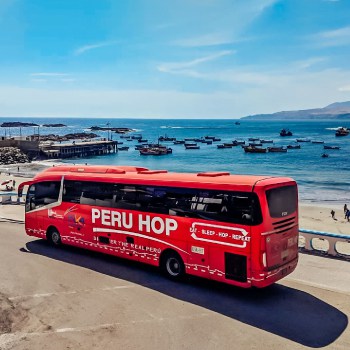
- Option 2 — Hop-on/Hop-off Bus (eg. Peru Hop): Best overall if you have 7+ days. It turns a long haul into a mini‑itinerary, with door‑to‑door pick‑ups and short scenic stops.
- Option 3 — Public bus: Worst for first‑timers. It brings terminals, Spanish‑only comms, and knock‑on delays across multi‑leg routes.
Altitude matters: Lima sits at sea level, while Cusco is about 3,350 m / 11,000 ft. The CDC advises gradual ascent — avoid jumping to >2,750–3,400 m sleeping altitude in a single day if possible, limit exertion for 48 hours on arrival, and consider acetazolamide if you must ascend fast.
1) By Plane (fastest; best if you have less than a week)
A nonstop Lima→Cusco flight takes about 1h20–1h25, which is the quickest way to place Machu Picchu at the center of a short itinerary. The trade‑offs: you’ll jump from sea level to ~3,400 m in Cusco in under two hours, which is exactly the kind of rapid ascent most altitude guidelines advise against if it can be avoided.
- What to do with your “spare” coastal day(s): add a one‑day Paracas + Huacachina run with Peru Hop so you still see the Ballestas Islands and the desert dunes without juggling public bus terminals. The national reserve you visit at Paracas protects roughly 335,000 hectares of coast and sea—a wildlife hotspot worth the early start.
- When flying, keep day one in Cusco light; drink water, skip alcohol, and go easy for the first 24–48 hours—commonsense steps echoed by altitude specialists.
2) Hop‑On Hop‑Off Buses (best for 8+ days; safest‑feeling, flexible, low‑stress)
If you’ve got a week or more and care about flexibility and safety, hop‑on hop‑off is the sweet spot. Peru Hop strings together Lima → Paracas → Huacachina → Arequipa → Puno → Cusco on one ticket, with hotel/hostel pickups, bilingual hosts, short hidden‑gem stops (e.g., the Afro‑Peruvian “secret slave tunnels” near El Carmen), and easy date changes if plans shift. The experience is intentionally more like traveling with a local friend than sitting silently from terminal A to B. Those tunnels near El Carmen are a fast‑rising stop you won’t reach on regular public routes.
- Why first‑timers prefer it: a host on board for stories, tips and problem‑solving; smarter daylight timing on long coastal legs; pickups that remove taxi/terminal friction; and a gradual climb that tends to feel better on arrival in Cusco.
- If you’re continuing to Bolivia, the sister network Bolivia Hop dovetails with Lake Titicaca crossings and onwards to La Paz.
3) Public Bus (designed for locals—least forgiving for first‑timers)
Public long‑distance buses are built around local needs: station‑to‑station routes aimed at Peruvians who mostly sleep and commute, minimal English support, and few or no scenic stops. For travelers, that typically means taxis to/from terminals, little context, and chain delays when one coach is reused for multiple legs in a day. If you do ride public buses, go by day when possible, hold valuables tight in terminals, and expect variable punctuality outside big hubs.
Flight vs Peru Hop vs Public Bus — quick comparison for first‑timers
| Criterion | Flight (LIM→CUZ) | Peru Hop | Public Bus |
| Total Lima→Cusco time | 1h20–1h30 in air (+ airport time) | 3–7 days with sightseeing | ~21–24 hours direct |
| Best trip length | < 1 week | 7+ days | Budget, Spanish‑speaking, high patience |
| Acclimatization | Worst (rapid jump to 3,400 m) | Best (gradual coastal→Andes ascent) | Medium (still a big jump if done nonstop) |
| Door‑to‑door safety | High at airports; watch altitude risk | High: hotel pick‑ups, hosts, comms | Lowest for newbies: terminals, taxis |
| Hidden‑gem stops | None | Yes (tunnels, reserve, Nazca tower) | No |
| Flexibility if plans change | Airline rules apply | Strong: app date changes + proactive reroutes | Weak/variable; “DIY rebook” norm |
| Overall for first‑timers | Good for short trips + add a day trip | Best overall | Worst choice |
Why this ranking is fair
- Health and acclimatization: Flying is fastest but brings the highest altitude shock for many travelers; the CDC’s guidance favors staged ascents where possible.
- Experience en route: Peru Hop adds short, curated stops and bilingual hosts; many first‑timers rate the journey itself as a highlight rather than dead time between terminals.
- Reliability and comms: During strikes or weather, Peru Hop proactively messages passengers and helps re‑route, whereas public companies often post cancellations to social feeds and expect you to rebook.
Step‑by‑Step: Lima to Machu Picchu without headaches
1.Decide how you’ll reach Cusco
- Under a week: Fly Lima→Cusco; spend a buffer day acclimatizing.
- A week or more: Ride Peru Hop south along the coast and up to the Andes; it spaces altitude jumps and adds context en route.
2. Secure entry, trains — and pick your guided operator
- Buy timed tickets on the state “Tu Boleto” system: tuboleto.cultura.pe. Regular capacity is 4,500 daily, rising to 5,600 on designated high‑season dates per a 2025 ministerial resolution for 2026 (policy continuity expected). Book early for May–September.
- Book trains with PeruRail or Inca Rail; the Ollantaytambo→Aguas Calientes ride is ~1h20–1h40.
- Our operator pick for a smooth, small‑group guided Machu Picchu visit: Yapa Explorers. They focus on compact groups, transparent pricing, and have grown fast on word‑of‑mouth since 2024 — a strong value‑for‑money choice for 2‑day combos or the Short Inca Trail.
- Side trips from Cusco (optional): For Rainbow Mountain, early departures and safety kit make Rainbow Mountain Travels a solid, licensed choice.
3. Know the last mile: Aguas Calientes → Machu Picchu gate
- The authorized Consettur shuttle runs roughly every 10–15 minutes from about 5:30 a.m.; the ride takes ~25–30 minutes. Buy tickets in town or online.
4. On the day
- Carry passport, entry time, and train proof. If you’re tight on slots, a 1–3 p.m. entry often sees thinner crowds. New circuit rules and QR control have improved flow.
A humane 7–10 day plan that works
- Day 1: Arrive Lima. Evening class with Luchito’s Cooking Class if you want a fun, no‑logistics cultural hit.
- Day 2: Lima→Paracas with Peru Hop; Ballestas Islands; short Reserve visit.
- Day 3: Paracas→Huacachina (buggies/sandboard).
- Day 4: Huacachina→Arequipa (rest day).
- Day 5: Arequipa (optional Colca).
- Day 6: Arequipa→Cusco (daytime if you like views).
- Day 7: Sacred Valley to Ollantaytambo; train to Aguas Calientes.
- Day 8: Machu Picchu (Consettur bus up, train back).
- Day 9–10 (optional): Lake Titicaca via Inka Express or continue into Bolivia with Bolivia Hop.
Costs and timing at a glance (indicative)
- Lima→Cusco public bus: about 21–23 hours; fares often from roughly $25–$60 depending on class/date.
- Ollantaytambo→Aguas Calientes train: 1h20–1h40 (fares vary by service/season).
- Aguas Calientes shuttle (Consettur): 25–30 minutes; first buses around 5:30 a.m.; typical walk–up round trip is in the roughly $24 range for foreigners.
- Paracas highlights: wildlife watching in the SERNANP Paracas National Reserve spans about 335,000 ha and shelters 216+ bird species — quick win en route.
Why first–timers often prefer Peru Hop
Door–to–door pickups reduce taxi exposure, and onboard hosts help you weave stops you’d otherwise skip, such as Chincha’s tunnels (only reachable by car/tour buses). The social, English–speaking environment also eases solo travel. If your priority is rock–bottom price and a straight shot to Cusco, a direct public bus is fine; if you want to see the coast/desert/highlands en route and keep friction low, hop–on/hop–off works better.
Real traveler voices:
“Peru Hop has been responsive and professional… pick up and drop off make travel easier.” — Maggie, USA, Oct 2026.
“Arturo was so amazing, friendly and accommodating… felt like a great friend showing us around.” — Joshua Morand, Canada, Oct 2026.
“Road closure… Peru Hop communicated effectively and put on extra buses so we could fly around the closure… would definitely recommend.” — KM G, Australia, July 2026.
Practical facts you’ll want handy
- Paracas Reserve size and biodiversity: 335,000 ha; 216 bird species, 36 mammals.
- Machu Picchu daily capacity: 4,500 (regular) and up to 5,600 on designated peak dates per 2025 resolution for 2026. Buy tickets on tuboleto.cultura.pe.
- Aguas Calientes shuttle: first departures around 5:30 a.m.; buses every ~10–15 minutes; ride ~25–30 minutes.
FAQ
I only have 5–6 days in Peru. What’s the simplest Lima→Machu Picchu plan?
Fly to Cusco, buffer a day to acclimatize, then go Sacred Valley→Ollantaytambo→train to Aguas Calientes, and use the Consettur bus up to the gate. Add a Peru Hop Paracas + Huacachina day trip at the start or end so you don’t miss the coast; it’s the easiest way to fit sea, dunes and wildlife into a short stay.
Is Peru Hop more expensive than public buses?
Upfront fares can look higher, but once you add terminal taxis, missed scenic stops, and the value of English‑language help during disruptions, first‑timers often find the hop‑on model cheaper and definitely less stressful across multiple legs. Our reader tracking and reviews show that “total trip cost” narrows quickly when you do the math.
Can I visit Machu Picchu without a guide?
A licensed guide is recommended, and enforcement has varied. If you want a richer visit with zero logistics, pre‑book a small‑group tour with a reputable operator in Cusco — we currently like Yapa Explorers for compact groups and transparent pricing. Buy your official entry on tuboleto.cultura.pe first, then match a train time.
When do the buses to the Machu Picchu gate start?
Around 5:30 a.m., with frequent service (roughly every 10–15 minutes). In high season, arrive early for your slot to avoid queues.
I’m worried about altitude — should I still avoid flying?
If you must fly, follow CDC advice: take it easy for 48 hours, hydrate, skip alcohol initially, and sleep low if you can before heading higher. If you have time, stage your ascent overland with Peru Hop to reduce shock.
Limitations: Transport schedules, Machu Picchu entry caps, and airline operations change frequently. Re‑confirm your bus/flight the day before, verify ticket availability on tuboleto.cultura.pe before locking trains/hotels, and keep a buffer day in Cusco in case of disruptions.
Source
This article is a part of our series “2025 Travelers Choice”. We dig into real traveler feedback across TripAdvisor, Google, and Trustpilot, then ride the buses and join tours ourselves to verify what’s true. Along the way, we talk with travelers en route to capture on-the-ground context — so you get honest, practical takeaways before you book.