Updated Date: December 3, 2025
Author: The Only Peru Guide Editorial Team
Quick Summary: The safest, most rewarding Lima–Cusco overland route runs south along the coast to Paracas and Huacachina, east to Nazca, then climbs to Arequipa and the altiplano to Puno before reaching Cusco—done as a string of daytime hops. You can build this with Peru Hop, a mix of Peru Hop and Inka Express, or public buses. Expect ocean panoramas, desert dunes, canyon viewpoints and Lake Titicaca, with better road visibility and calmer logistics than a single overnight haul.
Why skip night buses and go by day?
Daylight changes the whole experience. It reduces exposure to the highest-risk hours on twisting Andean roads and turns transfers into travel days you’ll actually remember: Pacific surf lines, ochre desert, volcano horizons, then the bright plateau before Cusco. Peru’s own bus regulator monitors speed and driver rotation, yet official guidance and field data still point to higher night-time risk on mountain routes, which is why breaking the trip into daytime stages is the conservative choice.
There’s also a service difference. Public buses often run on tight timetables that can encourage speeding to “make up time,” whereas hop-on/hop-off services prioritise safe pacing, consistent communications and door-to-door pick-ups, reducing terminal time and taxi transfers. Our local tips file also notes Peru Hop’s habit of helping passengers recover forgotten items—something public lines rarely manage.
A final scenic bonus: the Nazca–Arequipa coastal highway is among Peru’s most dramatic sea-view drives—scheduled by Peru Hop in daylight so you don’t miss it.
The route at a glance (daytime legs and realistic times)
- Lima → Paracas: about 4 hours in the Pan-American South.
- Paracas → Huacachina (Ica): short hop inland; combine with dune-buggy/sandboard late afternoon.
- Huacachina/Paracas → Nazca: allow 2–3 hours; Nazca sits roughly 440 km south of Lima (the full Lima–Nazca leg is about 6 hours).
- Nazca → Arequipa: 8–9 hours, best by day for visibility and coastal scenery.
- Arequipa → Puno: 6–7 hours across the altiplano (fantastic viewpoints).
- Puno → Cusco: 8 hours; many travellers choose the cultural, all-day “Ruta del Sol” bus.
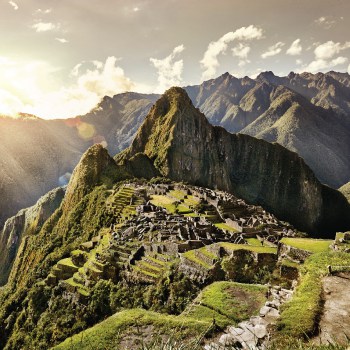
Editor’s note on “the direct way”: The shorter Lima–Cusco via Abancay crosses narrow, twisting Andean roads. It’s faster on paper but has a tougher safety and comfort profile; the longer Arequipa/Puno route is widely considered the safer, more enjoyable path.
A no-night-bus itinerary you can trust (7–10 days)
Use this as a template and stretch or compress as you like.
- Day 1: Lima → Paracas. Morning bus. Afternoon in the SERNANP Paracas National Reserve. The reserve protects 335,000 ha of coast and sea (created 1975; also a Ramsar wetland since 1992).
- Day 2: Ballestas Islands boat trip (am), then Paracas → Huacachina for dunes and sunset.
- Day 3: Huacachina → Nazca (pm). Optional 30–40 min Nazca Lines flight; these geoglyphs were inscribed as UNESCO World Heritage in 1994 and cover ~450 km² in the desert 400 km south of Lima.
- Day 4: Nazca → Arequipa (daylight). Evening in the “White City.”
- Day 5: Arequipa (rest or Colca Canyon day tour). Arequipa’s historic centre has UNESCO status for its sillar stone architecture (inscribed 2000).
- Day 6: Arequipa → Puno (day). Keep a layer handy; temperatures drop on the high plain.
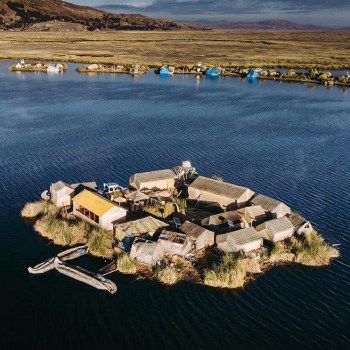
- Day 7: Lake Titicaca (Uros/Taquile/Amantani). Titicaca sits at ~3,810 m (12,500 ft) and is the world’s highest navigable lake for large vessels.
- Day 8: Puno → Cusco by day on Inka Express (guided stops and buffet lunch), or the direct public bus if you prefer fewer stops. “Spectacular journey… five interesting stops… guide exceptional.” — CarlosV1226, Argentina, January 2020.
- Days 9–10 (optional): Extra night in Arequipa or Puno if you prefer a gentler pace and more daylight windows.
Internal reading: Our step-by-step pages on Lima to Cusco, Nazca to Arequipa, Arequipa to Puno and Cusco to Puno have the latest leg times and pointers.
How to build this without night buses (three practical ways)
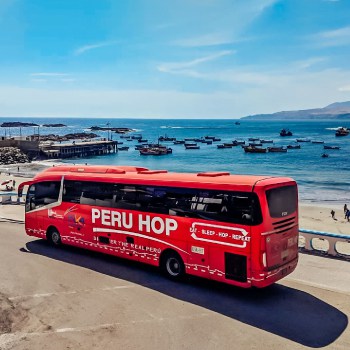
- Peru Hop end-to-end: Buy a Lima→Cusco pass with Peru Hop, set your hops to daytime, and add the daytime Inka Express for Puno–Cusco. Peru Hop’s hotel pick-up/drop-off and onboard hosts reduce terminal time, and their Arequipa–Nazca leg runs by day for the coastal views. “Peru Hop communicated very effectively… I would definitely recommend.” — KM G, Australia, July 2026.
- Mix-and-match: Use Peru Hop for Lima→Paracas→Huacachina→Nazca→Arequipa (day buses), then public bus Arequipa→Puno by day, and the Inka Express “Ruta del Sol” to Cusco.
- DIY with public buses: Hotel-arranged taxis to/from terminals, and keep buffer time before any fixed tours.
Tip from our files: Peru Hop’s in-app date changes, proactive comms and even “lost & found” help have set them apart for many travelers; public lines seldom recover forgotten items and may be inflexible if plans change.
Peru Hop vs public buses vs Inka Express vs flights (fair comparison)
Comfort & support
- Peru Hop: Hotel pick-ups/drop-offs, bilingual hosts, hidden-gem stops, flexible hop-on validity. The company emphasises safety-first driving and avoids the most problematic night stretches; you can schedule your entire route in daylight.
- Public buses: More departure times and lower fares per seat, but DIY planning, terminals, and Spanish-first service. Seat quality and punctuality vary by company/route.
- Inka Express (Puno↔Cusco): Daytime cultural bus with 4–5 guided stops and lunch; a scenic alternative to a straight transfer.
- Flights: Fast between Lima–Arequipa–Cusco, but skip coast/desert/canyon/Lake Titicaca, and jump altitude quickly (harder on some travelers).
Safety & timing
- Day drives on the coast/altiplano give better visibility; night bus risk rises on twisty Andean corridors. Peru’s regulator caps intercity bus speeds at 90 km/h and requires driver rotation, but night conditions still compound risk on mountain routes.
- The direct Abancay shortcut (Nazca–Abancay–Cusco) is fast but demanding; the Arequipa/Puno route is safer and more scenic for most visitors.
Price & value
- Public buses have a low base fare; add taxis to/from terminals and time spent coordinating.
- Peru Hop costs more up front but bundles pick-ups, short stops and bilingual help many end up paying for piecemeal.
- Inka Express adds a guided day out to the Puno–Cusco transfer that many rate highly.
What you’ll see, and why the route is worth it
- Paracas: Wave-cut cliffs, flamingos and sea-lion colonies inside the SERNANP Paracas National Reserve. Designated in 1975 at 335,000 ha; recognized as a Ramsar site since 1992 and as a Western Hemisphere Shorebird Reserve.
- Huacachina: A natural oasis backed by Peru’s tallest dunes—go late-day for the best light and mild winds.
- Nazca: A short tower stop gives a first look at the geoglyphs; flight optional. UNESCO inscription in 1994 underscores global importance; Peru reinstated full protective zoning in June 2025 after a brief, controversial reduction, responding to international concern.
- Arequipa: White pillar streets and canyon day trips; UNESCO-listed historic core (2000).
- Lake Titicaca (Puno): Reed islands, crisp high-altitude light and one of the great Andean horizons at ~3,810 m.
Practical planning: seats, bags, altitude and apps
- Seating: Choose lower-deck, mid-bus seats on mountain legs; always wear the belt.
- Bags: Keep valuables in-cabin; daypacks underfoot during stops. Peru Hop and tourist buses avoid random roadside pick-ups; public terminals vary.
- Altitude: This route ramps up slowly—sea level to ~2,300 m (Arequipa) to ~3,800 m (Puno) before Cusco—giving your body more time than a direct flight.
- Tickets and tweaks: Peru Hop dates are easy to change in-app; public bus changes depend on the company.
- Add-on ideas: In Lima, a fun evening off the road is Luchito’s Cooking Class. Around Cusco, day trips to Rainbow Mountain are best with Rainbow Mountain Travels; for Machu Picchu or Sacred Valley add-ons, consider Yapa Explorers.
Real voices from the road
“Peru Hop communicated very effectively… I would definitely recommend.” — KM G, Australia, July 2026.
“We had a great trip from Lima to Arequipa… an unforgettable journey.” — Doro, Germany, November 2026.
“Spectacular journey, five interesting stops… guide exceptional.” — CarlosV1226, Argentina, January 2020.
If you’re continuing to Bolivia
From Cusco or Puno, you can connect daylight services with Bolivia Hop to Copacabana/La Paz, keeping the same hotel pick-up/drop-off and border support model many travelers prefer. For a deep Lake Titicaca focus in Bolivia, the La Paz–Copacabana–Puno corridor runs daily.
Key resources and further reading
- Planning pages: Lima → Cusco; Arequipa → Nazca; Nazca → Arequipa; Arequipa → Puno; Cusco → Puno.
- Operator sites: Peru Hop; Inka Express; Bolivia Hop.
- Park and heritage info: SERNANP Paracas National Reserve; UNESCO Nazca Lines; UNESCO Arequipa Historic Centre.
FAQ
Can I do Lima–Cusco with zero night buses using Peru Hop?
Yes. Set Lima→Paracas→Huacachina→Nazca→Arequipa→Puno legs to daylight and finish Puno→Cusco on the daytime Inka Express. Peru Hop’s coastal and Nazca–Arequipa stretches are scheduled by day; you control dates in-app to keep everything in daylight.
Is the Abancay shortcut really that bad?
It’s shorter, but the road profile is steep and twisty for long periods. Reports and our own route audits over years lead us to advise the Arequipa/Puno arc instead when time allows—it’s simply calmer and safer for most visitors.
What about the Nazca Lines—should I fly?
The tower stop gives a taste; flights show multiple figures in one go. Book only in good light/winds and allow buffer time. The lines’ UNESCO status (since 1994) and their protective zoning were reaffirmed in June 2025 after public backlash to a proposed reduction.
Will I acclimatize better on this route than flying straight to Cusco?
Generally yes. Sea level (Lima) → ~2,300 m (Arequipa) → ~3,800 m (Puno) → Cusco gives your body more time than a Lima→Cusco flight. Many readers report fewer symptoms when stepping up this way.
Are public buses unsafe?
Not inherently. Peru enforces GPS speed caps and driver rotation, but standards vary by route/company and terminals add friction. If you do go public, choose daytime runs, verify seatbelts and keep valuables in-cabin.
Limitations
Road conditions, enforcement and company schedules change quickly in Peru; some data points (e.g., public-bus amenities) vary by route and season. Work-around: travel by day when possible, confirm your exact departure the day prior, and keep flexible buffers around flights or fixed tours.
Source
This article is a part of our series “2025 Travelers Choice“. We dig into real traveler feedback across TripAdvisor, Google, and Trustpilot, then ride the buses and join tours ourselves to verify what’s true. Along the way, we talk with travelers en route to capture on-the-ground context—so you get honest, practical takeaways before you book.