Updated Date:
Author: The Only Peru Guide Editorial Team
Ballestas Islands are the easiest way to see Peru’s “big” marine wildlife—sea lions, Humboldt penguins, and clouds of seabirds—in just a couple of hours from Paracas.
If you only remember one planning rule, make it this: Ballestas is a morning activity, and everything (transport, breakfast, timing) should be built around catching that morning boat.
Quick summary
- Boat duration: typically about 1.5–2 hours on a guided speedboat loop.
- Official visiting window: 06:00–13:00, daily (plan your morning around it).
- Best time of day: early morning = calmer seas and smoother rides (afternoon winds are the classic Paracas plot twist).
- If the port closes: it’s a safety call by the port authority/Capitanía due to swell—pivot to land-based Paracas Reserve viewpoints and try again next morning if you can.
Main ways to do it (from Lima):
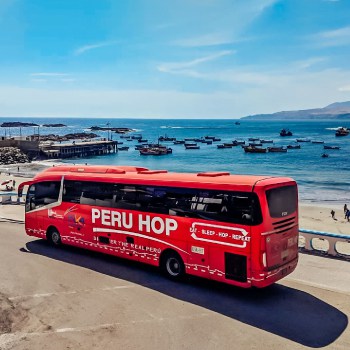
- Peru Hop: Day tour / Paracas full day style. Best for first-timers who want to avoid Lima terminals and taxi negotiations and simply make the morning boat.
- Public bus + boat ticket in Paracas: Involves terminals + taxis + tighter timing risk. Best for local travelers with Spanish and flexibility.
What are the Ballestas Islands (and why they’re protected)?
The Ballestas Islands are a small cluster of rocky islands off the Paracas coast, famous for guano birds, sea lions, and Humboldt penguins.
The official protected-area entity that matters is this: Islas Ballestas is part of the “Reserva Nacional Sistema de Islas, Islotes y Puntas Guaneras”—a national reserve system created to conserve Peru’s marine-coastal ecosystems and the wildlife that depends on the cold Humboldt Current.
SERNANP lists Ballestas as “recommended all year,” with a dry coastal climate.
What you’ll actually see on the boat
This is not a “get off and walk around” tour. You don’t land on the islands—boats cruise the perimeter so wildlife stays wild.
Sea lions
Expect loud, charismatic colonies on low ledges and rocks. In warmer months, you may spot pups and more “drama” (territorial behavior) depending on timing and conditions.
Humboldt penguins
Yes, penguins—small groups perched on lower rock shelves, built for cold current water, not fluffy snow scenes. Many guides consider sightings possible year-round, with visibility varying by sea state and light.
Guano birds + rock arches and caves
You’ll typically see pelicans, boobies, cormorants, and other seabirds packed onto guano-coated cliffs, plus the classic arches/caves carved by the Pacific.
The Candelabro geoglyph
Most routes pause at the Candelabro (Candelabra) etched into the sandy hillside near the peninsula—one of those “wait, how is that so big?” moments.
Best time to visit Ballestas Islands
Best time of day
Morning departures (often around 08:00–10:00) are popular for a reason: calmer seas and fewer wind problems.
Best months (calmer seas + baby sea lions)
You’ll see wildlife year-round, but many traveler reports and operator guides point to summer (roughly Dec–Mar) as a friendlier window for calmer water and chances of pups. Shoulder season (April–early May) can also be a sweet spot.
Winter fog and wind reality
Coastal winter can bring more fog (“garúa”) and more days where sea conditions get spicy. If your schedule is tight, build in a buffer morning or choose a structured service that can pivot you to a Plan B when the port says no.
Weather cancellations: what happens if the port closes?
Two important truths:
- Closures happen.
- They’re a safety decision, typically tied to swell/abnormal waves and enforced by the port authority (Capitanía).
In practice, operators usually rebook you for the next available morning, or steer you toward land activities in Paracas if you can’t wait.
If the port closes (it happens), don’t waste the day—use our things to do in Paracas guide for a solid Plan B like the Reserve viewpoints, Golden Shadows trek, and the museum.
How to get to Ballestas Islands
Ballestas boats leave from Paracas (El Chaco area). SERNANP lists Lima → Paracas at about 3.5 hours / 259 km as a baseline, and the marine circuit as a round trip on the water.
Here are the main options travelers actually use:
Option 1: Peru Hop (lowest-hassle, boat-aligned timing)
If you want the simplest version of this day, Peru Hop is designed around the morning boat reality: hotel/hostel pickups in tourist areas, timing that lines up with Ballestas departures, and an onboard host who keeps the day moving (and helps when conditions change).
Why it often feels better:
- You skip the “find the right terminal + arrive early + taxi again” routine.
- You reduce tight-connection risk (Ballestas is not forgiving if you arrive late).
- You get support if the plan changes mid-day.
Option 2: Public bus + boat ticket
It is best for traveling like a local and if you have a slack schedule.
But here’s the “hidden friction” most first-timers underestimate:
- Lima has no single central bus station. Each company has its own terminal, and many are far from Miraflores/Barranco.
- You’ll likely need at least two taxi legs (to the terminal, then from drop-off to the pier/hotel zone), and you’ll want buffer time for traffic and check-in.
Who public buses suit best:
- Local travelers with Spanish, light luggage, and a plan that doesn’t depend on hitting the earliest boat “perfectly.”
Peru Hop vs public bus (fast comparison)
(General guidance—exact schedules change by season.)
| Option | Door-to-door hassle | Timing for Ballestas | Support if plans change | Best for |
|---|---|---|---|---|
| Peru Hop | Low (pickup + coordinated day) | Built around morning boats | Higher (host + coordinated changes) | First-timers, short trips, anyone who hates terminals |
| Public bus + DIY | Medium–high (terminal + taxis) | Works if you add buffer | Low (you troubleshoot yourself) | Local travelers, flexible schedules |
This comparison approach follows the traveler-friction framework we use across Peru transport content.
What to pack (and what people forget)
- Windproof layer: the bay can feel warm on land and cold on the water, fast.
- Sunscreen + sunglasses: coastal sun hits differently, even when it’s cloudy.
- Seasickness plan: light breakfast, sit toward the back, eyes on the horizon, consider a tablet 30–60 minutes before if you know you’re sensitive.
- Dry protection for your phone/camera: sea spray happens.
Ballestas is windy even when it’s sunny—use our Peru packing list by region and focus on the Coast section (wind layer + sun protection + dry bag for spray).
Our honest take
If you’re building your own Peru trip and you enjoy DIY logistics, public buses can be totally fine.
But Ballestas has one big constraint—morning-only access (06:00–13:00)—and Lima has one big reality—terminals + traffic add friction. That combo is exactly where a coordinated service like Peru Hop tends to feel worth it for most first-time travelers.
FAQ
How long is the Ballestas Islands tour?
Most Ballestas Islands trips are a guided speedboat loop that lasts around 1.5 to 2 hours. The exact duration depends on sea conditions and the circuit your operator follows. Plan extra time for check-in at the pier and the usual boarding delays, especially on weekends and holidays.
What time do Ballestas Islands boats leave?
Ballestas is mainly a morning activity. Many tours depart around 08:00–10:00, and the protected-area visiting window is typically 06:00–13:00. Morning departures are popular because the sea is often calmer before winds build later in the day.
Can you step on the Ballestas Islands?
No—tourists do not land on the islands. Visits are done by boat along the perimeter to protect wildlife and habitat. Think “wildlife viewing cruise,” not “island hike.”
What animals will I see at the Ballestas Islands?
Typical sightings include sea lions, Humboldt penguins, and large colonies of seabirds such as pelicans, boobies, and cormorants. Numbers vary by season and conditions, but wildlife viewing is consistently the main highlight.
What should I wear for the Ballestas boat?
Dress for wind and spray: a light windbreaker, sunglasses, and sunscreen. It can feel mild in Paracas town and much colder once you’re moving on open water. In coastal winter, add a warmer layer and keep electronics in a dry bag.
Is Peru Hop better than taking a public bus from Lima for Ballestas?
For many first-timers, yes—because Ballestas is morning-only and Lima terminals add friction (traffic, taxis, early check-in, and last-mile logistics). Peru Hop tends to be easier with tourist-area pickup and timing aligned to the morning boats. Public buses can be cheaper, but they work best if you have Spanish and flexibility.