


Updated Date:
Author: Only Peru Guide Editorial Team
Quick Summary: If you have under a week, fly to Cusco, then add a one‑day Peru Hop coastal day trip before or after to sample Paracas and Huacachina without derailing your Machu Picchu plans. If you have a week or more, Peru Hop is the most rewarding way to reach Cusco—door‑to‑door pickups, hidden‑gem stops, and a slower ascent that helps with altitude. Public buses are the cheapest but least recommended for first‑timers due to terminals, safety/comfort variability, and zero sightseeing en route.
No trip to Peru would be complete without visiting the world-famous Machu Picchu. To get to Machu Picchu you need to first arrive at Cusco city which is the entrance gate of any journey to the Incan Citadel. Here is an extensive guide to all of the different methods on how to get to Machu Picchu which covers everything from hiking to taking the train.
The Only Peru Guide Expert Tip
Do NOT miss Huacachina Oasis on any trip to Peru. This sunny-all-year-round place must be seen to be believed and is Peru’s fastest-growing destination outside of Machu Picchu. Companies like Peru Hop run day trips to Huacachina for those who plan to fly within Peru.
Contents of this page:
- Where Is Machu Picchu Located?
- Getting From Lima To Machu Picchu (Cusco)
- Get From Cusco To Machu Picchu
- Get From The Sacred Valley To Machu Picchu
- Shuttle Buses From Aguas Calientes (Machu Picchu Town) To Machu Picchu
Where Is Machu Picchu Located?
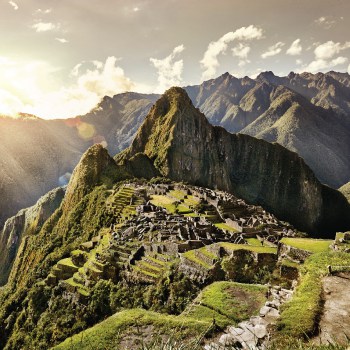
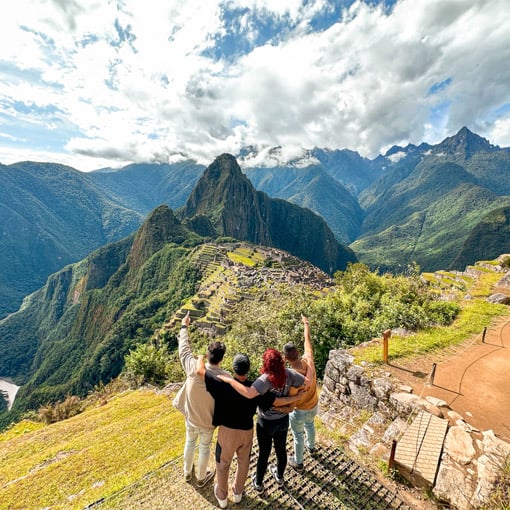
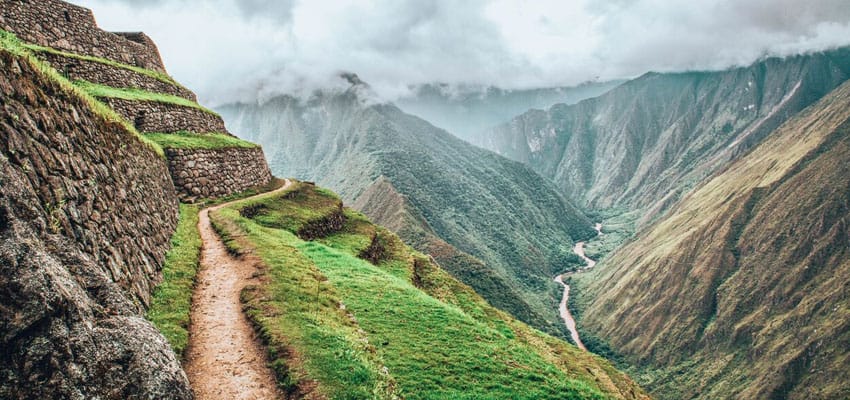
Machu Picchu sits above the town of Aguas Calientes (Machu Picchu Pueblo) at 2,430 m (7,970 ft). To reach the citadel you first travel to Cusco, then connect by train (or trek) to Aguas Calientes, and finally ride the shuttle bus or hike up to the entrance. Thousands of travelers and locals alike flock one of the Seven Wonders of the World daily to witness scenery like none other. And for that reason, there are different ways to get to Machu Picchu to suit the likes of everyone, from multiple treks to taking the train, all of which will be mentioned in this post.
Getting From Lima To Machu Picchu (Cusco)
Most people start their journey to Machu Picchu by first arriving in Lima. There are really only 2 ways of getting from Lima to Cusco and onwards to Machu Picchu which are plane and bus.
To get from Lima to Machu Picchu only traveling by train is impossible. There is a tourist train which leaves Lima once a month and only goes about one-third of the distance to Machu Picchu. From there, it is required to take public buses and transport until you get to the closest train station in Puno or Cusco to continue your journey to Machu Picchu. So this, for obvious reasons, is not really an option we can consider.
1) By Plane (best if you’re traveling less than a week)
- What it looks like: Fly Lima→Cusco (about 1h20–1h30), acclimatize gently on arrival, then take a train from Cusco/Poroy or Ollantaytambo to Aguas Calientes; finish with the Consettur shuttle up to the site.
- Smart use of a free day: If you don’t have time for a full overland route, add a coastal day trip with Peru Hop from Lima to Paracas and Huacachina to see the Ballestas Islands and the SERNANP‑managed Paracas National Reserve. The reserve spans 335,000 ha and shelters 216 bird species—an easy win if you’ve only got one spare day. .pe)
- Why this suits short trips: It’s fast, predictable, and you still catch a highlight beyond Cusco.
2) Hop On Hop Off Buses (best if you have 7+ days and value safety, flexibility, low‑stress travel)
- What it looks like: Use a hop‑on hop‑off pass from Peru Hop to connect Lima→Paracas→Huacachina→Nazca→Arequipa→(optional Lake Titicaca)→Cusco. You get hotel pick‑ups, bilingual onboard hosts, proactive comms during disruptions and short “hidden gem” stops on the way—without juggling terminals or taxis. These hosted buses emphasize a gradual ascent that many travelers find easier than flying straight to 3,400 m.
- Why we call it safest/lowest‑stress for first‑timers: On public networks, chain delays from multi‑leg buses are common; tourist buses like Peru Hop communicate proactively via WhatsApp/email and help rebook when strikes or closures affect routes. It’s designed to feel like traveling with a local friend—hosts share stories, slang, and practical tips.
- Bonus for planners: You can still bolt on the same train/shuttle combo from Cusco at the end. For a cultural Cusco–Puno add‑on, Inka Express runs the Ruta del Sol by day with guide stops.
“Peru Hop was fantastic… we felt valued and cared for… Highly recommended.” Peter, United Kingdom, October 2026.
3) Public bus (generally best left to locals with time and Spanish)
- What it looks like: Point‑to‑point coaches between big terminals (night and day services). Cheapest fare, but you self‑navigate baggage limits, terminal check‑ins, and the “taxi factor” at odd hours. Knock‑on delays are common because many companies string one vehicle across several legs a day.
- When acceptable: If you speak Spanish, have buffer days, and don’t mind A‑to‑B travel without scenic stops. Otherwise, expect higher stress for only modest savings once you add taxis, terminal time, and missed‑connection risk.
Quick Compare: Flight vs Peru Hop vs Public Bus (2026)
- Flight to Cusco
- Best for: Trips under 1 week.
- Highlights: Fastest repositioning to Cusco; pair with a one‑day Peru Hop coastal trip to still see Paracas/Huacachina.
- Watch‑outs: Higher risk of altitude symptoms on arrival; airport transfers and delays can eat into time.
- Hop-on/hop-off Buses (coast → Andes)
- Best for: 7–14 days (or more); first‑timers; solo travelers.
- Highlights: Door‑to‑door pickups, bilingual hosts, hidden‑gem stops, flexible hop‑on/hop‑off, safer feel; gradual acclimatization.
- Watch‑outs: Takes longer than flying; popular passes can be busy in peak months—book ahead.
- Public Bus
-
- Best for: Comfortable with Spanish, terminals and point‑to‑point travel.
- Highlights: Frequent schedules on main routes.
- Watch‑outs: Terminals, baggage rules, and safety/comfort vary; no curated stops or onboard assistance; again, we don’t recommend for first‑timers.
Get From Cusco to Machu Picchu
Once in Cusco, the gateway to Machu Picchu, you’ll have 3 options to choose from suiting all types of travelers:
- Guided Tour – best way to travel, least stressful
- Train – the quickest way, perfect for those short on time
- Trek – the most gratifying way, giving you beautiful scenary throughout the whole trek
- Minivan – the cheapest way, but also the most dangerous
Guided tour “operator” (stress‑free bundles)
If you prefer to outsource the moving parts—train, site tickets, bus, local guide—book a reputable Machu Picchu operator. A consistently high‑rated, fast‑growing option is Yapa Explorers, whose small‑group tours include ticket handling and well‑reviewed guides.
- “We didn’t have to worry about anything as everything was perfectly organised… It has been the highlight of our trip!” Emelineintzand, —, November 2026.
Balanced note: As with any operator, read recent reviews and confirm your exact circuit and timing at the citadel; some travelers anywhere in Peru report mis‑matched circuits or last‑minute adjustments in peak weeks.
Train
There are two main train operators offering services to Machu Picchu; the long-established company Peru Rail and the relatively new company Inka Rail. There really is no big difference between the two as both get you there and basically offer the same service.
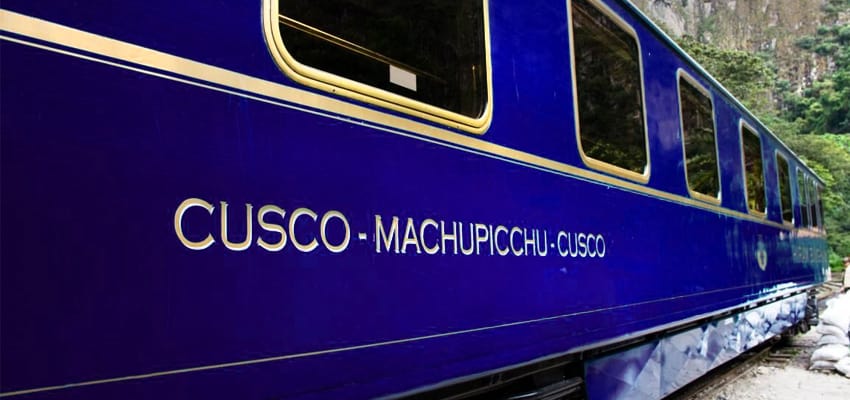
The departures to Machu Picchu are principally taken from 2 main stations: Poroy station and Ollantaytambo station.
- Taking a Train Departing Poroy Station
Poroy, a village about 25 minutes from Cusco by taxi or colectivo, is a main departure point for trains to Machu Picchu. The Peru Rail trains (3h20m) stop once at Ollantaytambo before reaching Aguas Calientes, where you then take the shuttle bus or hike up to Machu Picchu. Note: Only three early-morning services run from Poroy to Aguas Calientes. - Taking a Train Departing Ollantaytambo Station
From Cusco, travel about 2 hours by road to Ollantaytambo Station, then take a Peru Rail or Inca Rail train (1h50m, 6 am–7 pm) to Aguas Calientes. It’s best to buy tickets in advance. From Aguas Calientes, take the shuttle bus or hike up to Machu Picchu.
Bear in mind that for both options you’re going to need to book the Machu Picchu tour and shuttle bus ticket separately. To save you the hassle, we suggest you check out Yapa Explorers. They offer tours by train to Machu Picchu that include train tickets, entrance to Machu Picchu, expert guides and much more!
Treks
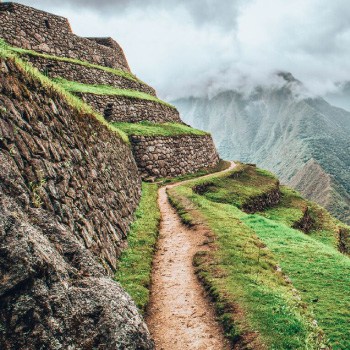
Trekking to Machu Picchu is undoubtedly the most unforgettable way of reaching the Inca citadel. Many people always say the journey matters more than the arrival and I couldn’t agree more. There are many treks to choose from, with new, undiscovered ones still popping up, and each offering you beautiful scenery. We’ll go over traveler’s favorite 3 with all the important info!
Classic Inca Trail | Difficulty: moderate
The most famous trek in South America and the only one that allows you to hike directly into the citadel. With only 500 permits issued per day, you usually have to book a spot 6 months in advance for this 4-day trek, but it sure is worth it. The 26 mile (42 km) trail connects several Incan archeological sites tucked away peacefully in the Andes mountain.
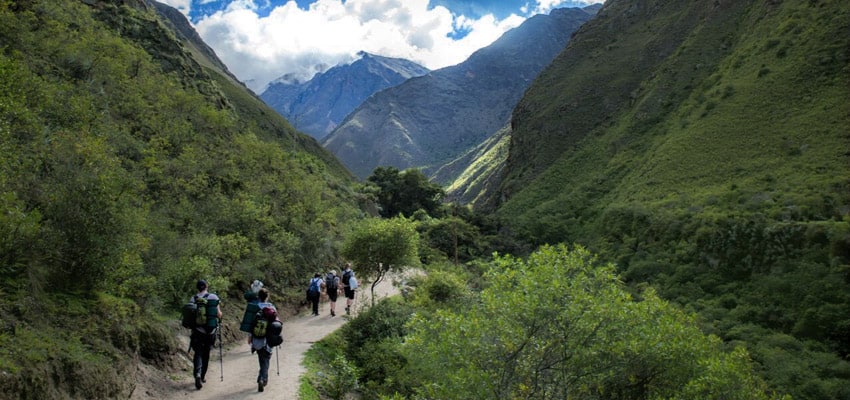
Throughout the trek, you’ll also witness Andean mountain passes, ruins, snow-capped mountains, cloud forests and much more. Prices range from $600 – $700 USD with everything included: Machu Picchu entrance, food, transport, etc. Even though it’s the most expensive trek, it is well worth it and certainly the “true” path to Machu Picchu.
Salkantay Trek | Difficulty: challenging
The alternative trek to the Classic Inca Trail, but more difficult. Named among the 25 best treks in the world by National Geographic, Salkantay has no limit of travelers and is by far considered the most beautiful of the treks that lead to Machu Picchu. The nature-rich experience will have you pass through the one the highest mountain ranges in Peru, traverse the jungle and meet local communities.

Booking a couple of days in advance should be more than enough time, with prices ranging from $250 – $350 USD all included: Machu Picchu entrance, food, transport, etc.
Inca Jungle Trek | Difficulty: easy
The most exciting and adventure-filled way to get to Machu Picchu. If you’re not a fan of treks this would be the best option for you (even though it has trek in its name, it’s nothing like a normal trek). It combines cycling downhill, river rafting, a bit of jungle trekking and ziplining.

Although it is the cheapest of the treks, it’s an unforgettable experience altogether. Prices range from $150 – 300$ and there is no need to book far in advance to have a spot on the trek.
Get From the Sacred Valley to Machu Picchu
Option 1) Urubamba Hotels – Machu Picchu
From Urubamba, take a 45–60 minute taxi or shared colectivo to Ollantaytambo. Colectivos usually stop at the main plaza, from where it’s a 3–4 minute taxi or 15–20 minute walk to the train station. Peru Rail and Inca Rail run 1h50m trains to Aguas Calientes, then a 40-minute shuttle bus takes you up to Machu Picchu.
Option 2) Ollantaytambo Hotels – Machu Picchu
This is the best option with the least amount of travel time needed. Essentially the same as above, but you simply need to walk to the train station in Ollantaytambo, which is just a short 15 minutes’ walk from most hotels in the village.
Option 3) Tambo del Inka Hotel – Machu Picchu
Guests at Tambo del Inka in Urubamba can take a direct Peru Rail Vistadome train from the hotel’s own station to Aguas Calientes (2h24m via Ollantaytambo). There is only one service each way per day with limited availability:
- Tambo del Inka → Aguas Calientes: Vistadome 601, 06:50–09:24
- Aguas Calientes → Tambo del Inka: Vistadome 304, 15:48–18:43
*Correct at the time of publication!
For an excellent combination tour including an immersive experience in the Sacred Valley before continuing on to Machu Picchu. Have a read of this tour offered by Yapa Explorers. It is a unique offering that is becoming very popular in the past 12 months. Sacred Valley and Machu Picchu tour.
Smart Planning Tips (tickets, timing, acclimatization)
- Buy entrance tickets early: Circuits, Huayna Picchu or Montaña add‑ons sell out in peak months. Peru’s Ministry of Culture confirms the high‑season cap is 5,600 visitors/day; don’t gamble on last‑minute slots.
- Queue strategy: Early mornings are busiest for buses; a mid‑afternoon entry can be calmer. Our shuttle guide explains timing and ticket pickup options.
- Acclimatize with intention: Gradual ascent, water, light meals and go easy on alcohol/exertion the first day in Cusco. If you’re crossing the Andes overland, Peru Hop makes this much easier.
Related Services Worth Knowing (balanced notes)
- Peru Hop runs flexible coast‑to‑Cusco passes and popular Paracas/Huacachina day trips for flyers. Hidden‑gem stops and onboard hosts are a plus; schedules take longer than flying.
- Bolivia Hop connects Puno/Cusco with La Paz/Copacabana; handy if you’re continuing to Bolivia.
- Inka Express operates the scenic “Ruta del Sol” tourist bus between Cusco and Puno with guided stops—an enjoyable alternative to a point‑to‑point night bus.
- Rainbow Mountain Travels offers day trips from Cusco to Rainbow Mountain—useful add‑on while you’re in the region.
- In Lima, Luchito’s Cooking Class is a well‑reviewed, hands‑on way to learn ceviche and pisco sours between travel days.
FAQs
How far in advance should I buy Machu Picchu entrance tickets?
As early as you can for the exact circuit/time you want, especially June–October. The Ministry of Culture sets a dynamic capacity—4,500 visitors/day (low season) and 5,600/day (high)—so prime morning slots and add‑on hikes can disappear quickly. If your dates are fixed, secure tickets before trains and guides.
Is flying to Cusco risky because of altitude?
It’s common to feel headachy or short of breath on day one. The widely supported approach is to ascend gradually, stay hydrated, eat light and take it slow on arrival. If you’re especially altitude‑sensitive—or simply prefer to acclimatize en route—an overland coast‑to‑Andes trip with Peru Hop helps your body adjust across several days.
What’s the simplest way to go from Cusco to Machu Picchu if I’m not hiking?
Take a taxi or transfer to Ollantaytambo, then the train to Aguas Calientes (≈1 h 50 m), then the shuttle bus up (≈30 minutes). Alternatively, when available, trains depart from Poroy near Cusco (≈3 h 20 m to Aguas Calientes). Our shuttle guide covers last‑mile details.
Is the bus from Aguas Calientes to Machu Picchu reliable in 2026?
Yes, but 2025 is a transition year. After Consettur’s concession ended, Peru’s Cabinet brokered a contingency to keep buses operating while a new process is defined, and occasional disruptions have occurred. Build buffer time for queues, and buy bus tickets the day prior in Aguas Calientes when possible.
Are public buses a bad idea?
They’re cheap and functional, but first‑timers often find the terminal logistics, variable standards, baggage fees and occasional petty theft risks not worth the savings—especially when compared with door‑to‑door options and curated stops on Peru Hop. If you do go public, research specific companies and routes carefully.
Limitations
Transport rules around the Aguas Calientes shuttle are evolving; policies and vendors could change again—verify locally 24–48 hours before your visit. Work‑around: keep a cushion before/after your Machu Picchu entry, purchase bus tickets a day early, and know the hiking route as a backup.