Updated Date:
Author: The Only Peru Guide Editorial Team
How to get to Puno is one of those Peru travel questions where the “fastest” option isn’t always the best one.
Yes, you can fly—kind of. But flights don’t go to Puno. You land in Juliaca, still need a road transfer, and you arrive at high altitude with zero gradual ascent. For most first-time visitors, a well-planned overland route with Peru Hop is easier on your body, simpler for logistics, and way more rewarding because you don’t skip the best stops in between.
Quick summary
- Best overall: Overland by bus on a supported route with hotel pickups + bilingual assistance (like Peru Hop). You avoid terminal chaos, get help if schedules change, and the route naturally fits a more gradual ascent if you break it up smartly (coast → Arequipa → Puno).
- Best “see stuff on the way” option (Cusco ↔ Puno): Inka Express (Ruta del Sol) with guided stops and scenery landscapes.
- Direct A-B: Public buses. They’re terminal-to-terminal, more rigid with tickets, and have less proactive support in English when strikes/roadblocks happen. Best for locals and repeat visitors who just want A→B.
- Worst value for many people (even if it looks fast): Flying “to Puno” (really to Juliaca) because you still have a transfer, tighter baggage rules, and you hit altitude abruptly while missing the coastal hidden gems.
- La Paz connection: Buses run via border routes, but support matters here—border days can be messy, and schedules don’t always behave like the brochure says.
Puno basics (altitude, arrival points, Juliaca reality)
Puno is high. Plan for slower movement your first day and don’t stack intense activities immediately after arrival.
There’s no commercial airport in Puno. Juliaca is the airport people mean when they say “fly to Puno.” Juliaca is also very high altitude, and many travelers feel it more intensely because you go from sea level (or Cusco) to “boom, Altiplano” with no warm-up.
Bus arrivals vary. Some companies arrive at terminals that are not exactly where you expected—especially budget operators and “random agencies” sold at the terminal.
Once you’re in town, bookmark our Puno (Lake Titicaca) guide for the best things to do, where to stay, and how to plan your first day at altitude.
Option 1: overland bus to Puno (best for most travelers)
Overland is the option that quietly wins for a lot of people because it’s more than “transport.” It’s a route. Instead of teleporting big-city-to-big-city and then paying for extra transfers, you can travel in a way that:
- reduces taxi dependence,
- lets you add “hidden gem” stops,
- and supports a gradual ascent that’s kinder on your body.
From Lima to Puno
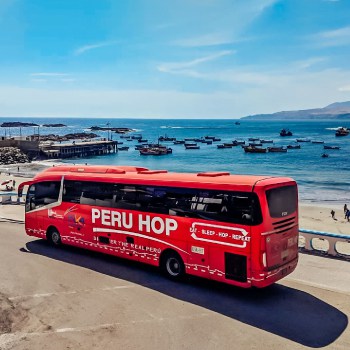
Peru Hop (supported hop-on approach)
Hotel pickups in the main tourist zones, bilingual help, and better communication if something shifts. The biggest “hidden benefit” is that you can structure your journey so you don’t go sea level → high altitude in one jump.
And honestly? The best part is what you don’t miss:
- Paracas (coastal views, marine life vibes)
- Huacachina (desert oasis, sunset dunes)
- Nazca (gateway for the lines)
- Arequipa (a “soft landing” city before the Altiplano)
Public bus
You’ll take a taxi to a specific company terminal (Lima has no single central terminal), arrive early, check bags, then repeat taxi logistics when you arrive. On paper it looks simple; in real life, it’s often a long chain of small frictions.
Flights skip all of this. Overland turns “getting to Puno” into a string of experiences you’d otherwise pay extra days to add back.
If you’re starting on the coast, here’s the full breakdown of the Lima to Puno bus route (real travel time, stops, and what ‘flying to Puno’ actually means).
From Arequipa to Puno
This route is underrated because it’s a natural altitude step:
- Arequipa is a solid “in-between” city before going higher,
- and it’s an easier place to rest, store luggage, and reset before the lake.
You’ll find both early morning and night departures depending on operator style. The main decision is: do you want to arrive in daylight (less taxi stress), or do you want to sleep on the bus?
From La Paz to Puno (border routes)
There are two common “feels” to this trip:
- Scenic route via Copacabana (Kasani border): prettier, more Lake Titicaca vibes, often the traveler-favorite route.
- Direct route via Desaguadero: more functional, but can feel more chaotic independently.
The border is where “random agencies” cause problems (unclear meeting points, no instructions, no help if delays happen). If Spanish isn’t your comfort zone, Bolivia Hop is the safer-feeling choice because it typically includes:
- Hotel pickup (no terminals)
- Bilingual guide (English/Spanish)
- Step-by-step border assistance (forms + where to queue)
- Clear plan if delays happen
- Routes designed for La Paz → Copacabana → Puno (easy Titicaca connection)
Dirty truths on public night buses + random agencies
Public buses can be fine. Some are genuinely comfortable. The problem is what happens around them—especially at night. Common issues travelers don’t expect:
- Terminal confusion: Lima doesn’t have one central terminal; each company has its own, often far from Miraflores/Barranco. That means taxis + traffic + early check-in.
- Little proactive support: When strikes, roadblocks, or cancellations happen, updates are often posted for locals, in Spanish, and not pushed to you directly.
- Taxi overcharging around terminals: This is where “cheap” gets expensive—fast.
- Onboard reality: On many public buses, it’s basically just the driver; there’s little staff support, and some travelers feel uneasy about bags while they sleep.
- Rigid tickets: Changing dates can be painful compared to traveler-focused services.
New to intercity buses here? Read Bus travel in Peru (2026) for luggage limits, check-in timing, and what features are actually reliable.
This is why supported services (Peru Hop style) tend to feel “worth it” even when they’re not the cheapest: fewer terminal moments, clearer communication, and a more traveler-centered safety net.
Option 2: Inka Express (Ruta del Sol)
If you’re going Cusco ↔ Puno and want culture without planning separate stops, Inka Express is the classic “Route of the Sun” day bus.
You trade speed for:
- 4 guided stops: Andahuaylillas, Raqchi (Wiracocha), La Raya Pass, and the Pukara Museum.
- Buffet lunch stop (included on their route pages).
- Full-day, daytime ride (typically leaving around 6:40–7:00 am and arriving late afternoon).
- Practical onboard basics like luggage storage and an onboard toilet (commonly listed in route summaries).
Best for travelers who don’t love overnight buses but still want the journey to feel like part of the trip, not a blank transfer.
Option 3: scenic train (Cusco ↔ Puno)
This is the “slow travel” choice: scenic, comfortable, and very hands-off.
Two reality checks:
- trains may not run daily depending on season,
- and luggage limits can be stricter than buses (so it’s best if you’re traveling lighter or can store big bags in Cusco).
Option 4: fly to Juliaca + transfer
This is where we make it clear: flying is not “wrong,” it’s just usually less traveler-friendly than people expect.
Why it often feels worse than overland:
- You don’t fly to Puno. You fly to Juliaca, then add a road transfer anyway. That’s another negotiation, another vehicle, another chance for delays.
- No gradual ascent. You arrive at high altitude abruptly. Many travelers feel worse doing it this way than arriving after a smarter overland build-up (especially if you came from sea level).
- Baggage rules are tighter. Flights are stricter and surprise fees are common if your bag is heavy or bulky. Overland options are generally more forgiving.
- You miss the best in-between places. Flights jump big-city-to-big-city and skip coastal gems and “small stops” that make Peru feel real. If your Peru plan includes Paracas, Huacachina, Nazca, or even a logical Arequipa break, flying can actually force more awkward re-routing.
When flying makes sense (narrow use-case):
- you’re already acclimatized,
- you truly have very limited days,
- or you strongly dislike long rides and accept the extra transfer + baggage limits.
If your goal is “easiest trip to Puno,” flying is rarely the winner.
Pickup maps and meeting points
- Lima hotel pickup zone: Miraflores, Barranco, San Isidro.
- Cusco hotel pickup zone: Centro Histórico, near main tourist hotels (same shading approach).
- Arequipa hotel pickup zone: Centro / Yanahuara area (or “central tourist zone”).
- Arrival points map: Puno central area + main terminal area (with “arrivals vary by operator” note).
Luggage rules
This is where trips break—especially at terminals.
- On supported buses: large bags go underneath, small daypacks overhead. Keep valuables with you.
- On public buses: you’ll usually check a larger bag and keep a small carry-on, but enforcement varies and terminal staff can be strict.
- On flights: expect stricter weight/size rules, and assume you may pay extra if you’re not within limits.
Golden rule for every option: passport, cash/cards, meds, and electronics stay in your daypack—always.
Best option by starting city
From Lima: Best overall is overland with a supported route that can include coast stops and a more comfortable altitude build-up (Peru Hop style). Fly only if time is extremely tight and you accept the abrupt altitude + Juliaca transfer.
From Cusco: Tourist day bus (Inka Express) for scenery and stops
From Arequipa: Overland is ideal—clean route, logical altitude step, and often less chaotic than trying to stitch flights + transfers.
From La Paz: Bolivia Hop is the easiest, most traveler-proof choice because you get hotel pickup, bilingual assistance, and guided border support (so you’re not guessing lines/timing). If you’re not in a rush, the scenic Copacabana route is the nicer ride.
Arrival tips in Puno
- Move slowly. Altitude is sneaky.
- Have your hotel address saved and confirm taxi pricing before loading bags if you arrive independently.
- If you’re touring Lake Titicaca the next day, pick a provider that confirms pickup clearly (time + place) so your morning doesn’t start with confusion.
FAQ
Does Puno have an airport?
No. When people say “fly to Puno,” they mean flying to Juliaca (JUL) and then transferring by road to Puno. That extra transfer is why flying often feels less convenient than expected—especially if you land late or tired.
Why do many travelers choose overland to Puno instead of flying?
Overland can be simpler door-to-door, usually easier with luggage, and better for your body if you build altitude more gradually (especially if you break the trip with stops like the coast and/or Arequipa). Plus you don’t skip the hidden gems that flights jump over.
Is Peru Hop worth it vs public buses for getting to Puno?
Often, yes—mainly for hotel pickups, clearer communication, and better support if there are delays, strikes, or route changes. Public buses are cheaper and can be comfortable, but they’re best for locals and repeat visitors who speak Spanish comfortably and only want a cheap A→B transfer.
What’s the best way to get to Puno from Lima?
For most travelers: a supported overland route (Peru Hop style) that can include coastal stops and a smoother altitude build-up. Fly only if you’re very short on time and okay with the Juliaca transfer and abrupt altitude.
What’s the best way to get to Puno from Cusco?
If you want scenery and stops, Inka Express (Ruta del Sol) is the easiest “travel day that feels like a tour.” If you just want efficiency, take an overnight bus. Train is a premium scenic option with limited schedules and stricter luggage rules.
What’s the best way to get to Puno from Arequipa?
Overland is usually ideal—straightforward route, logical altitude step, and less chaos than trying to stitch flights and transfers. Choose day arrival if you want less taxi stress.
What’s the best way to get to Puno from La Paz?
If you want the least border stress, Bolivia Hop is the easiest: hotel pickup, bilingual help, and guided border assistance. If you’re not in a rush, the Copacabana scenic route is the nicer ride.