Updated Date:
Arequipa altitude sits at about 2,335 meters (7,661 ft) above sea level—high enough to notice if you’re coming from sea level, but usually not high enough to ruin your trip.
If you want the smoothest Peru itinerary, think of altitude like spice: you can jump straight to the hottest dish, but you’ll enjoy it more (and suffer less) if you build up gradually.
Quick summary
- Arequipa altitude: ~2,335 m / 7,661 ft.
-
Most travelers feel fine, but you may notice: lighter breath on stairs, mild headache, or weird sleep the first night.
-
The real altitude challenge near Arequipa is often Colca Canyon, where the route can touch much higher points (and some overnight stops are above 3,600 m).
-
Best strategy: soft landing day in Arequipa, then treat Colca (and later Cusco/Puno) as “harder levels” you schedule later.
-
Getting to Arequipa:
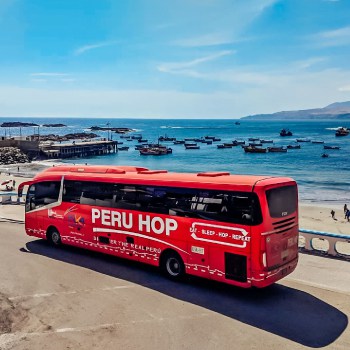
- Peru Hop is best if you want a staged, traveler-friendly route (coast → Arequipa → higher Andes) with less terminal/taxi friction.
- Flights are fastest between big cities but can still leave you tired and dehydrated on arrival.
- Public buses usually mean more taxi dependence and less help if plans change.
How we made this guide
Built around what matters in real life: sleep altitude, how you actually feel the first night, and what happens when you combine Arequipa with Colca + Cusco/Puno in one week.
We factor in practical Peru frictions travelers underestimate: early pick-ups, long ride days, dehydration, and the temptation to “do the big hike tomorrow” when your body hasn’t caught up yet.
Arequipa altitude explained
At ~2,335 m, the air pressure is lower than at sea level, so each breath delivers a bit less oxygen.
That’s why Arequipa can feel like a “moderate altitude warm-up” before the bigger numbers in Cusco and Lake Titicaca.
Is Arequipa “high altitude”?
It’s more accurate to call Arequipa moderate altitude. Many people don’t get classic altitude sickness here, but plenty still feel something, especially on day 1—because your body is adjusting.
Why some people still feel it at 2,335 m
Three common reasons:
- You arrived dehydrated (bus + dry air + not enough water).
- You pushed too hard too fast (hello, steep streets around Yanahuara or a long day at Santa Catalina).
- You stacked stressors: late arrival + heavy dinner + a couple beers + early tour pick-up.
Common altitude symptoms you might notice
Most mild symptoms feel like:
- light headache
- lower appetite
- “why am I breathing harder on stairs?” (especially if you’re hauling a backpack)
- sleep that feels shallow or restless
Symptoms often show up after a few hours at altitude, sometimes later that evening.
The easiest way to handle Arequipa altitude
Here’s the rule that makes Peru easier: be “relaxed” for 24 hours. Your trip gets better when you stop trying to prove you’re immune.
Your first 24 hours in Arequipa (soft landing)
Do:
- check in, shower, and take a slow loop around Plaza de Armas
- eat something simple (soups are an underrated local move)
- sip water steadily
- sleep early
Avoid:
- hard workouts
- heavy drinking
- turning day 1 into “walking 25k steps because the city is pretty”
If you want a calm “arrival day” before climbing higher later in the trip, this is also why starting in Lima can be smart
Day 2: choose “flat and pretty”
Day 2 in Arequipa is a great time for:
- viewpoints (Yanahuara-style pacing: short walks, lots of pauses)
- museums, cafés, and slow city wandering
- early night if Colca is next
Colca Canyon is where altitude gets real
Arequipa itself is usually manageable. Colca is where people suddenly realize: “Oh. This is the Andes.”
The big altitude points on a typical Colca route
Common reference points travelers feel:
- Chivay (a common overnight base) is often cited around 3,600+ m.
- The high pass / viewpoint stops on the road can reach around 4,900 m (Patapampa area), which is “thin air” even for fit people.
- Condor viewpoints in Colca are commonly cited in the mid-to-high 3,000s meters, so treat that morning like a high-altitude outing, not a casual stroll.
How to make Colca easier on your body
- If you’re sensitive, aim for Arequipa → Colca day trip(s) that return to lower altitude to sleep, instead of sleeping high immediately.
- If you do sleep in Chivay, keep that first evening simple: light dinner, warm layers, early sleep.
- Don’t schedule your hardest hike for the morning after your first high-altitude night.
This is also where itinerary design matters: staged routes that build altitude gradually tend to feel easier than one giant jump.
Arequipa as an acclimatization “stepping stone” to Cusco/Puno
Arequipa is one of the smartest “middle rungs” in Peru because it’s:
- high enough to start adapting
- low enough that most people can still sleep and eat normally
If your plan includes Cusco (3,399 m) or Lake Titicaca / Puno (over 3,800 m), giving yourself a couple of nights in Arequipa first can make the higher Andes feel less like a shock.
Peru Hop vs flying vs public buses for altitude + stress
Altitude isn’t just a number. It’s also how stressed and tired you are when you arrive, and how flexible your plan is if you need a slower day.
| Option | Why it can help (or hurt) altitude | Hidden frictions | Best for |
|---|---|---|---|
| Peru Hop (staged route) | Lets you build altitude in steps and adjust days if you feel rough | Fewer terminals/taxis, clearer support | First-timers, limited Spanish, travelers who want an easier “altitude ladder” |
| Flight | Fastest between big cities | You still deal with airport timing + dry cabin air + transfers | Tight trips, people who tolerate altitude well |
| Public bus | Can be comfortable on paper | Terminals + taxis + less support if delays/changes happen | Local travelers who just want A→B and don’t mind logistics |
Extra altitude tips that actually help
- Walk slower than you think you need to on day 1.
- Eat lighter early (carbs are friendly; huge meals aren’t).
- Skip alcohol for the first 48 hours at altitude—this is one of those boring tips that genuinely works.
- If you have medical conditions or a history of altitude issues, ask a clinician ahead of time about prevention options (don’t self-prescribe).
- Use “low nights” strategically: day trips higher + sleeping lower is easier on the body.
When altitude is not “normal” and you should get help
Mild symptoms can happen. But severe symptoms are not a “push through” moment.
If someone has severe headache that worsens, confusion, trouble walking straight, breathlessness at rest, or symptoms getting worse even while resting: get medical help and/or descend. That’s the universal high-altitude rule of thumb.
FAQ
How long does it take to adjust to Arequipa altitude?
Many people feel normal within 24–48 hours. If you feel off, the fastest “fix” is usually a soft landing day: gentle activity, hydration, and early sleep.
Is Arequipa high altitude like Cusco?
Not really. Arequipa is moderate altitude (~2,335 m), while Cusco is much higher (~3,399 m). Arequipa often feels like a stepping stone that makes Cusco easier later.
Can I get altitude sickness in Arequipa?
It’s less common than in Cusco or Puno, but yes—especially if you arrive dehydrated, drink alcohol right away, or head straight to Colca’s higher points.
What’s the biggest mistake people make with Arequipa + Colca?
Treating Colca like a normal day tour. The pass can reach around 4,900 m, so plan it like a high-altitude day: go easy, hydrate, and don’t stack hard hikes on top.
Should I do Colca Canyon right after arriving in Arequipa?
Consider spending at least one night in Arequipa first. It’s a simple way to reduce the shock before sleeping higher.
Is it better to fly into Arequipa or take the bus?
Flying is faster, but overland routes can be easier on acclimatization if they build altitude gradually. The best choice depends on your schedule and how your body handles altitude.