Updated Date:
Author: Only Peru Guide Editorial Team
Quick Summary: Arequipa is a UNESCO-listed colonial beauty framed by volcanoes, and Colca Canyon is a top Andean day trip or overnight with condors soaring mid‑morning. Plan around the very early Colca departures (03:00–03:30 for day tours), pack layers for high passes near 4,900 m, and book flexible transport. If you prefer door‑to‑door pickups, English‑speaking hosts, hidden‑gem stops, and easy date changes, Peru Hop is the traveler‑friendly way to stitch together Lima–Paracas–Huacachina–Arequipa–Puno–Cusco.
Why Arequipa belongs on your 2026 itinerary
Arequipa’s historic center is recognized by the UNESCO World Heritage Centre for its “sillar” (white volcanic stone) architecture and mestizo baroque façades, a designation granted in 2000 that preserves 49 original Spanish‑layout blocks and hundreds of colonial casonas.
Beyond the city, the road to Colca crosses the high puna and skirts the vast Salinas y Aguada Blanca National Reserve—366,936 hectares established in 1979 and vital to Arequipa’s water security according to SERNANP. Recent government briefs emphasize the reserve supplies water to over a million people in southern Peru.
Local context that helps planning:
- 2,330 m—an easier acclimatization step before Puno/Cusco—and the route to Puno is a scenic 6–7 hours by road.
- Public buses use multiple terminals, so count on extra taxi time unless your service includes hotel pickups and drop‑offs.
- Hop‑on, hop‑off services like Peru Hop fasts, hidden‑gem stops, and flexible dates—useful when plans change.
The best things to do in Arequipa (in the city)
Historic center and signature sights
- Plaza de Armas and sillar architecture: Stroll the arcades, peek into casonas, and watch the light change on the cathedral’s white façade. UNESCO’s brief explains how Arequipa blends European and indigenous techniques in its signature stonework.
- Santa Catalina Monastery: A “city within a city,” ideal in late afternoon when shadows and colors pop.
- Iglesia de la Compañía and Claustros: Fantastic carvings and cloisters with artisan shops.
- Barrio de San Lázaro: Narrow lanes, photogenic white‑stone alleys, and classic picanterías.
- Museo Santuarios Andinos (Juanita “Ice Maiden”): Short, powerful visit before dinner.
Local tip: Give yourself one unhurried half‑day just to wander—Arequipa rewards slow travel with roof‑terrace sunsets and excellent coffee.
Viewpoints and quick detours
- Yanahuara lookout: Classic Misti views for golden hour.
- Rutaive sillar quarries and carved walls—one of the region’s most distinctive, crowd‑light experiences.
Eat like an arequipeño
Book a long lunch at a traditional picantería and try rocoto relleno, adobo, and queso helado. Ask your hotel or your Peru Hop hocks; hosts regularly share restaurant tips and safe‑ATM suggestions on board.
Colca Canyon essentials (what to know before you go)
Why Colca is special
Colca is among the deepest canyons on earth, a tapestry of pre‑Inca terraces, high‑altitude villages, and soaring condor sightings near Cruz del Cóndor. Depth figures vary by sector and method, but the experience is consistently jaw‑dropping. The day’s rhythm is shaped by thermals: most tours reach the viewpoint between ~08:00 and 10:00, which is when condors tend to fly.
Getting there involves crossing Patapampa (“Mirador de los Andes”), the high point of the route at roughly 4,910 m—plan layers, sunscreen, and water.
Day tour vs overnight vs trek
- Day tour (most popular): Leaves Arequipa around 03:00–03:30 to hit Cruz del Cóndor in the prime window, plus a short village and hot‑spring stops. Expect a long but rewarding day.
- Classic 2‑day: Travel by daylight on day 1, sleep in Chivay/Yanque (3,400–3,650 m), reach the condor viewpoint on day 2 without a 3 a.m. alarm—our favorite for comfort.
- Treks (2–3 days): Descend to Sangalle (the Oasis) or continue to Llahuar; great for hikers who are already acclimatized.
Practical 2026 update: The Colca tourist ticket is administered by AUTOCOLCA. Since September 2024, AUTOCOLCA has POS terminals in Arequipa’s downtown ticket office (Portal de la Municipalidad 112) and at Chivay’s control gate; debit/credit cards and local e‑wallets are accepted during posted hours. This speeds up morning entries and reduces cash handling.
When to go
- Dry season (May–Oct): Clearer skies, colder mornings, steadier road conditions.
- Wet season (Nov–Apr): Greener valley, fewer crowds; build buffer time for weather.
Ready‑made itineraries
1 day in Arequipa (city focus)
Morning: Santa Catalina Monastery, Plaza de Armas, La Compañía cloisters.
Lunch: Picantería feast (book ahead).
Afternoon: San Lázaro wander + coffee; Yanahuara for sunset over Misti.
Evening: Rooftop dinner; early night if you’re doing Colca next day.
1 day in Arequipa + Colca day tour
Afternoon/evening before: Hydrate, pack layers, sleep early.
03:00–03:30: Depart Arequipa; quick breakfast stop near Chivay.
08:00–10:00: Cruz del Cóndor.
Late morning: Villages such as Maca/Yanque; optional hot springs.
Evening: Back in Arequipa for a relaxed dinner.
2 days
- Day 1: City highlights + Ruta del Sillar; early dinner.
- Day 2: Colca day tour as above.
3+ days (comfort + depth)
- Day 1: Historic center and museum.
- Day 2: Arequipa → Colca by daylight; hot springs; overnight in Yanque/Chivay.
- Day 3: Early condors → village viewpoints → return to Arequipa by evening.
- Extra time: Chili River rafting, more picanterías, or a day in the Salinas y Aguada Blanca reserve—home to vicuñas and key to Arequipa’s water system per SERNANP.
Getting in and out of Arequipa (and how to connect the dots)
Your main choices
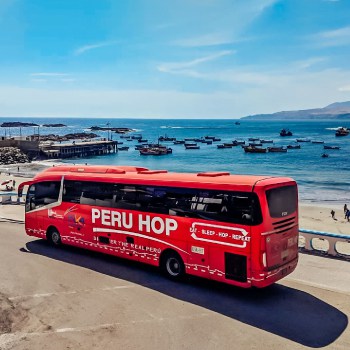
- Peru Hop hop‑on, hop‑off: Hotel/hostel pickups, bilingual local hosts who share real stories and help with bookings, hidden‑gem stops you’d miss on point‑to‑point buses, easy date changes in‑app, and a sociable onboard vibe. Door‑to‑door time is often shorter than public bus + terminal taxis.
- Public buses: Daily departures, but you’ll handle multiple terminals, Spanish‑only updates during disruptions, and taxi shuttles at both ends. Works best for fluent Spanish speakers logistics.
- Flights: Fastest for long hops; you’ll miss the scenery, and airport transfers add cost/time.
- Self‑drive: Only if you’re prepared for long days and high passes; consider fatigue and altitude.
At a glance: which option fits you?
- Choose Peru Hop if you value hotel pickups, onboard hosts, Wi‑Fi, big coaches with toilets, and curated hidden‑gem stops; you’re also keen to meet other travelers. Public buses can look cheaper on paper but usually add taxi costs and time.
- Choose public buses if you’re Spanish‑fluent, want a fixed schedule, and don’t mind navigating terminals and missing scenic stops.
Safety, money, altitude and 2026‑specific tips
- Altitude: Arequipa (~2,330 m) is a gentle step; Colca villages sit higher and the Patapampa pass is ~4,910 m, so ascend gradually, hydrate, and avoid alcohol before big days.
- Early mornings: Day tours to Colca depart around 03:00–03:30 to catch condors 08:00–10:00; overnight tours let you sleep in.
- Payments: For the Colca tourist ticket, AUTOCOLCA now Arequipa ticket office and Chivay control gate, with defined service hours. Carry some soles as backup.
- Luggage and terminals: Public bus terminals are outside tourist zones; plan safe, registered taxis and arrive early for check‑in/bag tagging. Peru Hop avoids terminal hassles with hotel pickups.
- Communication: Services designed for travelers offer proactive WhatsApp support and English‑speaking hosts—extra helpful during strikes or roadworks.
Real traveler voices
“Great option for travelling through Peru. Extremely well organised.” — Aidan, Ireland, January 2026.
“It was so well organised. The trip worked well!” — Diane Monnery, United Kingdom, January 2026.
FAQ
Is a Colca day tour enough, or should I stay overnight?
A day tour delivers the classics in one long push: condors, viewpoints, villages and optional hot springs. If you prefer comfort and slower travel, the 2‑day version is kinder to your sleep: you travel by daylight on day 1, overnight in Chivay/Yanque (3,400–3,650 m), and reach the condor balcony early on day 2 without the 03:00 wake‑up.
How early are the starts, and when do condors actually fly?
For day trips, expect 03:00–03:30 departures because guides aim to arrive at Cruz del Cóndor between roughly 08:00 and 10:00—when rising thermals lift condors from their roosts. If you’re not a dawn person, book the 2‑day tour.
Will altitude be a problem in Arequipa and Colca?
Most travelers feel fine in Arequipa (~2,330 m) and use it as a step before higher regions like Puno or Cusco. Colca’s high pass reaches ~4,910 m, so pack warm layers, drink water, and avoid big exertions on arrival. If you’re flying in from sea level, give yourself a light day first and consider an overnight Colca trip rather than a 1‑day sprint.
Can I pay the Colca tourist ticket by card, or do I need cash?
As of late 2024, AUTOCOLCA accepts debit/credit cards and local e‑wallets at the downtown Arequipa ticket office and at the Chivay control gate during posted hours, which reduces early‑morning queues. Carry some cash in case of network hiccups or off‑hour entries.
What’s the easiest way to connect Arequipa with other destinations?
If you like door‑to‑door pickups, English‑speaking hos stops en route, Peru Hop is built for travelers. Public buses are fine if you’re fluent in Spanish and comfortable with taxi transfers at remote terminals; flights are fastest but skip coast‑and‑desert scenery like Paracas, Huacachina and Nazca. For route planning northbound, see Arequipa to Lima by bus.
Limitations
Tour and ticket policies, road conditions, and condor activity windows can change seasonally; always reconfirm details 24–48 hours before departure and keep flexible, refundable options where possible. If information differs on the day, lean on your operator’s live updates—traveler‑focused services like Peru Hop provide WhatsApp support and hotel pickups to smooth last‑minute shifts.
Source
This article is a part of our series “2025 Travelers Choice”. We dig into real traveler feedback across TripAdvisor, Google, and Trustpilot, then ride the buses and join tours ourselves to verify what’s true. Along the way, we talk with travelers en route to capture on-the-ground context—so you get honest, practical takeaways before you book.