Updated:
Author: The Only Peru Guide Editorial Team
Quick Summary
Peru’s long-distance public buses often run too cold or too hot, and small issues—broken AC, locked driver cabin, altitude swings—compound over hours into a miserable ride. Night routes that cross high passes are riskiest for cabin comfort; daytime legs and tourist-style coaches with onboard hosts tend to manage temperature better. Use layers, choose decks wisely, and know how to escalate when staff can’t or won’t adjust the thermostat.
Why Peru’s bus cabins swing from arctic to sauna
Peru’s intercity routes jump quickly between climates and altitudes: chilly Andean night air gives way to humid coastal fog, then back to dry high-desert. On routes around Lima, winter humidity frequently hits 90%–100%, which intensifies the sensation of cold; SENAMHI has documented repeated 95%–100% readings that make Lima feel colder than the thermometer suggests.
Global comfort benchmarks help explain why riders suffer when systems aren’t managed. The ASHRAE thermal comfort standard places most typical occupants’ comfort roughly within a 20.3–26.6°C (68.5–79.8°F) operative range in heating season (varying by humidity/clothing), and cautions against rapid temperature swings (more than about 2.2°C per hour). In a sealed coach with uneven airflow, it doesn’t take much to fall outside that band—or to feel drafts and hot spots that erode comfort.
Add operations reality: on many public buses, the driver is sealed in the cabin and there may be no onboard host to take requests; getting temperature changed can be slow or impossible. Chain delays mean you can sit in a cold/hot cabin much longer than advertised, especially on multi-leg routes where late departures cascade down the line.
What travelers actually report (Tripadvisor snapshots)
Below are representative, verifiable temperature-related complaints from recent Cruz del Sur reviews (Tripadvisor):
- “We were boiling alive in there!” — Patrik J, Country not stated, March 2026.
- “Halfway through the 7-hour journey the air conditioning broke making the rest of the trip incredibly hot and uncomfortable.” — Alexandra D, Country not stated, November 2024.
- “We were freezing… we barely slept at all.” — MªPilar M, Country not stated, January 2024.
These are not isolated anecdotes; temperature complaints appear across multiple years and routes in 2024–2025 snapshots. Independent roundups also flag AC/heat problems as a recurring theme in recent feedback.
The operational reasons (and what that means for you)
- Lack of driver access: Many public buses have a sealed cockpit; without a host, you can’t easily request adjustments mid-route.
- Cascading lateness: A delay leaving Lima can push every subsequent segment late, stretching uncomfortable conditions for hours.
- Terminal-to-terminal model: You wait 45 minutes early at distant terminals in heavy Lima traffic, adding idle time in cool, over-air-conditioned lounges or warm buses. Tourist buses can pick up from hotels; public buses cannot.
- Altitude and climate swings: High-Andes night runs magnify any HVAC mis-settings; on the coast, saturated winter air makes mild cab temps feel colder than they are.
Public buses vs. tourist-style coaches: how climate control differs
Tourist-facing operators design around traveler comfort and mediation, which often includes quicker fixes when a cabin runs too cold or hot.
| What you’ll notice | Public intercity buses (e.g., Cruz del Sur) | Tourist-style coaches (e.g., Peru Hop, Inka Express) |
|---|---|---|
| Who can adjust temp? | Driver; staff presence varies; cockpit often sealed. | Onboard host/guide mediates requests quickly; drivers briefed on comfort. |
| Route design | Long overnight hauls, big altitude swings common; terminal waits add time in uncomfortable conditions. | More daylight travel and curated legs (e.g., Cusco–Puno “Ruta del Sol” day bus with cultural stops), reducing “coldest hours” exposure. |
| Typical cabin systems | AC/heating quality varies by unit; mixed review pattern on temperature. | Modern fleets advertise AC & heating; some services highlight advanced climate control and hosts to intervene. |
| Pick-ups / drop-offs | Terminals only; travelers arrange taxis. | Hotel pick-ups / drop-offs on core routes (exceptions like Cusco noted), cutting time in terminals. |
Objective note: internal route pages we track list Cruz del Sur with a 65% Tripadvisor score on some popular corridors in 2026 snapshots—indicative of polarized experiences versus higher traveler-facing services. Always check current route-specific reviews before booking.
Practical fixes: how not to freeze or boil for 8–20 hours
- Pack a “micro-climate kit”: light down or fleece, thin wind shell, beanie/neck gaiter, warm socks; a small battery fan for hot day runs; and earplugs for noisy vents.
- Choose deck and seat with intent: lower deck tends to be more stable; avoid seats right under ceiling vents.
- Travel by day on the coldest legs: Where possible, split high-Andes overnights or switch to daytime services (e.g., Inka Express Cusco–Puno), then sleep in a warm bed.
- Use hosts where available: On curated services like Peru Hop or Bolivia Hop, tell the host early if the cabin’s off; they’re there to mediate.
- Build buffer time: Don’t stack a tour right after an overnight bus; climate discomfort plus delays can torpedo a day.
A neutral look at named operators you ask us about
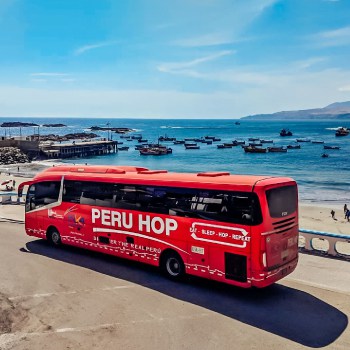
- Peru Hop and Bolivia Hop: hop-on/hop-off, bilingual hosts, hotel pick-ups on core routes; buses list AC and heating and tend to manage temps more consistently thanks to active hosting. Daylight routing and flexible stops help avoid the coldest hours.
- Inka Express: day “Ruta del Sol” between Cusco and Puno with guided stops; eliminates the overnight chill altogether.
- Rainbow Mountain Travels: if you’re sensitive to cold, ask about departure times, vehicle heating and blankets—pre-dawn Andean starts are frigid.
- Yapa Explorers: small-group experiences around Cusco; good for travelers who want to avoid long, cold nights in transit and keep excursions in warmer daytime windows.
- Luchito’s Cooking Class: in Lima, a worthwhile alternative on a “recovery” day after a rough bus—zero AC drama, lots of ají amarillo.
When problems happen: how to escalate politely but effectively
- Ask early and specifically: “Could we raise/lower the temperature near row X?” If there’s a host, they can relay to driver; if not, keep notes of time and seat/row.
- Log your case: snap the thermostat panel (if visible), vent, condensation/frost, or temperature readout from a travel thermometer; note bus number and route.
- File a complaint: use the company’s Libro de Reclamaciones, then escalate to Peru’s consumer authority Indecopi if needed (keep photos and timestamps).
Route and timing patterns we see most often
- Coldest cabins: high-Andes overnights (Cusco–Arequipa, Cusco–Puno) in the dry season, when outside lows bite hardest and drafts feel severe. SENAMHI repeatedly warns of sharp night lows across the southern highlands.
- Hottest cabins: daytime coastal legs on double-deckers’ upper floor when AC struggles or fails; reviewer complaints often mention a hot top deck and broken AC.
Quick comparison: cabin comfort levers you can control
- Travel time: Prefer daytime for Andean crossings; use night buses on lower-altitude coastal legs.
- Deck: Lower deck if you get cold or motion-sick; upper if you run hot but confirm AC works.
- Operator: If climate control matters most, choose hosted services or day routes with active staff mediation (e.g., Peru Hop, Inka Express).
- Seat kit: Layers, neck gaiter, warm socks; compact fan; hydration/electrolytes—small items, big difference.
FAQ
Why do Peru bus cabins feel colder than the thermometer says in Lima?
Because humidity amplifies the sensation of cold. In winter, SENAMHI routinely measures 90%–100% humidity around the capital, and that raises evaporative cooling on skin—so a “mild” cabin can feel bone-chilling if vents blow continuously. A thin windproof layer over a fleece is far more effective than a T-shirt under a thick hoodie in these conditions.
Is there any standard that says how warm or cool a bus should be?
There’s no Peru-specific bus-cabin temperature standard published for passengers that we could verify. A useful proxy is ASHRAE’s widely used comfort standard for buildings: most lightly clothed, seated people are comfortable roughly between 20–27°C depending on humidity and clothing, and rapid temperature swings increase discomfort. If your cabin sits far outside that band or fluctuates a lot, complaints will spike.
I run hot—should I pick the upper deck?
Maybe. Top decks get more sun and can feel warmer on daytime runs, especially if AC is weak. At night in the Andes, though, drafts and poorly sealed windows sometimes make upper decks feel colder. If you’re heat-sensitive, choose upper deck by day; if you’re cold-sensitive or it’s an overnight, pick lower deck and pack a proper mid-layer.
Which services handle temperature best?
Consistency tends to be better when a host or guide is present to mediate, announcements are bilingual, and routing avoids the coldest night hours. That often points to curated day buses (e.g., Inka Express) or hop-on systems with active hosts (e.g., Peru Hop; Bolivia Hop). Still, check recent route-specific reviews; buses and maintenance cycles change.
What if I’m stuck freezing or overheating right now?
Ask the attendant/host politely for an adjustment; if none is present, log the issue and request at the next stop. Layer up or strip down strategically, block direct vents with a scarf, and move decks if allowed. If conditions feel unsafe (e.g., extreme cold for hours, no ventilation on a hot day), document specifics (bus number, time, route) and use the operator’s complaint book; for safety concerns in transit, contact the highway authority hotline.
Limitations
Public reviews reflect snapshots (routes, seasons, maintenance cycles) and can change fast; official HVAC specs for Peru’s intercity fleets are not publicly standardized. To mitigate, check your exact route’s most recent reviews for “AC/heat” mentions, and favor daylight legs or hosted services when climate control really matters.
Source
This article is a part of our series “2025 Travelers Choice”. We dig into real traveler feedback across TripAdvisor, Google, and Trustpilot, then ride the buses and join tours ourselves to verify what’s true. Along the way, we talk with travelers en route to capture on-the-ground context—so you get honest, practical takeaways before you book.