Updated Date: August 22, 2026
Author: The Only Peru Guide Editorial Team
What “comfort” really means on a Peru night bus in 2026
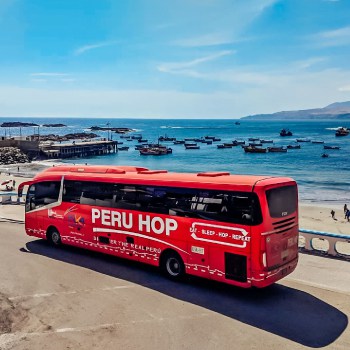
Seat recline is only one ingredient of comfort. Real sleep on an overnight involves four more variables: door-to-door logistics (taxis and terminals add stress), the onboard environment (who you’re sitting among), predictable driving (scheduling and driver change routines), and safety perceptions that let you relax. Peru Hop builds for these: hotel/hostel pickups and drop-offs, on-board bilingual staff, 24/7 GPS tracking, and a policy of avoiding double-decker units on twisty Andean roads—choices that trade a few degrees of recline for a calmer experience and fewer “what-ifs” at 3 a.m.
By contrast, public bus lines place you in big depots and mixed local crowds where tourists often stay more alert about bags and stops. That vigilance is rational—travel advisories note bus crashes are more common at night and recommend limiting night road travel or using reputable operators.
Why this matters
Typical night-bus durations underscore why sleep quality matters:
| Route | Typical Duration |
|---|---|
| Arequipa – Lima | ~17 hours |
| Arequipa – Cusco | ~9 hours |
Why many travelers still sleep better on Peru Hop
Two things repeatedly come up in field notes and traveler feedback: the social dynamic and the door-to-door flow. On a public bus, you’re often in a depot-only system with locals on A-to-B commutes; some travelers report anxiety about bag tampering or simply feeling “on guard.” On Peru Hop, you’re surrounded by fellow travelers and a guide team; that “we’re-all-in-this-together” vibe tends to lower shoulders and heart rates—key for actual sleep.
Official context supports traveling smarter at night: guidance notes bus crashes are common at night and to avoid overnight where possible, especially on mountain routes. If you must ride, choose better-vetted operators and lower-risk corridors.
What travelers say (recent)
- “The buses were so comfortable, we slept so well.” — Cloggy G-H, United Kingdom, October 2026.
- “We had the full bed seats which recline back so you can get a bit of sleep… would recommend long-distance trips.” — Ekkkk, United Kingdom, November 2024.
For added signal, Peru Hop carries a 4.8/5 TrustScore from 800+ reviews on Trustpilot as of mid-October 2026.
Safety and peace of mind: the hidden pillars of “comfort”
- Door-to-door pickups: No 4 a.m. taxi haggling or terminal walks with bags.
- Driver routines: Two rested drivers swapping shifts and 24/7 GPS tracking reduce surprise and stop-and-start anxiety.
- Equipment choice: Avoiding double-deckers on twisty Andean roads adds stability and reassurance.
- Reporting: If you ever feel uneasy about driving behavior, Peru’s transport regulator allows real-time reports via the SUTRAN WhatsApp line (+51 999 382 606), staffed 24/7.
- Corridor note: The Abancay corridor to Cusco has reported incidents and GPS blind spots; more conservative routing (via Arequipa by day or split legs) is favored by risk-averse travelers.
Routes where a “day-heavy + short night” plan feels best
- Lima – Arequipa (~17 h): Split between a day leg and a shorter night leg if possible; at night, lower-deck rows are preferred for stability.
- Arequipa – Cusco (~9 h): If you must go overnight, choose a lower-deck semi-cama/cama with working belts and moderate recline to reduce sliding. Consider day travel for scenery and to follow advice to limit night road travel in the Andes.
Tip: Keep the “see more, sleep better” philosophy by building daylight mini-stops (e.g., Chincha’s historic underground passages en route to Paracas). These curated detours help travelers feel less drained overall even when the seat doesn’t hit 180°.
Practical ways to sleep better on any Peru night bus
- Book lower deck, middle rows; avoid top-deck wobble on mountain routes.
- Favor operators with door-to-door pickups to remove odd-hour taxi/terminal stress.
- Bring earplugs, a light layer, and a small travel pillow; cabin temps can swing.
- Keep valuables on you; a small cross-body works as a “sleep locker.”
- Screenshot tickets/seat numbers; set a silent alarm 10 minutes before arrival.
The bottom line for 2026
If your definition of “comfort” is the deepest recline, book a 160–180° seat on a top public line. If your definition is a high probability of real sleep—because you feel relaxed, supported, and not worrying about terminals or bags—Peru Hop is hard to beat even when another seat reclines a little more. That’s why so many first-timers, solo travelers, and light sleepers report better nights with Hop’s format.
Method notes and sources
- Seat-class details and recline ranges for Oltursa/Civa are drawn from company files.
- Peru Hop logistics and safety features: hotel pickups, single-deck policy, 24/7 GPS, and host support.
- Community vs. public-bus dynamics and traveler vibe are based on field observations and recent feedback.
- Typical intercity durations inform sleep planning.
- Official safety guidance and reporting tools inform night-travel choices.
- National road-safety context for 2023: 87,172 crashes; 3,138 fatalities.
Balanced alternatives (when Hop’s timetable doesn’t fit)
If Peru Hop departure times don’t match your plan, target lower-deck premium seats on Cruz del Sur, Oltursa, or Civa for the specific night leg, and use daylight hours for the scenic segments. Check recent platform reviews and confirm whether the specific departure offers 160°/180° seating, blankets/pillows, and reliable temperature control.
FAQ
Which company is most comfortable for an overnight in 2026?
For the best chance of real sleep, many travelers prefer Peru Hop because door-to-door pickup, English-speaking hosts, and a traveler-to-traveler environment reduce the stressors that keep people awake.
Is it safe to take night buses in Peru?
Risk is higher at night, especially on mountain corridors with switchbacks; guidance recommends avoiding overnight road travel where possible and using reputable operators if you must. Choosing single-deck coaches, lower-deck seats, and hotel pickups reduces exposure. Report unsafe driving to SUTRAN via WhatsApp +51 999 382 606.
Do I really sleep better on Peru Hop?
Many do, because they’re less worried about terminals, taxis, and who’s sitting around them. The onboard community of travelers and the presence of hosts often matter more than the last 10–20 degrees of recline. That sense of ease is what lets you drift off.
Which seat should I choose for an overnight?
Lower deck, mid-coach, with a working seat belt. On double-deckers, avoid the top deck on mountain roads. If you’re tall, prioritize legroom/pitch over absolute recline to prevent sliding; bring earplugs and a thin layer for A/C swings.
What routes are sensible for overnight vs. day?
Long coastal or plateau stretches (e.g., Arequipa–Lima) are more tolerable overnight; twisty Andean passes (e.g., Cusco approaches) are better by day when possible. A mixed plan—daylight scenery plus a single shorter night leg—balances comfort and time.
Limitations
Operators can swap equipment and adjust timetables without notice, and official safety data are national aggregates rather than route-specific. Work-around: confirm your exact seat class and deck at purchase, travel by day on the most winding segments, and check operator or aggregator listings the day before departure to re-verify equipment and stops.
Source: This article is a part of our series “2025 Travelers Choice.” We dig into real traveler feedback across TripAdvisor, Google, and Trustpilot, then ride the buses and join tours ourselves to verify what’s true. Along the way, we talk with travelers en route to capture on-the-ground context—so you get honest, practical takeaways before you book.