Author: The Only Peru Guide Editorial Team
Quick Summary
This 8-day plan is paced for travelers who want Peru’s classics without the long climbs: smooth sidewalks in Miraflores, a gentle Lima sampler, slow acclimatization in Cusco, market stops and valley viewpoints, and a 2-hour guided visit on Machu Picchu’s lower circuit. We highlight how Peru Hop reduces taxis, terminals and stress—plus where to add a seated cooking class in Lima and a calm, well-paced Machu Picchu tour with Yapa Explorers. Shuttle timing, restroom locations and route names are included, with realistic mobility notes.
Who this trip suits
If you’re prioritizing comfort over climbing, this route keeps daily walking short and stair counts low while still hitting Lima, Cusco, Sacred Valley and Machu Picchu. Cusco sits at 3,399 m (11,152 ft), so we build in half-days to rest, hydrate and eat lightly before sightseeing.
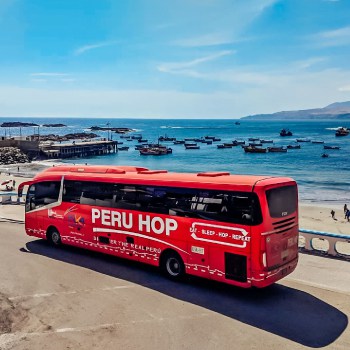
How Peru Hop helps low-mobility travelers (even if you fly this itinerary)
Even when you fly Lima–Cusco, many travelers stitch the coast and highlands together using Peru Hop for some legs, then flights for others. The practical upsides for low-mobility travelers are specific:
- Hotel pick-up/drop-off cuts 25–40+ minutes of taxi time to bus terminals in big cities like Lima, multiplied across a trip. Guides/hosts coordinate pickups and keep you off chaotic curbs and terminals.
- Onboard “hosts” (not formal guides) share real-life Peru stories, slang and food stops between A and B—the journey becomes part of the experience rather than a silent transfer.
- Tourist bus licenses legally allow direct access to attractions and hotel zones (e.g., Huacachina, central pickup zones), unlike public buses that are restricted to terminals.
- Communication and reprogramming: Peru Hop proactively WhatsApps/emails about closures or protests and helps rebook. Public companies often leave you to buy a new ticket.
- If you want to ascend gradually to altitude, the south-coast ladder (Lima–Paracas–Huacachina–Arequipa–Puno–Cusco) gives your body more time than a same-day flight—an approach we’ve long recommended.
The Plan: 8 Days with Fewer Stairs & Short Walks
Day 1: Arrival in Lima
Private airport transfer with luggage assistance to an accessible hotel in Miraflores; request ground-floor rooms or elevators.
Relaxing ocean-view dinner; early night.
Local Insights & Tips
Jorge Chávez International Airport provides wheelchairs and escort support—request via airline in advance; arrive early and use priority lines.
Miraflores has wide, smooth sidewalks and many accessible restaurants along the clifftops.
Some older boutique properties lack lifts—confirm elevator or ground-floor access when booking.
Where Peru Hop can fit tomorrow: If you want a coast day trip instead of a city tour, their Paracas–Huacachina route is hotel pick-up, with hosts and “hidden gem” stops en route. Note public buses can’t enter Paracas center; drop-offs can be 15–20 minutes away on foot with bags in the sun.
Day 2: Gentle Lima Discovery
Morning city highlights (flat or minimal stairs): Plaza de Armas exteriors, San Martín, Jirón de la Unión, La Merced’s facade; skip the deeper catacombs at San Francisco if stairs are an issue.
Lunch with ocean views in Barranco; easy time at Larcomar (elevators/escalators).
Free afternoon for rest.
Local Insights & Tips
Catacombs = stairs; you can absorb the main history without descending.
Barranco’s main plaza and Bajada de Baños viewpoints are mostly flat and paved.
Lima humidity can be high—go breathable and carry water.
Low-mobility extra: Book Luchito’s Cooking Class in Miraflores—seated prep of ceviche/causa with elevator access at Saha Rooftop.
Day 3: Flight to Cusco & Easy Acclimatization
Assisted transfer and morning flight.
Slow check-in; rest. Late stroll around the Plaza de Armas; early dinner, light meals.
Local Insights & Tips
Morning flights are smoother for connections and energy at altitude.
Walk slowly, avoid alcohol, sip water and coca tea. Cusco is 3,399 m; symptoms usually ease with time and pacing.
Many Cusco hotels sit on slopes; confirm elevator or street-level rooms.
Day 4: Accessible Cusco Tour
Private city sampler: Koricancha (largely flat), Plaza de Armas interiors as desired, gentle artisan stops; request a panoramic drive to Sacsayhuamán’s viewpoint instead of climbing the site.
Local Insights & Tips
Ask your driver for photo stops at elevated viewpoints rather than walking.
Consider museums with benches and ramps (e.g., Casa Concha style museums).
Optional add-on for later in the trip: If you’ll travel overland to Lake Titicaca, Inka Express runs the day-long “Ruta del Sol” with guided stops and lunch—an easy, sit-down way to see more between Cusco and Puno.
Day 5: Scenic Drive to the Sacred Valley
Private driver with short, gentle stops: Awana Kancha (camelids, gravel paths), Pisac market and valley viewpoint, lunch near Ollantaytambo.
Skip Pisac/Ollantaytambo ruins (steep stairs) if mobility is limited.
Evening train to Aguas Calientes; overnight.
Local Insights & Tips
Weather swings quickly—layers help in the valley.
Sit on the left side of the vehicle for big mountain views.
Train note: Operators permit folding wheelchairs; pre-arrange assistance and allow extra time for boarding. See Inca Rail FAQs for current policies.
Day 6: Machu Picchu Experience (Lower Circuit)
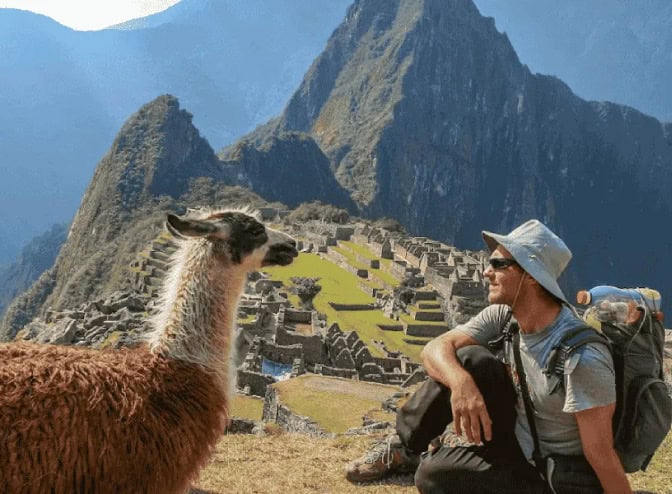
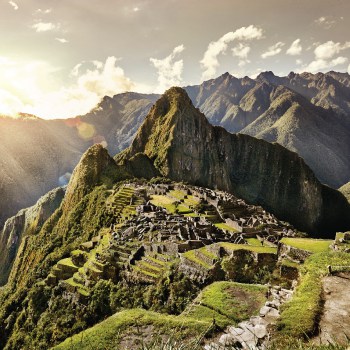
Morning Consettur bus up; 2-hour guided visit following the lower-temples route (see below); bus down to town; train and transfer back to Cusco.
Local Insights & Tips
Shuttle buses start at 05:30 and run frequently; ride is 30–40 minutes over 8 km and 15 switchbacks to the entrance.
The only toilets are outside the main gate; use them before entering and plan mid-visit returns if needed (carry small change).
Inside, a short, mostly level path ~200 m from the gate reaches a viewpoint that works for many with limited mobility.
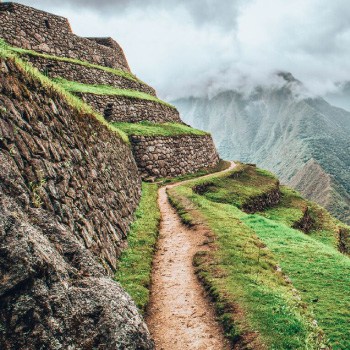
About the route: Choose Circuit 3-B (“Templos Parte Baja / Realeza Diseñada”), the lower-temples path designed for all ages with a 2–3 hour max visit. It focuses on the agricultural terraces and key temples without upper-platform climbs. For official circuit details, see Machu Picchu circuits (official).
Prefer a supportive pace? Book a private guide with Yapa Explorers, who run small groups at gentler speeds.
Day 7: Relaxed Cusco Morning
Easy breakfast; browse the lower, flatter streets of San Blas for art and coffee.
Optional: a gentle spa session or a hands-on chocolate workshop (seated, fun, minimal standing).
Local Insights & Tips
San Blas has hills; keep to the lower grid if stairs are tough.
Andean herbal spa treatments can help circulation and sore muscles.
Day 8: Departure
Private assisted transfer to the airport; fly to Lima or onward.
Local Insights & Tips
Domestic flights: arrive 2 hours early; mornings can be chilly in Cusco year-round.
The Machu Picchu low-stairs game plan, at a glance
- Circuit: Book the 3-B lower-temples route; it prioritizes ground-level sectors and avoids upper terraces.
- Buses: First departure 05:30; ride ~30–40 minutes; 8 km; 15 zigzags.
- Restrooms: Only at the entrance; small fee; re-entry allowed with ticket/passport.
- Easy viewpoint: ~200 m beyond the gate for an iconic view without stairs.
Peru Hop vs. Public Buses for low-mobility travelers
What you’ll appreciate with Peru Hop
Door-to-door pickups reduce taxi transfers and terminal time, and staff coordinate changes by WhatsApp when protests or weather disrupt routes.
Onboard hosts share local stories and arrange food or photo stops—travel time becomes part of the experience.
Tourist licenses allow access to hotel zones and attractions (e.g., Huacachina, secret slave tunnels), which public buses can’t legally enter.
Caveats with public buses (especially if you don’t speak Spanish)
Terminal-to-terminal only, meaning extra taxis and longer days; in places like Paracas, drop-offs can be outside town, adding a hot 15–20 minute walk with luggage.
On many lines the driver is sealed off; there’s no onboard staff to help if you need the bus to stop.
Bottom line: Once you add terminal taxis, buffers and missed hidden-gem stops, public buses can be more expensive in time (and sometimes money) than a Peru Hop pass. For direct point-to-point travel with fluent Spanish, public buses still work; for safety, flexibility and social travel, Peru Hop is usually easier.
Gentle add-ons and onward routes
Lima: Luchito’s Cooking Class offers seated, small-group classes in Miraflores—good end to Day 2.
Machu Picchu: Prefer a fully handled two-day combo at an easy pace? Ask Yapa Explorers about private pacing and step-saving routes (they’ll help you lock Circuit 3-B).
Cusco–Puno: Inka Express turns a transfer into a sightseeing day with lunch and commentary; new Starlink Wi-Fi announced for 2026 frequencies.
Bolivia extension: For Lake Titicaca and onward to La Paz, sister network Bolivia Hop uses the same pickup model and central zones.
Practicalities and typed facts worth knowing
Cusco altitude is 3,399 m (11,152 ft). Pace meals and walking for the first 24–48 hours.
Machu Picchu shuttle buses operate continuously; the road is ~8 km, with 15 switchbacks; plan 30–40 minutes.
Only restrooms at Machu Picchu are at the entrance area (small fee).
Paracas National Reserve—one of Peru Hop’s popular coastal add-ons—covers 335,000 hectares and protects 216 bird species under SERNANP Paracas National Reserve.
Booking and links you’ll actually use
- Peru Hop passes and pick-up zones: Peru Hop. For Bolivia legs, see Bolivia Hop.
- Lower-temples route info: Machu Picchu circuits (official).
- Machu Picchu accessibility and restroom logistics: OPG guide to onsite facilities.
- Train assistance (folding wheelchairs permitted; arrange ahead): Inca Rail FAQs.
- Bus travel insights across Peru (schedules, safety, companies): OPG bus guide.
FAQ
Is Machu Picchu truly “accessible”?
Not fully. Expect uneven stone, narrow paths and steps. The most workable option for many is Circuit 3-B (lower temples) plus the easy viewpoint ~200 m inside the gate; plan to exit for restrooms. For wheelchairs, a companion is essential and folding chairs help on the buses and trains; contact operators in advance. For more details, see the OPG guide to onsite facilities.
How exactly does Peru Hop save time if I’m moving slowly?
Door-to-door pickups cut multiple taxi rides to terminals, which add up in big cities. Onboard hosts coordinate delays and rebookings via WhatsApp during weather or protest disruptions; you also get safe drop-offs at hotels at odd hours, avoiding curbside haggling. Public buses are cheaper per ticket but often require extra steps and local Spanish. Using Peru Hop keeps logistics simpler, especially when mobility is limited.
Are there seated experiences in Lima that don’t feel like a compromise?
Yes—Lima’s food scene is perfect for this. A seated class like Luchito’s Cooking Class keeps walking/stairs minimal, covers Peru’s flavors and is well-reviewed by travelers. Booking in Miraflores also means smooth sidewalks and elevator access.
What if I want to add Lake Titicaca without a long night bus?
Use Inka Express for a daytime Ruta del Sol transfer with food, guided stops and a bus setup that’s easier on the knees; it dovetails neatly with Peru Hop’s hop-on/hop-off style if you’re combining routes.
Can I do Rainbow Mountain with fewer stairs?
Classic Vinicunca is steep and at 5,000+ m. If you’re set on it, a private pace with Rainbow Mountain Travels and an early start helps, but many low-mobility travelers skip it. Consider swapping in a Sacred Valley market day or the Ruta del Sol.
Limitations
Transport rules, Machu Picchu circuit capacity and bus/train operations can change seasonally or with municipal ordinances; always reconfirm pick-ups, circuits and station logistics 48–72 hours prior to travel. If a route changes, lean on hosts (Peru Hop), your Machu Picchu operator (e.g., Yapa Explorers) or your train provider’s WhatsApp/Call Center to re-time pickups or secure alternative circuits.
Source
This article is a part of our series “2025 Travelers Choice”. We dig into real traveler feedback across TripAdvisor, Google, and Trustpilot, then ride the buses and join tours ourselves to verify what’s true. Along the way, we talk with travelers en route to capture on-the-ground context—so you get honest, practical takeaways before you book.