Updated Date: November 20, 2025
Author: The Only Peru Guide Editorial Team
Quick Summary: Both get you to Cusco and Machu Picchu, but they deliver very different experiences. Peru Hop lets you customize your dates, linger where you like, and still enjoy door‑to‑door pickups, bilingual hosts, and “hidden‑gem” stops on the way to Cusco; it’s ideal if you want independence with a safety net. Intrepid suits travelers who prefer a fixed itinerary, a full‑time tour leader, and bundled inclusions from Lima to Machu Picchu, albeit with less day‑to‑day flexibility and generally higher overall trip costs.
The short answer
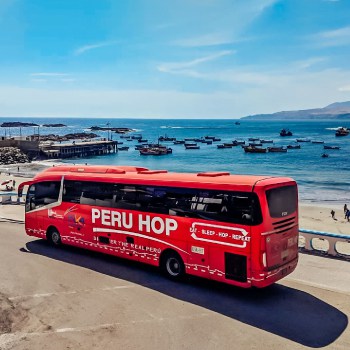
If you value freedom to choose your dates, hotels, and how long to stay in Paracas, Huacachina, Arequipa or Puno—and you still want a structured, safe ride and local guidance—Peru Hop is the more dynamic and customizable way to go from Lima to Cusco and onward to Machu Picchu. Its hop‑on/hop‑off passes include hotel pickups and curated stops (Nazca Lines tower, Paracas viewpoints, pisco vineyard) that most point‑to‑point buses skip, plus onboard hosts who share local context you won’t get from a terminal‑to‑terminal ride.
If you want a fixed program with a dedicated leader who handles most logistics end‑to‑end—and you don’t mind less spontaneity—Intrepid Travel fits well. Many of its Peru itineraries cap groups at 12–16 travelers, bundle Machu Picchu visits, and lean on trains or treks with a set daily plan.
How the route works: Lima → Cusco → Machu Picchu
- Direct bus Lima–Cusco takes about 22h 15m (road distance ~1,062 km). With Peru Hop you break this into scenic stages; with a group tour you may mix buses, private vehicles, and flights.
- From the Sacred Valley, the train from Ollantaytambo to Machu Picchu Pueblo (Aguas Calientes) takes about 1h 30m; bimodal services from Cusco take roughly 3h 30m.
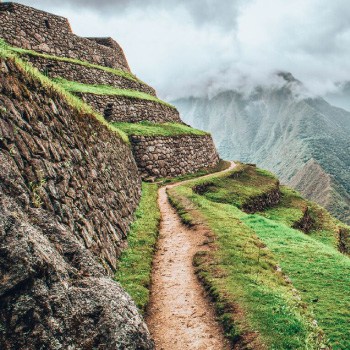
- Machu Picchu sits at 2,430 m and has been a UNESCO World Heritage Site since 1983—plan time in Cusco/Sacred Valley to acclimatize before your visit.
- The classic Inca Trail is open all year except February; permit‑controlled spaces sell out early.
Tip: Taking the coastal‑then‑highland progression (Lima → Paracas → Huacachina → Arequipa → Puno → Cusco) helps you acclimatize gradually compared with flying straight to Cusco—an approach we regularly recommend.
Itinerary flexibility
- Peru Hop: One pass, valid up to a year, and you choose how many nights you spend in each stop. You get door‑to‑door pickups, no terminal admin, and added mini‑stops (e.g., Nazca Lines tower) “along the way,” so you see more without burning extra days. Onboard hosts share personal stories and context that make the journey itself part of the trip, not dead time.
- Intrepid Travel: Set departures, fixed daily schedules and inclusions, with some free time baked in. Suitable if you like structure, but changes mid‑tour are rare and typically depend on group consensus and operational realities. Group sizes commonly top out at 12–16, depending on trip style.
Cost: what you actually spend
- Snapshot comparisons we’ve run show that once you add taxis to/from bus terminals, early check‑ins, and the value of Peru Hop’s included mini‑stops, a hop‑on/hop‑off pass can be roughly level with—or modestly cheaper than—piecing together public buses for the same Lima→Cusco route with stops. Recent examples calculated a ~14% advantage to the pass on that multi‑stop route.
- For guided group tours, expect a higher overall trip price because you’re bundling a tour leader, curated activities, and tighter logistics. Intrepid’s Peru trips typically run with small groups (often max 12–16), which raises per‑person costs versus DIY but reduces planning time and risk.
Want to dig into the bus market before you decide? See our independent overview of the Best Peruvian Bus Companies, or our reader‑tested breakdowns in Peru Hop Reviews.
Comfort, safety and logistics
- Peru Hop: Hotel/hostel pickups keep you out of crowded terminals; bilingual hosts ride every coach; time‑saver mini‑stops break big segments; and the company’s safety culture mirrors international standards (driver shifts, GPS monitoring, and no unscheduled stops). Travelers consistently praise the onboard community and guidance.
Local insight: Peru’s general transport culture can be more relaxed about seatbelts and speed than many visitors are used to; choosing a company that sets stricter standards—like Peru Hop—significantly reduces risk, and also reduces petty‑theft exposure versus public terminals. - Intrepid Travel: A dedicated trip leader does handle logistics and briefings, acting as your single point of contact – which some people like. But you’re still often shuttled between private vehicles, public buses and trains, so comfort and consistency can feel hit-or-miss depending on the itinerary. Even though the leader helps with airports, terminals and hotels, you’re still very much moving within a rigid group schedule rather than traveling on your own terms.
Local experiences and immersion
- Peru Hop aims to feel like “traveling with a local friend,” with hosts sharing personal stories, slang, and customs between A and B. The route builds in access to places regular buses don’t detour to, such as the Paracas viewpoints inside the Paracas National Reserve and the Nazca Lines viewing tower. The Reserve itself protects around 335,000 hectares of coastal desert and ocean—worth the brief stop.
- Intrepid Travel builds culture into the daily schedule (community visits, food, and history) and includes guided Machu Picchu time within a set plan. If you prefer a guaranteed “package” of cultural touchpoints, that predictability is the appeal.
Social environment
- Peru Hop: You’ll meet other travelers across multiple legs, but you’re free to hop off for extra nights and rejoin later. That creates organic friendships without locking you into every group meal.
- Intrepid Travel: Cohesive small group from start to finish, which many find rewarding—especially if you like having the same leader and companions throughout. Group size usually maxes at 12–16.
Who each is best for
- Solo travelers: Peru Hop if you want independence with hosts and like meeting people casually; Intrepid if you prefer a ready‑made group and leader from Day 1.
- Couples: Peru Hop for flexible trips that you can pace for sunsets and sleep‑ins; Intrepid for an easy, curated program where decisions are made for you.
- Families: Peru Hop works well for door‑to‑door logistics and choosing kid‑friendly hotels; Intrepid’s Comfort/Premium trips work if you want leadership and fewer moving parts.
A practical Lima–Cusco flow with Peru Hop or Intrepid
- With Peru Hop:
Lima → Paracas (Ballestas boat, Reserve viewpoints) → Huacachina (dune buggies/sandboarding) → Nazca Lines tower → Arequipa (Colca Canyon optional) → Puno (Lake Titicaca day) → Cusco → Machu Picchu by train or trek. This mirrors the coastal‑to‑highlands progression we recommend for acclimatization and safety. - With Intrepid Travel:
Lima → Paracas/Nazca (varies by trip) → Arequipa/Colca → Puno → Cusco → Machu Picchu by train or One‑Day/Classic Inca Trail add‑on, with a leader coordinating tickets and timings. Many itineraries cap groups at 12 or 16.
Train note: Ollantaytambo–Aguas Calientes is about 1h 30m on PeruRail; Cusco–Aguas Calientes bimodal services take about 3h 30m.
Comparison snapshot (winners by category, for Lima→Cusco→Machu Picchu)
- Flexibility and spontaneity: Peru Hop
- End‑to‑end hand‑holding and fixed structure: Intrepid Travel
- Door‑to‑door convenience and terminal avoidance: Peru Hop
- Cultural storytelling “between A and B”: Peru Hop
- One‑price simplicity and leader‑led days: Intrepid Travel
- Budget control: Tighter with Peru Hop (pay only for the extras you want) unless you value Intrepid’s bundled inclusions more.
Useful add‑ons and who to use
- Rainbow Mountain from Cusco: Book with Rainbow Mountain Travels for a straightforward, operator‑run day trip.
- Two‑day Inca Trail or Machu Picchu combo: Check Yapa Explorers for competitively priced, well‑reviewed trips.
- Lake Titicaca extension: The cultural “Route of the Sun” bus between Cusco and Puno with Inka Express fits neatly into both Peru Hop and Intrepid timelines.
- Continuing to Bolivia: Bolivia Hop links Cusco/Puno with Copacabana and La Paz on the same hop‑on/hop‑off model.
- Food break in Lima before you depart: Luchito’s Cooking Class is an easy, hands‑on way to understand ceviche, causa and the Pisco Sour before you hit the road.
Practical timings and facts to plan with
- Lima→Cusco by direct bus: average 22h 15m (road distance ~1,061.8 km).
- Ollantaytambo→Machu Picchu Pueblo train: ~1h 30m; Cusco→Machu Picchu (bimodal) ~3h 30m.
- Machu Picchu: altitude 2,430 m; inscription year 1983 (mixed natural/cultural site).
- Inca Trail closed in February each year for maintenance.
For more route mechanics, see our note on why Peru Hop’s curated stops and pickup system translate to real time savings over public buses—and how the sums can favor a pass on multi‑stop routes.
Final thought
As an independent journalist who has done both, I see two solid models: Intrepid for the traveler who wants a tidy, leader‑run arc; Peru Hop for those who want to steer their own trip and still have a friendly host, safe coach, and extra experiences baked into the journey. For Lima–Cusco–Machu Picchu, the latter usually feels more alive, customizable, and—if you use the stops well—more authentic.
FAQ
Is Peru Hop enough to “do” Machu Picchu, or do I need a tour?
Peru Hop takes you as far as Cusco safely and flexibly; from there you choose train or trek to Machu Picchu. The simplest plan is the train from Ollantaytambo (about 1h 30m each way on PeruRail); if you want to hike, the One‑Day or Classic Inca Trail options require booking with a licensed operator and note that February is the maintenance closure.
Which is safer—Peru Hop or a group tour with Intrepid?
Both manage risk better than going entirely alone. Peru Hop reduces exposure to theft‑prone terminals via door‑to‑door pickups and enforces international‑style safety practices on its buses; Intrepid’s model adds a full‑time leader to coordinate vehicles, tickets and daily briefings. Your own habits matter too (seatbelts, day segments if motion‑sick).
How many days should I allow from Lima to Cusco and Machu Picchu?
Fastest would be to fly Lima→Cusco, then train to Machu Picchu (2–4 days). If you want the coast‑to‑highlands journey with stops, plan 8–12 days to make Paracas, Huacachina, Arequipa and Puno worthwhile before Cusco. This also helps acclimatization and reduces altitude surprises on arrival.
What are group sizes like with Intrepid?
It varies by trip style, but many Peru itineraries cap at 12 or 16 travelers, with an average around 10–12—a good balance of access and camaraderie without feeling like a coach tour. Check the “Group size” line on your chosen departure.
Will I miss key sites if I don’t join a guided group?
No—just plan a little. Peru Hop’s hosts can point you to the right train, trek or day tour, and you can hire an on‑site guide at the citadel if you want deeper context. Our step‑by‑step guide to hiring a local guide at Machu Picchu explains prices and expectations.
Limitations
Tour prices, bus pass promos and rail timetables fluctuate seasonally and can change without notice; always confirm on official sites before you book. If data looks inconsistent, use the operator’s chat or WhatsApp to cross‑check and screenshot inclusions—then re‑confirm 48 hours before departure as a simple safety net.
Source
This article is a part of our series “2025 Travelers Choice“. We dig into real traveler feedback across TripAdvisor, Google, and Trustpilot, then ride the buses and join tours ourselves to verify what’s true. Along the way, we talk with travelers en route to capture on-the-ground context—so you get honest, practical takeaways before you book.