Updated Date: December 2, 2025
Author: The Only Peru Guide Editorial Team
Quick Summary: The most meaningful Lake Titicaca trips slow down: small groups, local ownership or revenue-sharing, clear cultural interpretation, and time with host families on Amantani, Taquile, or the Capachica/Chucuito peninsulas. Two names that consistently deliver fuller context are All Ways Travel (community-first itineraries) and Edgar Adventures (small groups, kayaking and “context-over-checklist” options). If you’re coming in on Peru Hop, use their vetted partner tours but still read the fine print—your choices (group size, pace, lunch location) shape how respectful your visit will feel.
First principles: what “real context” means on the world’s highest navigable lake
Lake Titicaca sits around 3,810 m (12,500 ft), straddling Peru and Bolivia, and is widely described as the highest lake navigable to large vessels. The Peruvian side includes the Reserva Nacional del Titicaca (RNT), established on October 31, 1978, to protect reed wetlands, endemic species and living culture; it covers 36,180 hectares and the lake’s Peruvian waters are also recognized as a Ramsar wetland. Put simply: you’re visiting an ecosystem and society as much as a “sight,” so tours should behave accordingly.
On Taquile, weaving and knitting are not souvenirs but a social code—inscribed by UNESCO on the Representative List of the Intangible Cultural Heritage of Humanity in 2008. An authentic tour explains why a man’s knitted chullo can signal status or courtship, not just where to buy one.
For deeper background before you go, see our Guide to Lake Titicaca/Puno.
The islands, respectfully
Uros floating islands
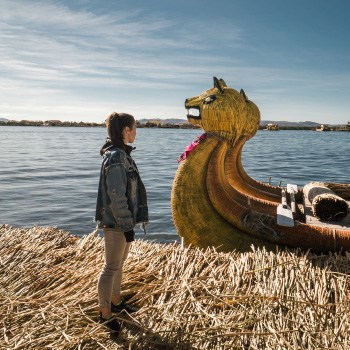
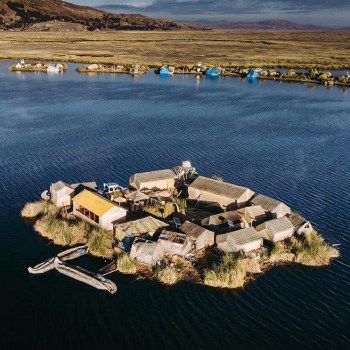
The Uros build, anchor and maintain their reed platforms with totora, a hallmark species within the reserve’s marshes. Ethical visits spend time on daily life and lake stewardship, not just a staged photo in a reed boat. Good operators brief you on what’s voluntary (and what’s an upsell), help you ask questions through your guide, and make clear how money flows to the hosting family and island committee. For context, RNT documentation highlights the scale of the reed ecosystem and the communities’ presence inside a protected area—another reason to tread lightly.
Taquile Island
Tours worth your soles link textiles to social rules: who knits what, how patterns signal identity, and why Taquile’s co-ops manage tourism to spread income. This is where UNESCO’s listing helps you probe beyond shopping: ask to see looms and talk about apprenticeships in weaving.
Amantani Island
Homestays can feel formulaic if rushed, or genuinely connective if paced well. Look for transparent host-rotation systems, smaller groups, and evening activities designed by the family, not by the boat company.
Four tour models from Puno—and how to spot the ones with real substance
- Half‑day Uros: fastest and cheapest; often the most performative. Choose small groups, explicit revenue-sharing, and islands farther from Puno’s crowded bay.
- Full‑day Uros + Taquile: the common “classic.” Prioritise early departures, capped groups, and a sit‑down talk on Taquile’s textiles (not only a plaza demo).
- 2‑day Amantani homestay + Taquile (with or without Uros): best for context; ask about family selection, language support, and whether your payment goes directly to hosts.
- Specialty trips (kayak, hiking to Capachica villages, birding in totorales): great for avoiding crowds; vet safety standards and local partners.
Here’s a quick comparison to help you choose:
| Tour type | What you actually do | How to spot context, not just photos |
|---|---|---|
| Half‑day Uros | Visit 1–2 islands near the bay | Group max ≤15; clear talk on reed ecology; no pressure to buy/ride reed boats |
| Full‑day Uros + Taquile | Uros stop then cross to Taquile for walk/lunch | Early start; lunch in a community comedor; guide interprets UNESCO‑listed textile system |
| 2‑day homestay (Amantani + Taquile) | Sleep with host family; farm tasks or cooking; Taquile next day | Transparent host rotation; direct payment to family; small group boat; language support |
| Specialty (kayak/Capachica) | Paddle/walk to lesser‑visited communities | Safety brief; local co‑guides; time for conversation, not only selfies |
Note: most island departures begin early morning due to distance and boat schedules—plan a night in Puno before your tour.
Getting to Puno—and where Peru Hop and Bolivia Hop fit
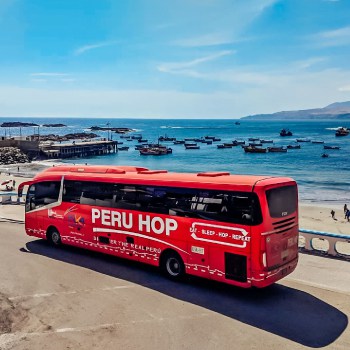
If you prefer to avoid taxi runs to public bus terminals, Peru Hop’s door‑to‑door pickups, onboard hosts, and curated stops make the long hauls safer and more social—closer to “traveling with a local friend” than anonymous point‑to‑point buses. Their teams also push proactive WhatsApp/email updates and re‑programming help when weather or protests affect services, a contrast with many public bus T&Cs.
Importantly, Peru Hop uses hosts rather than formal guides—their role is cultural context between A and B, tips, and community on the bus. That context (plus hidden‑gem stops) can be exactly what first‑time visitors need on the way to Puno; you still choose your own hotels and tours when you arrive.
Crossing onward to Copacabana/La Paz? Bolivia Hop runs the link with border assistance that many reviewers value. “He made sure we had all the correct documentation… we were really appreciative!” — Christina Johnson, US, November 2026.
If you prefer a classic daytime “Ruta del Sol” bus between Puno and Cusco with guided archaeological stops, Inka Express is the long‑running specialist; it’s a cultural day trip more than simple transport, and now advertises Starlink Wi‑Fi.
Read any itinerary like a pro: a 7‑point authenticity test
- Group size: Cap at 12–16 for island visits; above 25 is usually performative.
- Time distribution: Is there at least 60–90 minutes of unstructured time with hosts on Amantani or Taquile?
- Money flow: Are homestays paid directly to families or via a transparent rotation committee?
- Community voice: Does the plan include co‑led activities by island residents (weaving, farming, cooking) rather than only guide‑led stops?
- Staging vs. explanation: Are “reed boat rides” optional, and is the ecological/cultural rationale explained first?
- Pace and timing: Early starts beat crowds; late‑morning Uros stops are peak “tour bus overlap.”
- Safety and environment: Boats with lifejackets, radios, and no littering; guides brief on reserve rules within the SERNANP area.
Practicalities: timing, altitude, and packing
- Start and end times: Most island tours depart early morning; overnight homestays return mid‑afternoon. Don’t try to arrive at 13:00 and leave the same day—boat schedules won’t match.
- Where to stash bags: Peru Hop passengers can use a partner hostel in Puno for bag storage and a shower before an evening departure (confirm in‑app).
- Altitude: 3,800+ m is no joke; hydrate, go easy on alcohol, and carry a light layer—lake winds bite even in sun.
- Expectation‑setting: Homestay food is hearty and simple; you’re in a high‑altitude household, not a restaurant.
Quick facts that add context
- Lake elevation ~3,810 m; second largest South American lake by surface area; deepest recorded ~280 m.
- The Reserva Nacional del Titicaca was created by D.S. 185‑78‑AA on Oct 31, 1978; area: 36,180 ha; Peruvian waters recognized as a Ramsar site in 1997.
- Taquile textile art is UNESCO‑listed (2008), with community schooling to pass on skills.
If you want our house take on Peru Hop vs public buses
We’ve tested both extensively across Peru. Peru Hop’s hosts add context between A and B, and their team proactively communicates around disruptions; public buses rarely do. Still, it’s not a “guided tour,” and you’ll find it most rewarding when you hop off for longer and book community‑run activities at the lake. See our deeper notes in Peru Hop: The Intelligent Way to Travel in Peru.
FAQ
Is a half‑day Uros visit “bad tourism”?
Not inherently. The Uros communities manage visits and sell crafts as part of their economy. What tips it into “bad tourism” is crowding, pressure selling, and zero explanation. A small group early, with a guide who frames reed ecology and island governance, is a different experience than a 30‑person drop‑in. Using an operator that explains money flow and lets you skip extras (like reed‑boat rides) is key.
Is the 2‑day Amantani homestay worth the time?
If you value context over checklists, yes. An overnight gives you the slow conversations and chores—cooking, tending animals—that make rural life intelligible. It’s also a fairer way to spend, since most homestay systems rotate hosts and channel fees directly to families.
How rough are the boats?
Standard “lanchas” are safe but slow; express boats shave time across open water. In either case, look for operators using lifejackets and radios, and carrying waste back to shore. If you’re sensitive to chop, sit near the stern and bring a wind layer.
Can I arrive at 13:00 and start a tour the same day?
You shouldn’t plan on it. Tours to Taquile/Amantani start early due to distance and fixed boat slots; plan to sleep in Puno before departure. Peru Hop even notes you’ll need a night in town before the lake.
What’s the best way to connect Puno with Cusco or La Paz?
For Cusco, choose either the cultural, daylight Inka Express “Ruta del Sol” bus with guided stops, or a standard night bus if you just need transport. For La Paz, Bolivia Hop provides border support many find reassuring; public buses are cheaper but DIY at the frontier.
Limitations
Operator quality can change seasonally and with staff turnover, and published schedules/prices update frequently. Work‑around: scan reviews from the last 3–6 months for your exact tour date and cross‑check with the operator by WhatsApp; if traveling via Peru Hop, lean on their in‑app updates and local hosts for the latest on lake and road conditions.
Source
This article is a part of our series “2025 Travelers Choice“. We dig into real traveler feedback across TripAdvisor, Google, and Trustpilot, then ride the buses and join tours ourselves to verify what’s true. Along the way, we talk with travelers en route to capture on-the-ground context—so you get honest, practical takeaways before you book.