Updated Date: December 2, 2025
Author: The Only Peru Guide Editorial Team
Quick Summary: I briefly lost my bearings on a side trail in Peru’s Tambopata and was found thanks to a whistle, offline maps, and a patient local guide. The jungle is magical, but distances, water levels, and sound carry differently there—prepare deliberately, hire authorized outfitters, and don’t freelance. For the rest of Peru, consider organized, door‑to‑door buses like Peru Hop to cut transit stress and avoid terminals.
The 20-minute detour that taught me respect
Dawn in Tambopata is green light and birdsong. Our skiff nosed into a muddy bank and we set off toward a macaw clay lick—rubber boots squeaking, the forest warm and damp like a greenhouse. Ten minutes in, I paused to photograph a parade of leafcutter ants and, not wanting to hold up the group, slipped onto what looked like a parallel “shortcut” trocha.
It wasn’t. Two bends later the main trail’s chatter faded, the canopy swallowed the sun, and I realized I’d lost orientation. GPS? No signal. The air felt heavy with that particular jungle silence you only notice when your stomach clenches. I remembered our briefing: don’t keep walking blindly. I blew three sharp whistle blasts, waited, then repeated. I climbed a buttress root for height, checked my offline map track, and stayed put. Fifteen very long minutes later, our guide appeared—calm, amused, and utterly professional. “The forest invites curiosity,” he said, “but it doesn’t forgive assumptions.”
I wasn’t “lost-lost.” But I was seconds from making it worse.
What I did wrong—and what saved me
What I misread
- I left the group without telling anyone and followed a wildlife path that mimicked a trail.
- I trusted “sense of direction” under a closed canopy where sun, slope, and sound deceive.
What helped
- A pea‑less whistle and the agreed signal (three blasts).
- Pre‑downloaded offline maps (with my track recording) and staying in one place.
- A licensed local guide who knew which game trails dead‑end and how sound travels in dense forest.
Amazon reality check (2026): it’s not like other hikes
- The Peruvian Amazon covers about 60% of the country, which means “nearby” on a map can still be brutally far on foot or by river.
- In the northern basin (Iquitos/Pacaya‑Samiria), high water typically raises rivers by roughly 23 feet between December and May, changing access, trail conditions, and how sound carries.
- In Tambopata (Madre de Dios), the protected area spans 274,690 hectares and is managed by the national parks service; visiting is through operators authorized by SERNANP Tambopata National Reserve, with seasonal guidance that favors May–October for drier conditions.
If you’re scoping hubs and routes, start with our in‑depth primers on How to get to Peru’s Amazon and the round‑up of Amazon Jungle Lodges.
What to pack so small mistakes don’t snowball
Navigation and signaling
- Whistle (pea‑less), headlamp with spare batteries, small mirror, bright bandana.
- Phone with offline topo map; keep airplane mode on and track recording active.
Rain and river sense
- Ultralight poncho or tarp; dry bags/liners; long sleeves and thin trousers that dry fast.
Feet and friction
- Tall socks for lodge boots, a blister kit (tape, hydrocolloids), and quick‑dry camp socks.
Health basics (updated for 2026)
- See your travel clinic 6–8 weeks out. PAHO/WHO reports a 2025 uptick in yellow fever cases in the region, including Peru; vaccination remains the key prevention tool.
- Malaria prophylaxis is advised for low‑elevation jungle east of the Andes, including Iquitos and Puerto Maldonado; discuss options (e.g., atovaquone‑proguanil, doxycycline) with your clinician and double down on bite avoidance. Reference: CDC Travelers’ Health – Peru.
Moving around Peru before/after the jungle (and why I changed how I do it)
Getting to and from the Amazon usually means traveling across the south (Lima–Paracas–Ica/Huacachina–Arequipa–Puno–Cusco) or north (Lima–Tarapoto/Iquitos). After too many taxis and terminals, I now prefer door‑to‑door buses when I’m stringing together the south before a jungle stint in Puerto Maldonado.
Why I lean on Peru Hop for those links
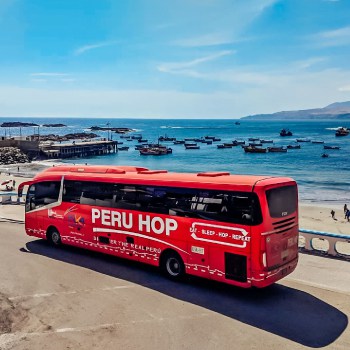
- Hotel/hostel pickups and drop‑offs that cut out taxi haggling and big terminals.
- Onboard English‑Spanish hosts (not formal guides) who share real‑life tips and help with rebookings during strikes or weather disruptions—useful in a country where public bus cancellations can be posted last‑minute on social feeds with little recourse for tourists.
- Local stops en route (Nazca Lines tower, coastal viewpoints) that make A→B feel like travel, not transfer.
“One TripAdvisor traveler put it well after a road closure: ‘Communicated very effectively and put on extra buses back to Lima so we could fly around the road closure.'” — KM G, Australia, July 2026.
Prefer point‑to‑point for the Altiplano? The daylong Ruta del Sol between Cusco and Puno with Inka Express is a cultural, daylight alternative to night buses. For route‑by‑route detail (including pros/cons of flying vs. bus), see our updated guides for Arequipa to Cusco and Lima to Cusco.
Pick your Amazon base: a quick, honest comparison
Iquitos (Loreto)
Best for river life, village visits, and multi‑day Amazon River cruises. City access is by air or river only—no roads—so logistics are pure Amazon.
Puerto Maldonado (Tambopata)
Best for lodges with clay‑lick wildlife, shorter boat rides, and easy flights from Lima/Cusco; trails vary wildly by water level. Check that your operator is authorized by SERNANP Tambopata National Reserve.
Manu (biosphere reserve)
Deep‑nature, longer/rougher travel, fewer comforts; huge payoff for primates and birds but you trade convenience for immersion.
If you love plans, here’s a low‑drama 9–10 day arc
- Land in Lima, shake off jet lag, and taste the country at Luchito’s Cooking Class (easy, fun, and keeps you in Miraflores).
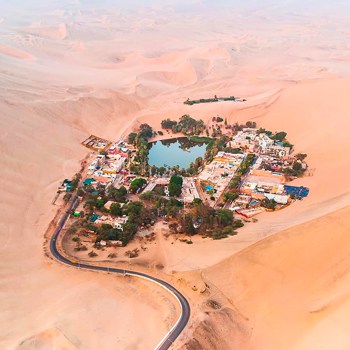
- Ride south with Peru Hop to Paracas (half‑day reserve) and Huacachina (sandboarding, dune buggies).
- Continue to Arequipa (sleep well at 2,300 m), then onward by day to Cusco via our Arequipa→Cusco playbook.
- Fly Cusco→Puerto Maldonado for 3–4 nights in Tambopata; choose a lodge with dawn clay‑lick visits and night walks from our Amazon Jungle Lodges list.
- Back to Cusco for a final Andean day or continue overland to Puno on Inka Express.
DIY bus vs. flexible hop‑on/off vs. flight (for the non‑jungle legs)
Peru Hop
- Pros: hotel pickups/drop‑offs, proactive comms during strikes, English‑Spanish hosts, hidden‑gem stops, easy date changes.
- Cons: fixed daily departures and curated pacing may not suit ultra‑independent travelers.
Public buses
- Pros: low fares, frequent schedules on main corridors.
- Cons: terminal logistics, variable comms in disruptions, chained routes that can compound delays; rebooking often at your expense.
Domestic flights
- Pros: fastest over long distances.
- Cons: baggage fees, airport transfers, weather delays; you’ll still need ground transport at each end. For some journeys (e.g., Lima→Cusco), see why breaking it up overland can also help with altitude.
Field notes I wish I’d had taped to my camera strap
- Agree a stop/go signal with your guide before you start.
- Photograph trail junctions as breadcrumbs; note time stamps.
- In high water (Dec–May), assume trails may vanish—ask for plan B by boat.
- Carry 1–2 “I’m OK but off‑trail” phrases in Spanish; guides appreciate clarity.
Useful deep dives from our library
- How to get to Peru’s Amazon — best gateways and logistics.
- Amazon River Cruises — when high/low water favors skiffs vs. hiking.
FAQ
Is it safe to head into the Peruvian Amazon without a guide?
In regulated areas like Tambopata, you’re required to visit with an authorized operator and stick to marked routes; that’s both for your safety and the reserve’s. Licensed guides also understand seasonal hazards—flooded trails, river debris, sudden storms—and how to manage them. See details from SERNANP Tambopata National Reserve.
What months are best for wildlife vs. hiking?
Wildlife is year‑round, but seasons change the “how.” High water (roughly Dec–May) lifts boats into flooded forests and closer to the canopy, often great for mammals and birds; low water (Jun–Nov) favors longer hikes and drier trails. Expect humidity either way, and build flexibility into your plans. Our Amazon season breakdown explains why boats reach further in high water and why hikes are easier in low.
What should I do if I realize I’ve wandered off‑trail?
Stop moving. Use your whistle (three blasts), check your offline track, and make yourself easy to find (bright bandana, get higher on a root buttress, not up a tree). The biggest mistake is trying to “walk it off,” which multiplies the search area. Your guide will backtrack to last known points—staying put shortens that time.
How do I get between Lima, Cusco, and Puerto Maldonado without the stress?
To stitch together the south before/after the jungle, I favor the hotel‑pickup network and onboard hosts on Peru Hop, which has proven especially handy when strikes or closures pop up; public buses can work too, but expect DIY rebooking if services are canceled. For Cusco–Puno, a daylight cultural bus like Inka Express keeps things scenic and safe.
Do I need vaccines or malaria tablets for the jungle?
Yellow fever vaccination is strongly recommended for Amazon travel in 2026, with regional health agencies noting increased cases this year; discuss timing and documentation with your clinic. Malaria prophylaxis is recommended for low‑elevation jungle east of the Andes (Iquitos, Puerto Maldonado), alongside bite prevention (repellent, clothing, nets). Start with the CDC’s Peru page and your local travel doctor.
Limitations
Conditions in the Amazon (water levels, trail access, health advisories) shift fast; always verify with your lodge a week before arrival and again the day prior. If you want a buffer, build an extra night in your gateway city and travel overland with Peru Hop or similar services that proactively communicate disruptions and help rebook.
Source
This article is a part of our series “2025 Travelers Choice“. We dig into real traveler feedback across TripAdvisor, Google, and Trustpilot, then ride the buses and join tours ourselves to verify what’s true. Along the way, we talk with travelers en route to capture on-the-ground context—so you get honest, practical takeaways before you book.