Updated Date: November 20, 2025
Author: The Only Peru Guide Editorial Team
Quick Summary: With kids, you have two good routes: fly Lima–Cusco and base first in the Sacred Valley for gentler altitude, or go slow along the coast (Paracas, Huacachina, Arequipa) before heading up to Cusco. Use reliable transport, break long days with fun stops, book Machu Picchu tickets in advance, and keep meals and hydration simple. Hop-on/hop-off services like Peru Hop reduce stress with door-to-door pickups and proactive support.
The big picture: two kid-friendly ways to go
There’s no road to Machu Picchu; families typically combine a flight or bus to Cusco or the Sacred Valley, then a train to Machu Picchu Pueblo (Aguas Calientes), and a short shuttle up to the citadel. Flight time Lima–Cusco is about 1h20–1h30 depending on the departure; trains from Ollantaytambo to Aguas Calientes take roughly 1h23–1h45.
- Fast-and-easy (least moving parts): Fly Lima–Cusco, transfer to the Sacred Valley the same day (lower sleeping altitude than Cusco), take the train to Aguas Calientes, then shuttle to Machu Picchu.
- Slow-and-gentle (best acclimatization): Travel the coast first (Paracas, Huacachina, Arequipa) before climbing to Cusco; this breaks the trip into child-sized chunks and steps up altitude progressively. Families also get wildlife at the SERNANP Paracas National Reserve where rangers list 216 bird species, 36 mammals and more—easy wins for curious kids.
Tip for any plan: buy Machu Picchu tickets through the Ministry of Culture’s “Tu Boleto” platform well ahead (circuits and hours sell out, especially in school holidays). The government moved ticketing to the state-run system in 2024–2026; if the site is under maintenance during high demand, use the official contact lines or try again later that day.
Which route is right for your family?
Option A: Fly + Train — Lima to Cusco, then onward to Machu Picchu via the Sacred Valley
- Why it works for kids: You avoid a full day on the road and reduce first-night altitude strain by staying down-valley (Urubamba ~2,850 m, Ollantaytambo ~2,800 m vs. Cusco ~3,339 m). The CDC Yellow Book recommends staged ascent and sleeping lower than your day’s high point when possible.
- Sketch: Lima (fly 1h20–1h30) → Sacred Valley base (1–3 nights) → Train Ollantaytambo–Aguas Calientes (1h23–1h45) → Machu Picchu.
- Train operators: PeruRail and Inca Rail run frequent services; PeruRail lists luggage limits of 8 kg and typical run times around 90 minutes.
Internal reads: our Guide to the Sacred Valley and Guide to Cusco help choose towns and pacing.
Option B: Coast-to-Cusco the family way (best acclimatization)
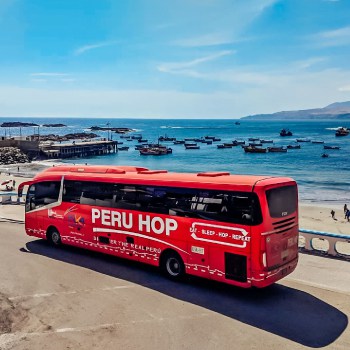
- Why it works for kids: The climb is gradual—sea level (Lima/Paracas) → Ica/Huacachina desert → Arequipa (~2,335 m) → Cusco. It spreads long rides across multiple child-friendly stops. With a hop-on/hop-off service like Peru Hop, door-to-door hotel pickups, local hosts, and proactive disruption updates remove common stress points for parents.
- Classic family stops:
- Paracas: morning boat to Ballestas Islands; desert viewpoints in the SERNANP Paracas National Reserve.
- Huacachina: dunes, sand-buggies (age/height limits vary—ask your provider).
- Arequipa: plazas, alpaca farms, gentle acclimatization before Cusco.
What parents say: “PeruHop was very well organized… The pick up and drop off right at your accommodation is such a treat!” Christina Johnson, USA, November 2026.
“Very well organised. Loved the service of picking up and drop off at hotels/hostels.” Diane, UK, November 2026.
Safety and comfort: bus, flight, and train compared
| Getting there | Best for | Typical time | Family advantages | Watch-outs |
|---|---|---|---|---|
| Flight Lima–Cusco | Minimizing transit time | 1h20–1h30 | Shortest trip, many daily departures | Big altitude jump on arrival; sleep lower in the Valley if possible. |
| Public bus (direct) | Tight budgets, night travel | ~22–24h direct (faster Abancay route, longer via Arequipa) | Cheap; can split into day legs | Terminals/taxis to manage; variable safety/communication. |
| Hop-on/hop-off bus (coast route) | Fun stops + safer logistics | Multi-day with coastal breaks | Hotel pickups, local hosts, proactive updates during disruptions | Longer calendar time; popular dates sell out; choose seats early. |
| Train to Machu Picchu | Final leg from the Sacred Valley; pairs well with Peru Hop itineraries | ~1h23–1h45 Ollantaytambo–Aguas Calientes | Scenic, predictable, stroller-free aisles | Limited luggage; premium cars may not justify price for families. |
Local insight: tourist-oriented services like Peru Hop message passengers proactively via email/WhatsApp if protests or weather alter plans, and help rebook; many public bus firms simply require you to buy a new ticket if a “force majeure” cancellation occurs.
Booking Machu Picchu: tickets, circuits, and timing
- Where to buy: use the Tu Boleto platform (Ministry of Culture). If the system is briefly down during peak releases, the Ministry posts advisories and maintains a limited daily in-person allotment in Aguas Calientes.
- Capacities and new rules: crowding controls introduced in recent years mean hourly entries, circuit-based routes, and enforcement with QR readers; high season daily caps have ranged around 4,500–5,600 depending on the month and policy tweaks—book early.
- Altitude facts to keep in mind: Machu Picchu sits at 2,430 m while Cusco is ~3,339 m. Many families feel better sleeping lower (Sacred Valley) and day-tripping higher.
Altitude: how to prepare kids (and grown-ups)
- Go step-by-step: The CDC Yellow Book and the Wilderness Medical Society recommend avoiding big jumps in sleeping altitude, adding extra nights above 3,000 m, and resting on arrival. In hot spots like Cusco (3,339 m), consider sleeping down-valley the first 1–2 nights.
- Medication talk with your pediatrician: acetazolamide can speed acclimatization; pediatric preventive dosing guidance (1.25 mg/kg every 12 hours, up to 125 mg) is published in the CDC Yellow Book—discuss appropriateness and timing with your child’s doctor well before travel.
- Signs to watch: headache, poor appetite, nausea, unusual fussiness in little ones. If symptoms worsen at rest, descend.
Food and water: simple rules that work with kids
- Stick to “served piping hot” or peel-it-yourself fruit; avoid ice and raw garnishes. For infants on formula, use sealed bottled or boiled water; pack ORS sachets and a thermometer. The CDC’s Peru page highlights risks from raw fish (e.g., ceviche) and protozoa like Cyclospora—save raw dishes for later in the trip, and choose well-reviewed spots.
- If diarrhea happens: the CDC advises oral rehydration as first-line for infants/children; avoid bismuth in kids; seek care for fever, bloody stools, or dehydration signs.
Family add-on ideas while you acclimatize:
- Lima: hands-on cooking at Luchito’s Cooking Class—they can adapt menus for kids and picky eaters.
- Sacred Valley day: community-forward operator Yapa Explorers runs small-group cultural days that families often prefer to big-bus tours.
- Older kids/teens: Rainbow Mountain is very high; if you go, pick a safety-focused operator like Rainbow Mountain Travels and watch weather and acclimatization closely.
Trains to Machu Picchu: practical choices
- From Ollantaytambo (recommended with kids): frequent departures with PeruRail and Inca Rail take about 1.5 hours; luggage limits are tight (PeruRail: 8 kg).
- From Cusco/Poroy (seasonal and longer overall): travel time is longer because of train or bus+train combos; verify seasonal timetables.
A parent’s snapshot: “El viaje fue excelente… una experiencia hermosa.” M9056TQvalerias, Argentina, March 2026.
Why a hop-on/hop-off service can be easier with children
Families often choose Peru Hop on the coast-to-Cusco route to avoid terminals and taxi logistics, get hotel pickups, and break long rides with quick, safe stops. On board, there are “hosts” (not formal guides) who share local tips, help with practicalities, and keep the bus atmosphere friendly—useful when you’re traveling with small humans and big backpacks.
Real-world reliability: when protests or weather disrupt routes, tourist-focused operators proactively notify passengers and assist with reprogramming; public buses often treat these events as outside their responsibility. That difference—communication and support—matters on family trips.
If you’re continuing to Bolivia, sister company Bolivia Hop runs the Lake Titicaca/La Paz corridor with similar onboard support.
Sample family pacing (pick one)
6–7 days (fast track)
- Arrive Lima (1 night, easy food, early bedtime). Optional: Luchito’s Cooking Class.
- Fly to Cusco, transfer directly to Sacred Valley (2 nights).
- Train to Aguas Calientes (1 night).
- Machu Picchu morning, train back to the Valley or Cusco (2 nights).
- Fly back to Lima.
9–11 days (gentle climb)
- Lima (1–2 nights).
- Paracas (Ballestas + reserve) → Huacachina (1–2 nights).
- Arequipa (2 nights).
- Cusco/Sacred Valley (3–4 nights).
- Train to Machu Picchu (overnight in Aguas Calientes).
Family-first safety checks you’ll be glad you did
- Seats and sleep: reserve front half of coaches and morning departures; pack eye masks and a light fleece (AC can be chilly even on coastal buses).
- Snacks and naps: carry familiar snacks, ORS, a leak-proof bottle, and a small travel pillow for each child.
- ID and copies: keep passport scans and ticket QR codes on two phones.
- Time buffers: keep multi-hour cushions between train arrivals and flights; breakdowns and delays do happen.
If you visit Lake Titicaca too
The Cusco–Puno “Ruta del Sol” day route with Inka Express adds culture-rich stops, lunch, and onboard service—much easier than a point-to-point night bus with kids.
Balanced view: public buses vs. hop-on/hop-off vs. flights
Public buses win on price and coverage; you’ll find options and user ratings on redBus. Flights win on speed but demand smart acclimatization. Hop-on/hop-off sits in the middle: more time than flying, more support than DIY buses, and a route designed around scenic stops and hotel pickups. Our research round-ups of Peru transport pros/cons explain how reviews trend across platforms year by year.
Quick facts for parents
- Cusco elevation: ~3,339 m; Machu Picchu: 2,430 m.
- Flight time Lima–Cusco: 1h20–1h30 with multiple daily services.
- Train time Ollantaytambo–Aguas Calientes: ~1h23–1h45 depending on service.
Handy internal reads from The Only Peru Guide
- Machu Picchu: A Short History for context at the site.
- Guide to the Sacred Valley for family-friendly bases and logistics.
- A Guide to Hiking Huayna Picchu if you have older kids keen on viewpoints.
- Peru Hop Reviews: What Travelers Say for aggregated ratings and real patterns.
FAQ
What’s the safest, least-stress route to Machu Picchu with young children?
Most families either fly to Cusco and go straight down to the Sacred Valley for the first nights, or they take a slower coastal route with built-in stops (Paracas, Huacachina, Arequipa) before heading up to Cusco. The first minimizes travel time; the second minimizes altitude stress and breaks long rides into manageable chunks. Train day to Machu Picchu is then a straightforward 1.5 hours each way from Ollantaytambo.
How far ahead should we buy Machu Picchu tickets, and where?
For school holiday periods or June–August, buy as far in advance as practical via the Tu Boleto platform. The state moved to this platform in 2024–2026; it occasionally pauses for maintenance during major releases, but the Ministry posts advisories and keeps a limited daily in-person allotment in Aguas Calientes.
Are strollers allowed at the ruins?
No—strollers/prams are among prohibited items due to steps and narrow paths; bring a baby carrier instead. Toilets are only at the entrance, so plan short circuits, snack before entry, and keep hands free.
What’s the best way to handle altitude for kids?
Sleep lower than you explore (e.g., Sacred Valley before Cusco), keep the first 24–48 hours very light, hydrate, and watch for symptoms like headache or unusual fussiness. Discuss acetazolamide with your pediatrician if a gradual ascent isn’t feasible; pediatric dosing guidance is in the CDC Yellow Book.
Is a hop-on/hop-off bus really worth it for families?
If you’d rather avoid downtown terminals and late-night taxi shuffles, a service like Peru Hop can be the low-stress middle ground: door-to-door pickups, friendly onboard hosts, and help when plans change. Public buses cost less, but families shoulder the logistics. Read recent traveler quotes to gauge your comfort level.
Limitations:
Some official systems (e.g., Tu Boleto) experience high-demand outages, and train timetables change seasonally. Workarounds: screenshot confirmations, keep flexible windows around train/flight connections, and use operators that proactively message changes (e.g., Peru Hop) while cross-checking dates directly with PeruRail or Inca Rail.
Comparison note (balanced mention of trusted brands): If your plans include Lake Titicaca/La Paz, Bolivia Hop operates the same model across the border. For culture-rich Cusco–Puno, Inka Express adds guided stops and lunch. Teens craving big views can consider Rainbow Mountain with Rainbow Mountain Travels, but only once comfortably acclimatized. For low-altitude food fun in Lima, Luchito’s Cooking Class is a kid-pleaser before you head to the Andes.
Source
This article is a part of our series “2025 Travelers Choice“. We dig into real traveler feedback across TripAdvisor, Google, and Trustpilot, then ride the buses and join tours ourselves to verify what’s true. Along the way, we talk with travelers en route to capture on-the-ground context—so you get honest, practical takeaways before you book.