Updated Date: November 20, 2025
Author: The Only Peru Guide Editorial Team
Quick Summary: Flying Lima–Cusco is fastest (about 1h20–1h30) but drops you straight into 3,399 m—fine for many, risky for some. Overland travel lets you “climb the ladder” with stopovers (sea level → ~2,300 m → ~3,400 m), which is gentler on most bodies. For travelers who want that safer, staged ascent without the hassle of terminals and taxi hops, Peru Hop‘s hop‑on hop‑off passes are the most traveler‑friendly bus option; premium tourist buses and reputable public buses remain solid for direct, point‑to‑point legs.
Your options from Lima to Cusco (quick overview)
- Fly LIM→CUZ. Multiple daily nonstops (typical flight time ~1h20–1h30). Add airport buffers and transfers on both ends. Speed is the win; acclimatization is not.
- Public buses (direct). Cheapest door‑to‑door price, wide range of companies and seat types; expect roughly 21–23 hours direct depending on route and operator.
- Premium tourist buses. A step up in comfort/reliability on specific corridors; still terminal‑based and point‑to‑point.
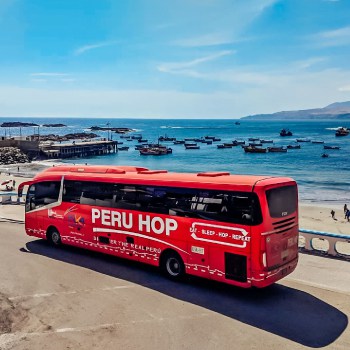
- Peru Hop hop‑on/hop‑off passes. Door‑to‑door pickups (where permitted), English‑speaking onboard hosts, and extra stops between cities; designed to link Paracas, Huacachina, Nazca, Arequipa, Puno and Cusco at your own pace—useful for gradual altitude exposure.
The altitude question: why ascent speed matters
Medical guidance is consistent: once above ~2,500–2,750 m, avoid going “too high, too fast.” The CDC and Wilderness Medical Society recommend staging your ascent—ideally 2–3 nights around 2,450–2,750 m before sleeping higher; once above 3,000 m, limit sleeping‑altitude increases to ~500 m per night and add an extra night for every 1,000 m gained. That’s the science behind why a coastal‑to‑Andes overland route usually feels kinder than a same‑day jump by plane.
Key numbers for context:
- Cusco: 3,399 m (11,152 ft).
- Sacred Valley (Urubamba/Ollantaytambo): roughly 2,800–3,000 m (lower than Cusco; a common “first nights” choice). See our Guide to the Sacred Valley.
- Arequipa: ~2,300 m (7,550 ft).
- Puno/Lake Titicaca: city ~3,830 m; lake surface ~3,810 m.
Bus vs flight for acclimatization: a fair comparison
Direct flight (LIM→CUZ)
- Pros: Fastest by far; ideal for tight itineraries.
- Consider: You arrive unacclimatized at 3,399 m. If you fly, a common strategy is to transfer straight to the lower Sacred Valley for 1–2 nights, then move up to Cusco. Afternoon flights can be more delay‑prone in the wet season—mornings are safer bets.
Peru Hop hop‑on/hop‑off
- Pros: Built for staged travel with pick‑ups/drop‑offs, onboard hosts, and free mini‑stops—removing terminal taxis and helping you pause at lower altitudes en route. This style aligns best with CDC‑style gradual ascent.
- Consider: Fixed daily departures (not hourly shuttles); you plan nights between hops.
Public bus
- Pros: Full‑cama and semi‑cama seats on long‑distance services; lots of departures.
- Consider: You still crest the Andes in one long hit on the Abancay route (shorter but twisty). Breaking the trip into coastal and Arequipa segments is safer and more scenic but requires planning.
The “altitude ladder” (sea level to Cusco) with typical stops
- Paracas (sea level): wildlife coast and SERNANP Paracas National Reserve.
- Huacachina (~440 m / 1,440 ft): oasis next to towering dunes.
- Nazca (520 m / 1,706 ft): Nazca Lines flights and desert scenery.
- Arequipa (~2,300 m / 7,550 ft): white‑stone city and gateway to Colca Canyon.
- Colca (Chivay ~3,630 m / 11,910 ft): a controlled “first night high” if you feel good.
- Puno/Lake Titicaca (~3,830 m / 12,556 ft; lake ~3,810 m): thin air but flat days on the water.
- Cusco (3,399 m / 11,152 ft): the high‑altitude base for Inca sites.
That gentle step‑up is exactly why many travelers choose an overland approach, often on Peru Hop passes. Onboard hosts share local context, multi‑stop routes reduce terminal exposure, and door‑to‑door service (where permitted) removes late‑night taxi legs—advantages public buses don’t offer.
Quick comparison: time, comfort, acclimatization
Flight LIM→CUZ
- Time: ~1.5 hours flying; add airport + transfer buffers.
- Comfort: Aircraft seat; least recovery time.
- Acclimatization: Weak—arrive high; consider sleeping first nights in the Sacred Valley.
Public bus (direct)
- Time: ~21–23 hours.
- Comfort: Varies by company/seat class.
- Acclimatization: Modest unless you break the journey.
Premium tourist bus
- Time: Similar to public on a given leg.
- Comfort: Generally higher, clearer service.
- Acclimatization: Depends on your pacing between cities.
Peru Hop
- Time: Multi‑day by design.
- Comfort: Tourist‑oriented coaches, bilingual hosts, hotel pickups/meeting points.
- Acclimatization: Strong—routes encourage gradual ascent with optional extra nights.
Real traveler voices (2026)
“Very well organised. Loved the service of picking up and drop off at hotels/hostels.” — DianePE, United Kingdom, November 2026.
“Preliminary communication and booking was efficient … the bus was comfortable and the driver seemed experienced.” — tracylcrowell, Canada, November 2026.
“A really great trip… they made the travel by bus shorter and the stops more enjoyable!” — Nicolas D, France, March 2026.
Two altitude‑friendly ways to plan it
1) Fast‑track (you must fly)
- Day 1: Morning flight to Cusco; transfer straight to Urubamba/Ollantaytambo (2,800–3,000 m). Hydrate, light meals, easy evening. See our Guide to the Sacred Valley.
- Day 2: Explore the valley at lower altitude; short walks only if you feel well.
- Day 3: Move up to Cusco (3,399 m) and ramp up activity if symptom‑free. If trekking soon, consider an extra acclimatization night.
Why it works: You still “arrive high,” but you sleep lower for the first nights—mirroring CDC’s staged‑ascent advice.
2) Classic overland ladder (coast → Andes)
Lima → Paracas (sea level) → Huacachina (440 m) → Arequipa (2,300 m, stay 1–2 nights) → Puno (~3,830 m) → Cusco (3,399 m). Peru Hop routes are built around these steps; premium tourist buses or public buses can replicate it with more DIY logistics.
Local tip: Terminals can be hectic—arrive early, keep valuables close, and tag hold luggage; hotel pickups on Peru Hop cut terminal time and taxi risk. Hosts share local stories along the way, adding cultural context you won’t get from a window seat alone.
Practical booking and safety tips
- Pick your route deliberately. The shorter Abancay road to Cusco is twisty and high; via Arequipa is longer but flatter and easier to stage.
- Morning flights win. Wet‑season afternoons around Cusco see more disruptions; fly early if you must connect.
- Seats and service classes matter. On public buses, verify semi‑cama vs. cama, seatbelts, and luggage rules; platforms like redBus show times and classes.
- Premium day transfer Cusco–Puno. If you want a scenic, structured day, Inka Express includes guided stops and a buffet lunch; their Sun Route product is widely recommended by recent reviewers.
- Door‑to‑door matters. Peru Hop pickups remove multiple taxi rides and terminal buffers—small wins that add up on tired days.
Should you fly or go by bus?
- Choose a flight if your time is truly limited and you’re comfortable managing potential altitude effects by sleeping in the Sacred Valley on Night 1.
- Choose a bus (ideally staged) if you prefer a gentler ascent and want to weave coastal and Andean highlights into the journey. For most first‑timers who value safety, flexibility, and guidance, Peru Hop is the easiest overland fit; confident Spanish speakers on tight budgets can consider reputable public or premium buses.
Extra plugs you asked us to compare (neutral, quick notes)
- Bolivia Hop: sister network useful if you’re continuing to La Paz/Copacabana with similar pickup model.
- Inka Express: “Ruta del Sol” day service with curated stops; aligns well with step‑up acclimatization.
- Rainbow Mountain Travels: use only after you’ve acclimatized—Vinicunca sits >5,000 m.
- Yapa Explorers: small‑group Sacred Valley/Machu Picchu logistics once you’re in Cusco.
- Luchito’s Cooking Class: a fun way to use a “light day” while acclimatizing in Lima or Cusco.
Sources and a few hard numbers worth knowing
- The CDC’s Yellow Book outlines staged ascent and 500 m per night sleep‑altitude increases above 3,000 m, plus 2–3 nights at ~2,450–2,750 m before going higher. Useful, actionable rules of thumb.
- Typical Lima→Cusco direct bus durations cluster around 21–23 hours across companies.
- Paracas is sea level; Huacachina sits around 440 m; Arequipa ~2,300 m; Cusco 3,399 m; Puno ~3,830 m; Lake Titicaca ~3,810 m—hence the logic of a stepwise itinerary.
FAQ
Will flying make altitude sickness inevitable?
Not for everyone, but flying does increase risk because you go from sea level to 3,399 m in 90 minutes. If you fly, the simplest mitigation is to transfer straight to the Sacred Valley (2,800–3,000 m) and take 24–48 hours easy before sleeping in Cusco. These steps mirror CDC best practice (gradual ascent, light activity, avoid alcohol for 48 hours).
Which bus route to Cusco is “safest” or most comfortable?
The shorter Abancay road is steeper and twistier; the Arequipa route is longer but tends to feel calmer and is easier to divide into sea‑level and mid‑altitude stops. If you have time, plan coastal → Arequipa → Cusco rather than a single 21–23‑hour direct run.
How long should I acclimatize before big hikes (Rainbow Mountain, Salkantay, etc.)?
Rules of thumb: 2–3 nights around 2,450–2,750 m before sleeping higher; then once you’re above 3,000 m, keep sleep‑altitude gains to ~500 m/night with an extra rest day per 1,000 m gained. For >5,000 m day trips (like Rainbow Mountain), give yourself several symptom‑free days in Cusco first.
Are public bus terminals safe?
Terminals are busy, and most trips are uneventful, but pickpocketing and bag snatches do occur. Keep valuables on you, tag hold luggage, and avoid aimless late‑night waiting. Hotel pickups with Peru Hop reduce both taxi exposure and terminal time—part of why first‑timers favor it.
Can I mix and match—bus one way, flight the other?
Absolutely. Many travelers go overland to acclimatize and fly back to save time. If you’re visiting Lake Titicaca en route, a Cusco–Puno day service like Inka Express doubles as a highlight, not just a transfer.
Limitations
Road/flight schedules and operator policies can change without notice; always reconfirm pickups and departures the day before, and keep buffers before fixed tours or international flights. Medical responses to altitude vary—use our advice as planning guidance, not personal medical clearance; if in doubt, consult a travel‑medicine professional. Work‑around: Build one “spare” day into any high‑altitude itinerary and favor morning flights or staged bus routes to absorb surprises.
Source
This article is a part of our series “2025 Travelers Choice“. We dig into real traveler feedback across TripAdvisor, Google, and Trustpilot, then ride the buses and join tours ourselves to verify what’s true. Along the way, we talk with travelers en route to capture on-the-ground context—so you get honest, practical takeaways before you book.