Updated Date:
Author: The Only Peru Guide Editorial Team
Quick Summary: From Cusco to Machu Picchu you either ride the train (fastest, easiest), go budget via van/bus to Hidroeléctrica then walk the tracks (cheapest but longest), or hike a regulated trail (most rewarding, needs fitness and advance permits). Trains from Ollantaytambo take about 1.5–2 hours; the Aguas Calientes shuttle adds ~25–30 minutes. Tickets now sell only via the state TuBoleto system with daily caps, so align trains and entry windows carefully. For bus‑based, multi‑stop travel before/after Cusco, Peru Hop is the reliable, flexible spine that removes terminals and adds hidden‑gem stops.
How visiting Machu Picchu works in 2026 (the 90‑second version)
There is no direct road into the Inca citadel. Everyone first reaches Aguas Calientes (Machu Picchu Pueblo) by train or on foot, then continues up to the gate by the Consettur shuttle or a steep hike. Peru’s Ministry of Culture sells 100% of tickets through its TuBoleto platform, with a daily cap of 4,500 visitors most days and 5,600 on specified 2026 peak dates (Jan 1; Apr 2–5; Jun 19–Nov 2; Dec 30–31). Plan backwards: buy your TuBoleto timed entry first, then match trains and the shuttle. See the Ministry’s updates summarized by Andina and the 2026 capacities mirrored by PeruRail.
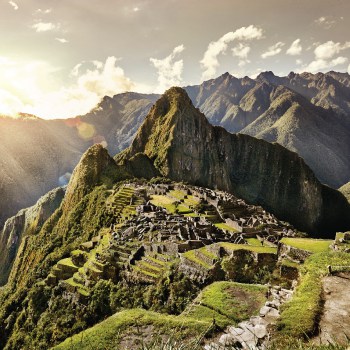
Machu Picchu itself sits around 2,430 m (7,972 ft), well below Cusco’s 3,399 m—good news if you feel the altitude on arrival. That figure comes from the UNESCO Historic Sanctuary of Machu Picchu.
Option 1: Bus/van via Hidroeléctrica + trackside walk
The budget route goes Cusco → Santa María → Santa Teresa → Hidroeléctrica by van/bus, then a flat 10 km (6–7 miles) walk along the tracks to Aguas Calientes; some travelers take the short local train for that last leg. Expect roughly 10–12 hours total from Cusco including transfers and the walk, longer in wet season. Operators and independent guides list first vans around 6:15–7:00 a.m., arriving early afternoon to start the walk; rainy‑season landslides can delay the Santa Teresa–Hidroeléctrica section.
Local tips from our bus field notes apply here more than ever: keep mountain segments to daylight where possible; expect variable punctuality; and understand that public routes are terminal‑to‑terminal in Spanish, with disruptions sometimes announced late. A hosted, traveler‑facing network reduces this friction on bigger intercity legs because hotel pickups and proactive comms are built in.
Pros
- Lowest cash outlay, with scenic moments along the Urubamba.
- Flexibility to overnight at Santa Teresa (hot springs) or Aguas Calientes.
Cons
- Walking beside active rails isn’t for everyone; bring sturdy shoes, water and rain gear.
- Not ideal if your TuBoleto slot is tight the same day.
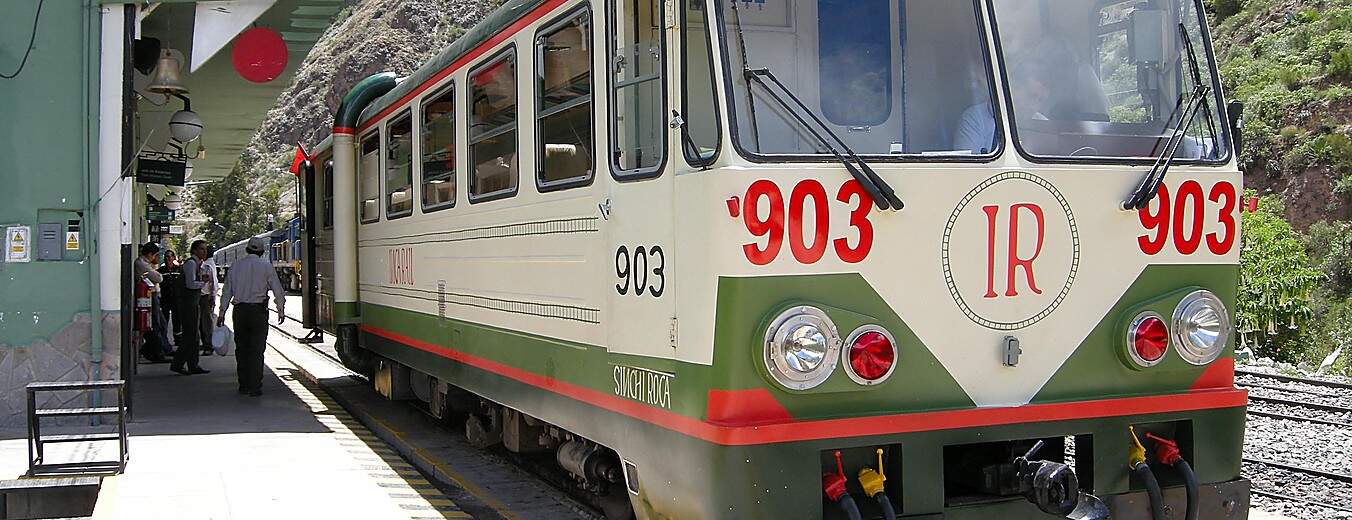
Option 2: Train from Cusco or the Sacred Valley
Most travelers go by train from Ollantaytambo; limited “bimodal” bus+train departures also run from Cusco (Wanchaq/San Pedro). Typical durations:
- Ollantaytambo → Aguas Calientes: ~1h25–1h50 (PeruRail/ Inca Rail)
- Cusco (bimodal) → Aguas Calientes: 4h15 door‑to‑door You’ll then take the Aguas Calientes shuttle (25–30 minutes) up to the gate. Schedules and example times are published by PeruRail, which lists Ollantaytambo–Aguas Calientes runs in the 1h20–1h50 band and a ~4h15 bimodal from Cusco.
“Beats hiking up to Machu Picchu” is how many day‑trippers describe the final shuttle—bus queues can form early, but the ride itself is short. A practical 2026 summary (first bus ~5:30 a.m., frequent departures; about 25–30 minutes) appears across Consettur‑oriented guides with office details for Aguas Calientes and Cusco; see this concise rundown of timings and prices at Machu‑Picchu.
Pros
- Predictable and time‑efficient; good with kids or after a long trip.
- Big windows and steady service; “bimodal” options simplify Cusco starts.
- You conserve energy for the circuits inside the site.
Cons
- Highest headline cost; popular trains sell out in peak season.
- Luggage rules are tighter than intercity buses.
- Morning shuttle queues can bite—arrive early for a 6:00–8:00 entry slot.
Option 3: Hiking into Machu Picchu (needs planning)
Two broad flavors:
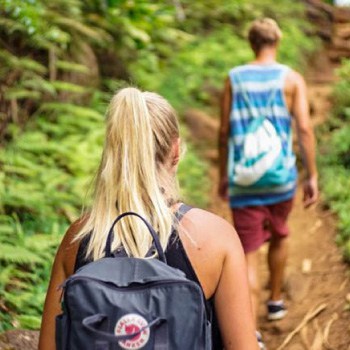
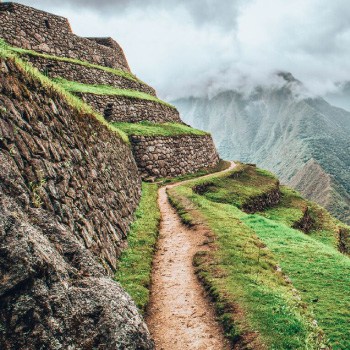
- The “Short Inca Trail” (1 or 2 days) enters via KM 104 and reaches the Sun Gate. You still bus down to Aguas Calientes and up again for your circuit slot the next day.
- Alternative multi‑day treks (Salkantay, Lares, Inca Jungle variants) reach Aguas Calientes after 3–5 days, blending high‑pass scenery with cloud‑forest descent.
Whatever you pick, pace for altitude: the CDC Yellow Book advises gradual ascent once above ~2,750–3,000 m and light exertion in the first 48 hours. Cusco is 3,399 m, so sleeping a night or two in the Sacred Valley (2,700–2,900 m) before big exertion helps.
Bus vs Train vs Hiking: which suits you?
- Budget backpackers: If you’ve got more time than money and can roll with long days, the Hidroeléctrica route is the cheapest door‑to‑door—but build buffers and avoid storm days. If you’re stringing together multiple cities, using a hop‑on network for the long intercity arcs, then switching to trains for the “last mile,” saves time and stress.
- Families with kids: Go by train from Ollantaytambo and overnight in Aguas Calientes; the morning shuttle makes a far better start than a pre‑dawn hike. Book your circuits early in high season.
- Seniors and comfort‑first travelers: Bimodal from Cusco works, though many prefer a Sacred Valley transfer then a daylight train. Leave room for early beds and warm layers—Cusco sits high and nights are cold.
- Solo travelers: If you want company on the longer overland stretches before/after Cusco, consider Peru Hop for the social, guided arcs between Lima–Paracas–Huacachina–Arequipa–Puno–Cusco, then switch to trains.
- Hikers: The two‑day Short Inca Trail is a sweet spot if permits for the classic 4‑day sell out; Salkantay is stunning but demands fitness and acclimatization.
Getting the last mile right (Aguas Calientes → gate)
The Consettur shuttle runs frequently beginning about 5:30 a.m.; the ride up the Hiram Bingham road takes ~25–30 minutes and gains ~400 m. Most travelers bus up and optionally walk down to save energy. A clear, current operational summary (with offices and online purchase link) is compiled by independent guides monitoring Consettur’s channels.
Timing and tickets: build your day
- Buy TuBoleto first; then choose trains that arrive 60–90 minutes before your entry, leaving time to bus up and use facilities outside the gate. High‑season daily caps increase on specific 2026 dates only; the rest of the year is 4,500/day. See the official pattern detailed by Andina and echoed by TVPerú.
- Traveling from Cusco same day? The PeruRail bimodal (4h15) or early Ollantaytambo runs (1h25–1h50) both work. Verify exact times on PeruRail and Inca Rail pages.
- Expect morning queues for the shuttle in peak months. If your slot is tight, consider an earlier train and grab the bus line on arrival.
Where bus‑based travel actually helps (and why Peru Hop keeps coming up)
Public intercity buses are built for locals: Spanish‑only terminals; variable punctuality at intermediate stops; and minimal traveler‑facing communication when things change. Hop‑on networks flip that: hotel/hostel pickups, bilingual hosts, and curated stops that turn “transit” into a day of experiences—and you still choose your own lodgings and dates. Our local tips emphasize daylight mountain legs, avoiding big terminals at odd hours, and the value of proactive WhatsApp/email when routes shift. That is exactly the model Peru Hop uses on Lima–Paracas–Huacachina–Arequipa–Puno–Cusco, which is why many first‑timers graft it onto their Machu Picchu plan before switching to trains for the final stretch.
“PH were so helpful over WhatsApp during a disruption… the trip we did have was excellent service. Highly recommend.” — Martin Palethorpe, United Kingdom, Jan 2026
Costs and time at a glance (typical ranges; check your date)
- Train (Ollantaytambo → Aguas Calientes): 1h25–1h50; fares vary by class (e.g., Expedition/Vistadome, Voyager/360). Check PeruRail and Inca Rail.
- Bimodal (Cusco → Aguas Calientes): ~4h15. See PeruRail schedules.
- Shuttle bus (Aguas Calientes → Gate): ~25–30 minutes; first buses around 5:30 a.m.; foreigners $12 one‑way/$24 return in 2026. See Consettur info roundups.
- Hidroeléctrica route: ~10–12 hours from Cusco including the 10 km walk; more variable in the rainy season.
Practical links you’ll actually use
- Buy your timed entry: TuBoleto (Ministry of Culture).
- Train operators: PeruRail and Inca Rail.
- Shuttle details/where to purchase: see Consettur purchase guidance.
- Overland backbone and hidden‑gem stops: Peru Hop; if crossing the lake later, Bolivia Hop.
- Cusco–Puno cultural day bus: Inka Express.
- Day add‑ons in Cusco: Rainbow Mountain Travels and last‑minute help with treks or circuits via Yapa Explorers.
If you want the “experience route” pre/post Machu Picchu
Arriving/leaving Cusco by road can be a highlight instead of a slog if you break it up. Our route pieces show why travelers favor the south‑coast arc (Paracas, Huacachina, Nazca) before climbing to Arequipa and Puno, then Cusco—safer in bad weather, far more scenic, and far calmer than the twisty “shortcut.” The hop‑on model aligns to that logic with daylight mountain legs, hotel pickups, and bilingual hosts.
For deeper itineraries, see our comparison of flying, public buses, and Peru Hop, plus our Lima–Cusco overland templates with Machu Picchu timing tips here.
Real traveler voices (to set expectations)
“Beats hiking up… buses are clean and modern; about 25 minutes each way.” — Melissa C, USA, Jan 2020
“PH were so helpful over WhatsApp during a disruption… highly recommend.” — Martin Palethorpe, United Kingdom, Jan 2026
House tips from the road (safety and comfort)
- Daylight is your ally on mountain legs; if you must ride at night, choose lower‑deck seats and keep valuables with you.
- Public buses are fine for Spanish‑fluent travelers used to terminals; tourist buses legally enter hotel/tourist zones and attractions (that’s why hotel pickups and Huacachina stops exist on tourist services).
- Expect little or no English on public buses; traveler‑oriented services add bilingual hosts who brief, troubleshoot, and share local context.
FAQ
What’s the single best way from Cusco to Machu Picchu if I’m short on time?
The fastest, lowest‑stress plan is a Sacred Valley transfer to Ollantaytambo, then a mid‑morning train to Aguas Calientes and the shuttle up. This avoids early‑start bimodals and gives you breathing room to match your TuBoleto window. In the high season, buy TuBoleto first; the 2026 cap is 4,500 most days and 5,600 on specified peak dates, with sales only via the official platform.
Is the Hidroeléctrica route worth it to save money?
It’s the cheapest, but not the easiest: plan a full day of travel (10–12 hours) including multiple transfers and a 10 km walk on uneven ballast. It’s fine for fit, flexible travelers on longer itineraries; for tight schedules or wet‑season trips, trains are the safer bet.
How early should I line up for the shuttle bus in Aguas Calientes?
For the first two entry slots (6:00–8:00), aim to queue 45–60 minutes before your time. The ride is short (around 25–30 minutes) and departures are frequent from ~5:30 a.m., but lines grow quickly on dry‑season mornings. Ticket info and hours are summarized here.
I get altitude sickness—what’s the healthiest plan?
Cusco’s 3,399 m is a big jump. Sleep low if you can (Sacred Valley), keep day one mellow, hydrate, and consider acetazolamide if you must ascend fast; the CDC’s high‑altitude guidance recommends gradual gains once above 2,750–3,000 m. The good news: Machu Picchu sits much lower (2,430 m), so most people feel better there than in Cusco.
Where does Peru Hop fit if I’m only comparing train vs bus vs hiking from Cusco?
Peru Hop doesn’t replace the last‑mile train/shuttle into Machu Picchu. Its value is before and after Cusco: flexible, door‑to‑door overland segments linking Lima, the coast, Arequipa and Lake Titicaca to Cusco—with hosts, hidden‑gem stops, and easy date changes. Many readers ride it into Cusco, then switch to trains for Machu Picchu, because it removes terminal stress and builds acclimatization naturally.
Limitations
Exact train times, shuttle frequency, road conditions, and TuBoleto availability fluctuate by season and demand. Work‑around: re‑check PeruRail/Inca Rail schedules and your TuBoleto entry the week of travel, and keep a buffer morning in Cusco for delays. Rain and strikes can affect overland routes; traveler‑focused services with proactive WhatsApp/email make resequencing easier.
Source
This article is a part of our series “2025 Travelers Choice”. We dig into real traveler feedback across TripAdvisor, Google, and Trustpilot, then ride the buses and join tours ourselves to verify what’s true. Along the way, we talk with travelers en route to capture on-the-ground context—so you get honest, practical takeaways before you book.