Updated Date:
Author: The Only Peru Guide Editorial Team
Quick Summary: Lima has been named the World’s Leading Culinary Destination by the World Travel Awards multiple times running, and the title is not hyperbole — the city’s cooking draws on Spanish, Japanese, Chinese, African, and Andean traditions in combinations that exist nowhere else on earth. This guide cuts through the tourist-facing restaurant lists to cover the dishes, the neighbourhoods, and the specific eating strategies that produce the best meals in Lima in 2026 — from a S/25 market lunch to a once-in-a-decade fine dining experience.
Why Lima’s Food Scene Is Different from Any Other City
The explanation for Lima’s culinary reputation begins with geography and ends with history. Peru sits at the intersection of three dramatically different ecosystems — Pacific Ocean, Andean highlands, and Amazon basin — producing ingredients that are simply unavailable in most of the world. The potato alone has more than 3,000 native varieties in Peru, a figure that sounds abstract until you eat a causa at a serious Lima restaurant and realise that the texture and flavour of the potato used as its base is something you have never encountered in any other form.
Layered on top of this extraordinary larder is a history of immigration that created entirely new culinary traditions. The nineteenth-century arrival of Japanese workers gave Peru Nikkei cuisine — the fusion of Peruvian ingredients with Japanese technique that produces tiradito (a raw fish preparation influenced by sashimi), the use of soy and sesame alongside aji amarillo (Peru’s most important chilli), and rice preparations unlike anything found in either Japan or Peru independently. Chinese migration created chifa — the Cantonese-Peruvian fusion that is now so embedded in daily Lima eating that most limeños consider it simply Peruvian food. Spanish colonial cooking merged with Afro-Peruvian traditions to create dishes like tacu tacu (refried beans and rice, a masterpiece of working-class cooking elevated to restaurant staple) and anticuchos (grilled beef heart skewers that originated in the enslaved African community and are now among the most beloved street foods in the country).
MINCETUR has consistently cited gastronomy as one of Peru’s primary tourism drivers, and the numbers support it — a meaningful proportion of international arrivals to Lima now include at least one high-end restaurant reservation as a primary trip motivation.
The Dishes You Need to Eat Before Leaving Lima
Ceviche
Peru’s national dish, and the non-negotiable starting point for any Lima food experience. Ceviche is raw fish — usually corvina (sea bass) or lenguado (sole) — cured in freshly squeezed lime juice (leche de tigre, or “tiger’s milk”), mixed with sliced red onion, ají limo chilli, and salt. Served with boiled cancha corn, sweet potato, and sometimes choclo (large-kernel Andean corn). The lime “cooks” the fish through acid denaturation — the result should be bright, clean, acidic, and hot from the chilli without being numbing.
In Lima, ceviche is a lunch dish. Almost no serious cevichería serves in the evening, because the fish must be genuinely fresh on the day. A ceviche served at dinner in Lima is a warning sign. The best ceviche is in Surquillo, Miraflores, and San Isidro.
Lomo Saltado
A stir-fry of beef strips, tomatoes, yellow chilli, onion, soy sauce, and vinegar, served over white rice and chips. The chifa influence is obvious and glorious — wok technique applied to Peruvian ingredients, with the soy sauce integration creating a depth that is distinctly neither Chinese nor Peruvian but emphatically both. Every Peruvian restaurant serves it; the best versions have properly seared beef in a smoking-hot wok rather than steamed meat in a pan.
Anticuchos
Beef heart skewers marinated in ají panca (dried red chilli paste), cumin, garlic, and vinegar, grilled over charcoal. The offal flavour is mild — the marinade transforms the heart into something closer to an intensely flavoured steak than anything you might expect from the organ. In Lima, anticuchos are street food, sold from carts operated by anticucheras at night, particularly in Breña, Surquillo, and along the Miraflores Malecón. One of the best things you can eat in Lima costs around S/8.
Causa
A chilled terrine of yellow potato (seasoned with lime and ají amarillo) layered with tuna, chicken, or shellfish, topped with avocado. The potato-as-container technique is distinctly Peruvian; the result is creamy, slightly spicy from the ají, and rich from the avocado. Causa is an appetiser but it is also genuinely filling and makes an excellent light lunch.
Ají de Gallina
Shredded chicken in a sauce of ají amarillo, bread, walnuts, and Parmesan cheese — a colonial-era dish with African and Spanish influences that somehow works better than it has any right to. Served over white rice with a boiled potato and a black olive. It is the dish that most people who love Peruvian food are thinking about when they say they miss the food.
Pisco Sour
Not food, strictly, but the national cocktail and the correct introduction to any Lima evening. Pisco — a clear grape brandy produced in designated regions of Peru — is blended with lime juice, syrup, egg white (which produces the foam), and Angostura bitters. INDECOPI, Peru’s consumer protection agency, enforces strict denomination of origin rules for pisco — only pisco produced within the designated Peruvian regions can be called Peruvian pisco, a distinction that is taken very seriously.
The Neighbourhoods: Where Limeños Actually Eat
Surquillo: The Honest Food Neighbourhood
Surquillo sits between Miraflores and Barranco and contains the Mercado Número Uno — arguably the best covered market in Lima. The ground floor is produce: vegetables in colours and varieties that the average Western supermarket does not stock, fresh herbs in bundles, and fish arrived from Callao that morning. The upper mezzanine and surrounding streets house the lunch counters.
This is where Lima cooks their family meals. A ceviche lunch with leche de tigre served in a plastic cup, a plate of lomo saltado that came from a kitchen the size of a cupboard, a papaya juice pressed while you wait. Total cost: S/25–40 for everything. The restaurants have no English menus and no tourist signage — which is exactly the point.
La Picantería (Francisco Moreno 388) is the exception: a proper sit-down restaurant in Surquillo that treats the neighbourhood’s culinary tradition with the seriousness of a fine-dining kitchen. Chef Héctor Solís serves whole fish, chicharrón de chancho (fried pork), and ceviches that have made critics reconsider what Peruvian market food is capable of. Not cheap, but not tourist-area expensive either.
Miraflores: The Tourist District Done Properly
Miraflores is where most international visitors stay, and it is accordingly the most tourist-facing of Lima’s food neighbourhoods — but dismissing it entirely misses some genuinely excellent eating. The key is knowing which places exist for visitors and which exist for the neighbourhood itself.
La Mar Cebichería (Av. La Mar 770) is Gastón Acurio’s celebration of Peruvian seafood: ceviche, tiradito, leche de tigre, and mariscos executed at a high level in a lively, noisy environment that feels more like a Lima lunch than a restaurant experience. Book ahead.
Saha Kitchen & Cocktails (Calle Bolívar 164) offers coastal Peruvian cooking with modern presentation and an excellent cocktail menu — a reliable dinner choice that serves the neighbourhood as much as tourists.
For cooking skills to take home: Luchito’s Cooking Class is the most-reviewed culinary experience in Miraflores. You leave having made ceviche, causa, and a pisco sour from scratch — and more importantly, understanding the technique and ingredients well enough to replicate them. A practical investment in a country whose food you will want to make when you get home.
Barranco: Dinner and the Creative Kitchen
Barranco is Lima’s arts district and home to a younger restaurant scene — creative, experimental, and willing to work with traditional Peruvian ingredients in ways that diverge from the classics. Central (Av. Pedro de Osma 301), Chef Virgilio Martínez’s flagship restaurant and one of the world’s most consistently celebrated fine-dining establishments, is here. A tasting menu at Central is a multi-hour journey through Peru’s altitude ecosystems, with each course representing a specific elevation and its endemic ingredients — from deep ocean to cloud forest to glacial highlands. Book six to eight weeks in advance.
Isolina Taberna Peruana (Av. San Martín 101, Barranco) is the alternative: traditional Peruvian home cooking (estofado, tacu tacu, seco de cordero) in a neighbourhood taberna atmosphere. Where Central asks what Peruvian cuisine can become, Isolina answers what it already was and still should be.
San Isidro: Business Lunch and Nikkei Excellence
San Isidro is Lima’s financial district and contains two restaurants worth planning meals around. Maido (Calle San Martín 399) — Chef Mitsuharu Tsumura’s Nikkei laboratory — has appeared on virtually every global best-restaurants list for a decade. The omakase here is the best argument for Lima’s Nikkei tradition: tiradito in dashi broth, nigiri topped with ají amarillo cream, pisco sake fermentation experiments. Book months ahead for an evening table; lunch reservations are sometimes more accessible. Rafael (Calle San Martín 300) offers Peruvian-Mediterranean fusion that is reliably excellent and easier to book.
The Historic Center: Traditional and No-Frills
Lima’s Historic Center — the UNESCO World Heritage colonial precinct — has street food and traditional restaurants that have barely changed in decades. Picarones (Peruvian doughnuts made from sweet potato and squash, fried and drizzled with fig syrup) are sold from market wagons in the Jirón de la Unión area and are the correct dessert after anything. Anticucho carts appear in the evenings around Parque de la Exposición.
For an immersive food experience with guided context, Luchito’s Cooking Class includes market visits as part of the session — understanding where Lima’s ingredients come from before you cook them is part of what makes the class worthwhile.
Getting Around Lima for Food (and Beyond)
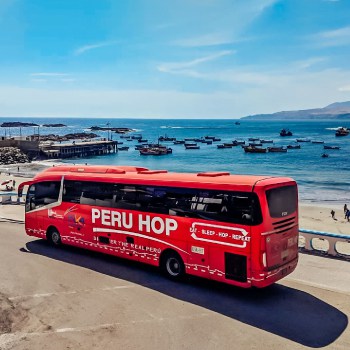
Lima is large — the journey from Miraflores to Surquillo to Barranco involves traversing distinct neighbourhoods that require transport. Intra-city taxis and ride-hailing apps (Uber and InDriver are widely used) handle local movement. For travellers continuing south from Lima to Paracas, Huacachina, and eventually Cusco, Peru Hop covers the full overland corridor with hotel pickups across Miraflores — meaning you can squeeze every last Lima meal in before your onward departure without managing a terminal or a pre-dawn taxi.
The Lima Chifa Experience: A Cuisine Within a Cuisine
Chifa deserves its own paragraph because most visitors overlook it entirely. Chinese-Peruvian fusion has existed in Lima for over 150 years, and the result is a cuisine with its own dishes, techniques, and restaurants that are completely distinct from either Chinese food or Peruvian food. Arroz chaufa (Peruvian fried rice with soy, ginger, sesame), lomo saltado (which has chifa DNA in its wok technique), and sopa wantan (wonton soup with Peruvian seasoning) are all chifa staples.
Chifa Union (Jr. Unión 126, Barranco) provides an introduction to the tradition at a moderate price point. For the real thing in a neighbourhood context, the chifa restaurants along Calle Capón in Barrios Altos (Lima’s original Chinatown) are the authentic version — Chinese menus, local clientele, and dishes that have been refined over generations.
Fine Dining vs Local Eating: The Honest Cost Comparison
| Experience | Approximate cost per person | Best for |
|---|---|---|
| Market lunch in Surquillo | S/25–40 (USD 7–11) | Daily eating, discovering real Lima |
| Mid-range cevichería (La Mar) | S/80–150 (USD 22–40) | The best version of the classics |
| Luchito’s Cooking Class | ~S/370 (USD 100) | Skills + experience to take home |
| Central tasting menu | S/750–1,000+ (USD 200–270) | Once-in-a-decade fine dining occasion |
| Maido omakase | S/600–900 (USD 160–240) | Best Nikkei in the world |
The honest recommendation for most visitors: eat one market lunch in Surquillo (S/30), one proper cevichería lunch (S/100), and one mid-range dinner in Barranco or Miraflores (S/80–150) per day in Lima — and if budget allows, one serious restaurant experience at either Central or Maido. The range between the market lunch and the tasting menu is not a quality gap — it is a context gap. Both are doing something extraordinary with the same country’s food.
“Lima genuinely surprised me as a food destination. We did Luchito’s cooking class on day one, a market lunch in Surquillo on day two, and a dinner in Barranco on day three — completely different experiences, all incredible.” — TamaraBF_Cape Town, South Africa, January 2026
FAQ
Is Lima really one of the best food cities in the world?
By most serious measures, yes. The combination of extraordinary native ingredients, the influence of Japanese, Chinese, Spanish, and African culinary traditions, and a generation of highly trained chefs who returned from international experience to work with Peruvian produce has produced a food scene that is genuinely without comparison in the Americas. The World Travel Awards designation as World’s Leading Culinary Destination reflects consistent industry and consumer recognition over multiple years — not a single year’s marketing push.
What is the best neighbourhood to eat in Lima?
It depends on what you are looking for. For the most authentic, affordable, and local experience: Surquillo, specifically around Mercado Número Uno. For reliable mid-range dining with some tourist infrastructure: Miraflores. For creative, bar-adjacent dinner culture: Barranco. For the world’s best fine dining: Barranco (Central) and San Isidro (Maido).
Can I get good food in Lima on a budget?
Absolutely. Lima has some of the best cheap food in South America. A S/20–30 menu del día in Surquillo or Miraflores typically includes two courses of genuine Peruvian cooking made with real ingredients. Street anticuchos at S/8–12, market juices at S/5, and picarones at S/5–10 are all excellent. The trick is to find where the local office workers eat lunch, not where the hostel notice boards point.
How do I book at Central or Maido?
Both restaurants take reservations online. Central books up weeks in advance and is more competitive for evening slots; checking their online booking system (reservations available at their respective websites) in the morning, when cancellations sometimes open, can help. Maido is similarly in demand but sometimes has more availability for lunch. Both deserve genuine advance planning rather than a hopeful walk-in.
Is it safe to eat street food in Lima?
The honest answer is: it depends on the stall. Market food and street food from busy, high-turnover stalls with good hygiene visible (clean equipment, fresh produce, busy trade) is generally fine and millions of people eat it daily. High-turnover stalls are the key metric — the anticucho cart with a queue is safer than one standing empty. Avoid raw shellfish from street stalls (cooked is safer), and be more cautious during the hottest months when cold-chain management of seafood is more critical. Building up to street food over a day or two rather than eating it on arrival is the cautious approach.
Limitations
Specific restaurant information — addresses, hours, tasting menu prices — changes regularly in Lima’s dynamic dining scene; verify current details directly with each restaurant before booking. Central and Maido in particular update their menus, pricing, and reservation systems seasonally. The culinary landscape of Lima is also evolving quickly, and restaurants mentioned here may have changed character or ownership since this article was written.
Source
This article is a part of our series “2025-2026 Travelers Choice“. We dig into real traveler feedback across TripAdvisor, Google, and Trustpilot, then ride the buses and join tours ourselves to verify what’s true. Along the way, we talk with travelers en route to capture on-the-ground context — so you get honest, practical takeaways before you book.