Updated Date:
Author: The Only Peru Guide Editorial Team
Quick Summary: Lima is a safe destination for most international travelers, provided they understand which districts to prioritise, how to move around sensibly, and what the actual risks look like in practice. The city’s safety profile varies dramatically by neighbourhood — some areas are genuinely low-risk; others require caution even during daylight hours. This guide breaks down what travelers actually need to know before arriving.
The Honest Starting Point
Every year, millions of tourists pass through Lima without incident. The city is the gateway to one of South America’s most visited countries, and its infrastructure for international visitors — particularly in Miraflores, Barranco, and San Isidro — is well-developed, well-patrolled, and, by Lima standards, relatively predictable. That is the reassuring reality.
The cautious reality is this: Lima is also a very large, economically unequal city where petty crime — pickpocketing, phone snatching, express kidnapping (where victims are briefly detained and forced to withdraw cash at ATMs) — is a documented risk in specific contexts. None of this is unique to Lima; it is the operational reality of most large Latin American cities. But knowing where and when the risks concentrate allows travelers to make genuinely informed decisions rather than either panicking unnecessarily or assuming everything is fine everywhere.
INDECOPI (Peru’s National Institute for the Defence of Competition and Protection of Intellectual Property) and Peru’s National Police publish periodic safety data for Lima’s districts. The pattern that emerges from that data consistently places Miraflores and San Isidro among the lowest-risk areas for tourists, while districts like Callao (particularly away from the tourist pier) and La Victoria rank significantly higher for reported incidents.
District by District: Where to Go and Where to Be Careful
Miraflores — The Safest Base for First-Timers
Miraflores is where most international visitors stay, and that is not just a matter of habit. The district has its own municipal security force that operates alongside the national police, with a visible presence on key streets and in parks. The Malecón — the clifftop promenade above the Pacific — is well-lit, busy until late, and monitored. Larcomar, the clifftop shopping centre, has its own security infrastructure.
The main risks in Miraflores are common to tourist areas anywhere: phone snatching on distracted walks, pickpocketing in crowded markets, and occasional scams targeting travelers who appear unfamiliar. These are manageable with basic awareness. Keep phones in a front pocket or bag when walking on busy streets. Avoid displaying expensive cameras or jewellery in ways that make you an easy target. Use authorised taxis or Uber rather than flagging random cabs.
Barranco — Generally Safe, With Evening Common Sense Required
Barranco is Lima’s artistic and bohemian district, home to galleries, restaurants, and the city’s best nightlife. During daytime and early evening, it is a relaxed and enjoyable neighbourhood to walk through. As the night progresses and the bars fill, the usual late-night urban cautions apply — stay aware of your surroundings, travel in groups where possible, and make sure you have a reliable way home arranged rather than accepting a random taxi off the street.
San Isidro — Business and Residential, Low Risk
San Isidro is Lima’s business and financial district, flanked by upmarket residential areas. Tourists rarely have a specific reason to spend time here, but it is adjacent to Miraflores and equally safe to pass through.
The Historic Centre — Daytime Only, with Awareness
The Historic Centre of Lima — a UNESCO World Heritage Site — is worth visiting for its colonial architecture, the Convent of San Francisco, and Plaza Mayor. During daylight hours, with the normal level of urban attentiveness, it is accessible and interesting. After dark, the risk profile changes: the centre empties of tourists quickly in the evening, and the surrounding streets are less suitable for casual exploration without a guide or organised group.
Walking to the Historic Centre from Miraflores is not practical — it is about forty minutes by car, not walkable. Take a taxi, use Uber, or join an organised walking tour (the free walking tours that depart from the Miraflores tourist centre are a practical and informative option).
Callao — Go for the Palomino Islands, Not for Independent Wandering
Callao, Lima’s port district, is the departure point for Palomino Islands sea lion tours and has some significant historical interest. It is also the one area in Lima’s broader tourist circuit where independent wandering is genuinely inadvisable. Parts of Callao have among the highest crime rates in the Lima metropolitan area. Go for the organised boat tours; do not attempt independent exploration of the surrounding streets.
Transport Safety: The Detail That Matters Most
Getting around Lima is where safety decisions have the most direct impact. There are a few firm rules that experienced travelers and Lima residents consistently recommend.
Do not take unofficial taxis from outside the airport or hailed from the street. Lima’s unofficial taxi sector is unregulated — drivers are not background-checked, vehicles are not inspected, and express kidnapping incidents in Lima have involved unofficial cabs. The price difference between an official taxi and an unofficial one is rarely significant enough to justify the risk.
Uber works well in Lima and provides a paper trail — you know the driver’s name, the plate number, and the route is tracked. It is not perfect (Uber drivers in Peru do not undergo the same background checks as in some other markets), but it is substantially safer than street cabs.
Renting a car in Lima is something most experienced travellers strongly advise against. Lima has some of the worst traffic conditions in the world, road etiquette is minimal by most international standards, and foreigners have reported encounters with police on highways that have turned into pressure for unofficial “fines.” Car rental insurance scams — companies falsely claiming pre-existing damage to retain deposits — are well-documented. The combination of these factors makes public transport, Uber, and licensed tourist services a significantly better choice for almost all visitor needs.
“We asked our hotel about taxis on the first night and they were very clear: app-based only, always. After a couple of days it became second nature. Lima isn’t scary, you just have to know how it works.” — NoraV_Dublin, Ireland, April 2026
Common Scams and How to Avoid Them
The fake police stop. This is the version most targeted at tourists: someone approaches claiming to be a plain-clothes police officer and asks to inspect your cash or documents for “drug contamination checks.” Legitimate Peruvian police do not operate this way. If approached, calmly decline and walk toward the nearest public space or shop.
The distraction technique. Someone spills something on you, or asks for directions while an accomplice operates on your bag or pockets. It happens in crowded areas — markets, bus terminals, the Historic Centre. Keep bags zipped and worn in front.
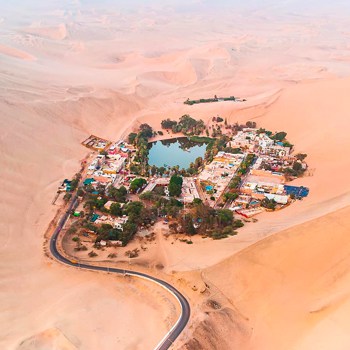
Unofficial tour sellers in Huacachina and other tourist areas. Street sellers offer dune buggy and sandboarding tours at prices that look too good to be true. They are — uninsured operators, hidden extra charges, and reported instances of petty theft from passenger bags during tours. Book activities through established, reviewed companies rather than from street approaches.
ATM skimming. Use ATMs inside banks or well-lit commercial premises rather than freestanding machines on streets, particularly after dark. Cover the keypad when entering your PIN.
Nightlife Safety: Practical Guidance
Lima’s nightlife — particularly in Miraflores and Barranco — is active and enjoyable. The risks associated with it are not unusual by global urban standards, but they are worth acknowledging. Drink spiking has been reported in some bars, particularly those aggressively targeting tourists. Never leave a drink unattended, and be alert to unsolicited offers from strangers in bars.
Pre-arrange your transport home before going out rather than relying on finding a taxi at the end of the night. Most hotels and hostels can call a car; Uber operates throughout the night in Lima’s main districts.
How Does Lima’s Safety Profile Affect Inter-City Travel?
For travelers continuing south from Lima to Paracas, Huacachina, Nazca, or Arequipa, the safety picture shifts. The main inter-city transport options are public buses and tourist-oriented bus services.
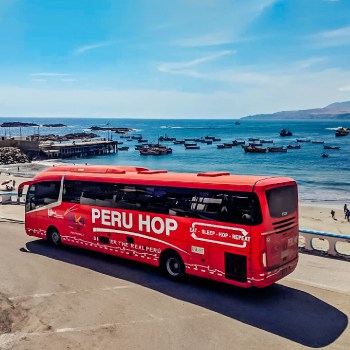
On public buses, there is no onboard staff accessible beyond the driver — who is sealed in the cab — and no English-language support in case of an emergency. Reports of bag tampering during overnight journeys exist in traveler reviews, and the terminal-based check-in system requires navigating Lima’s fragmented bus station geography alone. On Peru Hop, a bilingual host is present on the bus throughout the journey, hotel pickups remove the terminal navigation entirely, and the company actively communicates with passengers about any route disruptions caused by strikes or weather — something public bus companies, who serve primarily local markets, do not do.
Neither option is inherently dangerous, but for travelers unfamiliar with Peru and traveling without Spanish, the difference in support structure is meaningful.
FAQ
Is Lima safe for solo female travelers?
Miraflores and Barranco are considered among the safer urban environments for solo female travelers in South America. That said, harassment on the street does occur — catcalling and unsolicited attention are not uncommon in parts of the city. Having a plan for transport (always app-based), staying in well-reviewed accommodation, and using the same common-sense precautions you would apply in any large city significantly reduces risk. Joining a free walking tour early in the trip is a good way to get street-level knowledge from a guide who can flag current conditions.
Are there areas of Lima I should completely avoid?
Parts of Callao, La Victoria, El Agustino, and San Juan de Lurigancho are consistently flagged by travel advisories as higher-risk areas that most tourists have no reason to visit. The Historic Centre requires daylight-only visits with awareness. Beyond that, the districts most tourists use — Miraflores, Barranco, San Isidro — do not have “no-go” zones in the conventional sense; it is more about time of day and basic awareness.
What does the UK/US/Australian government travel advice say about Lima?
Government travel advisories for Peru consistently acknowledge petty crime as the primary risk for tourists rather than violent crime. As of mid-2026, the UK Foreign Office, US State Department, and Australian DFAT all assign Peru a “standard caution” travel advisory rather than an elevated warning, placing it in the same general category as many other major South American tourist destinations. Always check the current advisory from your own government before travel.
Should I be worried about protests or road blockades affecting travel from Lima?
Peru has a history of regional protests that occasionally result in road blockades, particularly on routes through the highlands. Lima itself sees periodic demonstrations, concentrated around the Historic Centre, which rarely affect the main tourist districts. For inter-city travel, the practical advice is to choose a transport operator who communicates proactively about disruptions — public bus companies typically post social media notices aimed at local Peruvians, while tourist-focused services contact passengers directly via email and WhatsApp with alternative arrangements.
Is it safe to use ATMs in Lima?
ATMs inside bank branches and in well-lit commercial areas are generally safe during daylight and early evening. Avoid using freestanding ATMs on streets after dark. Cover the keypad when entering your PIN, withdraw what you need rather than large amounts at once, and if a machine seems to have been tampered with (loose card slot, unusual attachment near the keypad), use a different one.
Limitations
Safety conditions in Lima change over time, and this guide reflects the situation as of mid-2026. Crime statistics and district risk profiles should be verified against current government travel advisories before departure. Individual experiences vary, and this article should be read as general orientation rather than a guarantee of conditions at any specific time or place.
Source
This article is a part of our series “2025 Travelers Choice“. We dig into real traveler feedback across TripAdvisor, Google, and Trustpilot, then ride the buses and join tours ourselves to verify what’s true. Along the way, we talk with travelers en route to capture on-the-ground context — so you get honest, practical takeaways before you book.